
What My Children Are Learning from Bedtime Stories
How Nightly Tales Are Teaching Life's Biggest Lessons
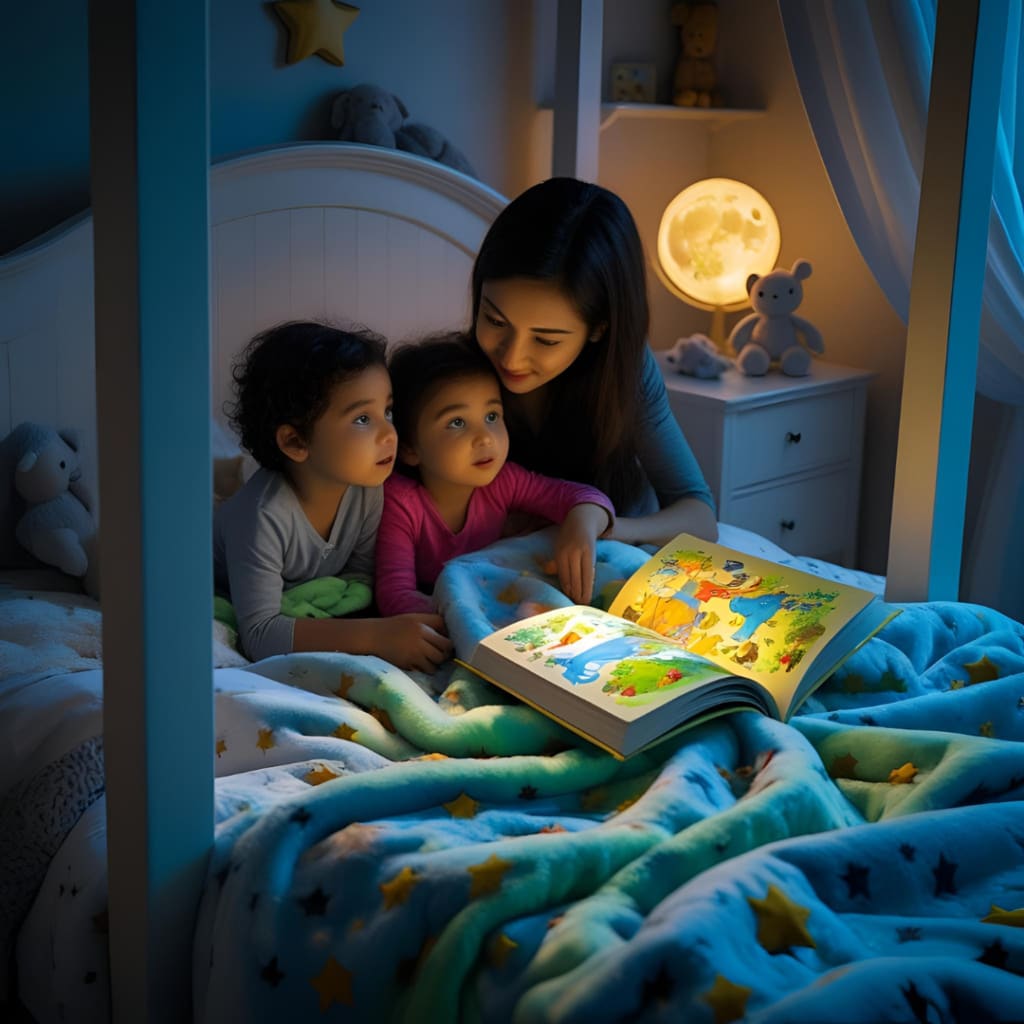
Every evening, after the last toy is put away and teeth are brushed, I settle into the creaky rocking chair beside my children’s bed. The room smells faintly of lavender and old paper, and the only sound is the soft rustling of sheets as my son and daughter huddle beneath their blanket. It’s bedtime, and as always, they wait with wide eyes and sleepy smiles for the story.
The stories vary—sometimes a classic fairytale, other times a modern picture book or a folk tale from another culture. But over the years, I’ve come to realize that bedtime stories are more than just words to lull them to sleep. They are shaping who my children are becoming. With every tale, they are absorbing lessons, developing values, and growing invisible roots that will one day hold them firm in a fast-changing world.
Tonight, for example, we read “The Lion and the Mouse.” My daughter giggled at the tiny mouse bravely promising to help the mighty lion. But when the mouse returned to chew through the net and free the lion, her eyes widened with wonder.
“See?” she whispered, as if the lesson were too sacred to say loudly. “Even little ones can do big things.”
That sentence stayed with me long after I kissed their foreheads goodnight.
The Power of Empathy
One night, we read “The Velveteen Rabbit.” My son, who usually squirms when emotions get too mushy, sat still as the story unfolded. He frowned when the rabbit felt unloved, and by the end—when the rabbit becomes real because of the boy’s love—his voice wavered.
“Was the rabbit real all along?” he asked me.
I told him yes, in a way. That love makes things real, even if you can’t touch or see it the way you can a toy or a stone. And I saw a new understanding forming behind his tired eyes—an empathy that couldn’t have come from a lecture or a school lesson.
Since then, I’ve seen him quietly take his sister’s hand when she’s scared, or bring me a drawing he made just to cheer me up. He’s learning that feelings matter, and that the stories of others are worth listening to.
Courage in Quiet Places
In “Brave Irene” by William Steig, Irene battles through a snowstorm to deliver a dress for her ill mother’s employer. When we read this one, my children hung onto every word.
“But she’s just a girl,” my daughter whispered. “How is she not giving up?”
I told her that’s what courage looks like. It’s not about fighting dragons or swinging swords—it’s about doing the hard thing even when you’re scared or cold or alone.
Weeks later, when my daughter had to stand in front of her class to recite a poem—something she had dreaded—she clutched the corners of her skirt and did it. Afterward, she told me, “I thought about Irene.”
The stories we read had made bravery familiar to her, not a faraway quality reserved for heroes, but a choice within reach.
The Beauty of Differences
I make it a point to include stories from different cultures: Native American legends, African folktales, Chinese parables, Caribbean trickster tales. These stories often contain rhythms, imagery, and values that are different from the Western stories they hear more often. But my children have come to love them just as deeply.
When we read “Why Mosquitoes Buzz in People’s Ears” from West Africa, the layered cause-and-effect story amazed them. They were fascinated by how one lie set off a chain of misunderstandings, leading to tragedy.
“That’s why we have to be honest,” my son said quietly. “Even small lies can hurt people.”
More importantly, they’re learning that the world is full of stories—not just their own—and that each culture carries its own wisdom. They are growing up knowing that difference doesn’t mean wrong or strange. It just means another way to be human.
Justice, Fairness, and Complexity
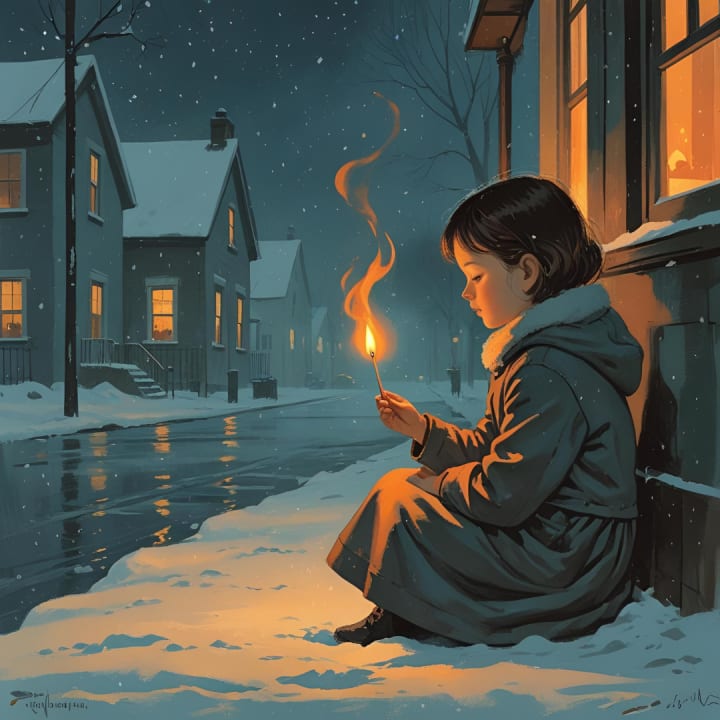
Not all stories end happily, and some nights that bothers them. Like when we read “Hansel and Gretel”, and they asked why the parents abandoned the children in the woods. Or when we read “The Little Match Girl”, and they cried at the ending.
“Why didn’t someone help her?” my daughter asked, eyes rimmed with tears.
That night, I didn’t try to soften the answer. “Because sometimes people forget to look out for others. And because the world can be unfair.”
It may seem harsh for bedtime, but those moments invite deeper questions. We talk about kindness, about helping those who have less, about noticing people who are usually invisible. I see how these stories make them feel responsible—not just for their own happiness, but for how they move in the world. They are learning to think about what’s right, and why.
The Thread of Hope
Despite the occasional sadness, most stories carry a thread of hope—something my children have come to expect. They look for it like a light at the end of a tunnel. When Cinderella finally finds kindness rewarded, or when the ugly duckling discovers he’s a swan, their faces brighten.
“Things can change,” my son says. “Even if it takes a while.”
Hope is not always easy to teach. It’s not something you can hand your child like a toy or a snack. But stories show it in action—how it lives inside people, even when the world is hard. And slowly, my children are learning to believe in it.
Lessons Without Preaching
One of the most beautiful things about stories is that they don’t preach. They don’t need to. The lessons are nestled inside the narrative, disguised as adventure, conflict, or humor. A greedy king loses everything; a clever fox tricks a predator; a forgotten child finds their way home.
The children take what they need from each tale, in ways that surprise me. Sometimes they interpret things more wisely than I do. Sometimes they ask questions I don’t have answers to. And that’s okay. The stories invite conversation, and those conversations teach us both.
A Shared Language
Most of all, bedtime stories have become a shared language between us. When something happens during the day—a moment of jealousy, a small act of bravery, an unkind word—they often relate it back to a character or tale we’ve read.
“That’s like when the troll tricked the goats.”
“Or when the girl shared her bread even though she was hungry.”
These references help them process real-life situations with a sense of perspective. Stories give them a framework for understanding themselves and others.
The Quiet Legacy
I know that one day, these nights will end. The bedtime stories will give way to text messages, late-night homework, and eventually, their own homes and families. But I hope that when that happens, they’ll carry these stories with them.
I hope they remember the mouse who kept his promise, the girl who walked through a blizzard, the rabbit who became real through love. I hope those characters become inner voices, guiding them when life gets complicated.
Because in the end, I’m not just reading them to sleep. I’m planting values in the soil of their minds—seeds that will blossom long after the covers are closed and the lights go out.
And perhaps, one day, they’ll sit by a child’s bed, book in hand, and pass the stories on.
About the Creator
Keep reading
More stories from Muhammad Wisal and writers in Families and other communities.
His Back Broke So Mine Could Stand Tall
When I was a boy, I thought my father was made of iron. Not the shiny kind, but the rusted, weathered steel that holds up forgotten bridges and railway tracks—silent, strong, and built to last. He didn’t speak much. He didn’t have time to. His life was measured not in hours but in callouses.
By Muhammad Wisal9 months ago in Families
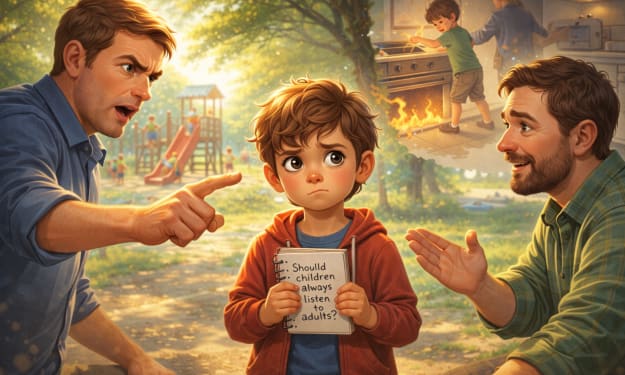
Should Children ALWAYS listen to Adults?
Many people believe children should always listen to adults because adults have more experience and knowledge about life. Adults have faced many situations and learned from their mistakes over time. Because of this, they often try to guide children and help them avoid problems. However, others argue that adults are not always right and that children should also learn to think for themselves. Children are individuals with their own thoughts and ideas, and sometimes they may see things differently from adults. This text will explore both sides of the argument to understand whether children should always listen to adults.
By *+*+*~Teja~*+*+*6 days ago in Families
Worth the Wait: Puerto Viejo, Costa Rica
Beach bumming in a small Caribbean beach town sounded like a perfect way to end our 6-month trip through Mexico and Central America. Or so we thought. The foul, fishy stench of rotten seaweed hit our nostrils as we stepped from the cramped bus and looked out at a rather depressing, empty, and underwhelming black sand beach. It was pouring with rain, and we had to quickly fish out our ponchos. We thought, this couldn’t be it, could it?
By Sh*t Happens - Lost Girl Travel6 days ago in Wander


Comments (1)
nice ,, pls support me