
What is the Best Meditation for Mental Health
Best Meditation for Mental Health
Introduction
Mental health is a vital aspect of our overall well-being, and in today's fast-paced world, it's becoming increasingly important to find ways to manage stress, anxiety, and other mental health challenges. One practice that has gained significant attention for its positive impact on mental health is meditation. Meditation is a mindfulness technique that allows individuals to focus their attention and achieve a state of calm and relaxation. But with so many different types of meditation available, how do you know which one is the best for mental health? In this article, we will explore various meditation techniques and their benefits for mental health, helping you find the one that resonates with you.
Understanding the Benefits of Meditation for Mental Health
Before delving into specific meditation techniques, it's essential to understand the broad benefits of meditation for mental health. Numerous scientific studies have shown that regular meditation practice can have a profound impact on our mental well-being. One of the primary benefits of meditation is stress reduction. When we meditate, we activate our parasympathetic nervous system, which helps counter the effects of the stress response. This activation leads to a decrease in heart rate, blood pressure, and cortisol levels, ultimately promoting a sense of calm and relaxation.
Another significant benefit of meditation for mental health is improved focus and attention. In today's world, our attention is constantly pulled in different directions. Meditation helps train our minds to stay present and focused on the task at hand, reducing distractions and enhancing productivity. Additionally, regular meditation practice has been shown to increase self-awareness and emotional regulation. By cultivating mindfulness, we become more attuned to our thoughts, emotions, and bodily sensations, allowing us to respond to them in a more balanced and compassionate way.
Different Types of Meditation Techniques
Now that we understand the benefits of meditation for mental health let's explore different types of meditation techniques. It's important to note that there is no one-size-fits-all approach to meditation, and different techniques may resonate with different individuals. The key is to find a practice that feels comfortable and aligns with your intentions and goals.
Mindfulness Meditation for Mental Health
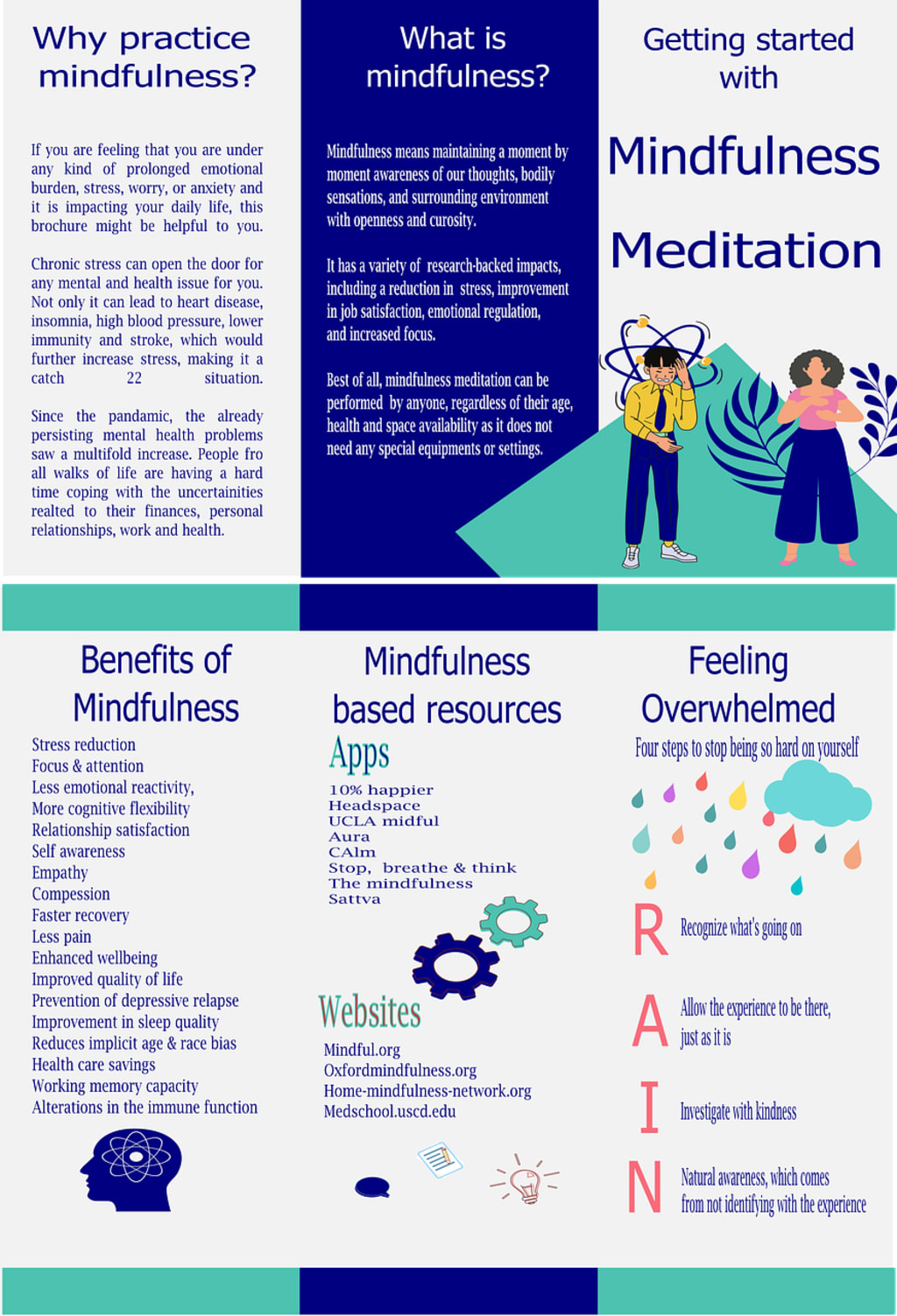
Mindfulness meditation is one of the most well-known and widely practiced techniques. It involves paying attention to the present moment without judgment. During mindfulness meditation, you focus your attention on your breath, bodily sensations, or a specific anchor point, such as a mantra or sound. The goal is to observe your thoughts and emotions as they arise, without getting caught up in them. Mindfulness meditation has been shown to reduce stress, improve focus, and increase self-awareness. It can also help individuals manage anxiety and depression by fostering a non-reactive and accepting attitude towards their thoughts and emotions.
Loving-Kindness Meditation for Mental Health
Loving-kindness meditation, also known as metta meditation, is a practice that cultivates feelings of love, compassion, and goodwill towards ourselves and others. It involves repeating specific phrases or intentions, such as "May I be happy, may I be healthy, may I live with ease." The practice starts with directing these intentions towards oneself and gradually extends to loved ones, neutral individuals, and even difficult people. Loving-kindness meditation has been shown to increase positive emotions, reduce negative emotions, and enhance social connectedness. It can be particularly beneficial for individuals struggling with self-criticism, anger, or relationship difficulties.
Transcendental Meditation for Mental Health
Transcendental meditation (TM) is a technique that involves the use of a mantra—a specific sound or phrase—to achieve a state of deep relaxation and inner peace. Unlike mindfulness meditation, where you actively observe your thoughts, TM aims to transcend thought altogether. During TM, you sit comfortably with your eyes closed and silently repeat your mantra, allowing it to become a vehicle for transcending the surface level of the mind. TM has been shown to reduce anxiety, improve focus, and promote a sense of calm. It is often practiced for 20 minutes, twice a day.
Guided Meditation for Mental Health
Guided meditation is a form of meditation where you listen to a recorded voice or follow along with a meditation teacher who guides you through the practice. It can be particularly helpful for beginners or individuals who find it challenging to quiet their minds on their own. Guided meditations are available in various formats, such as audio recordings, smartphone apps, or online platforms. They cover a wide range of topics, from stress reduction and sleep improvement to self-compassion and emotional healing. Guided meditation provides structure and support, making it easier to establish a regular meditation practice.
How to Incorporate Meditation into Your Daily Routine
Now that you have an overview of different meditation techniques, you may be wondering how to incorporate meditation into your daily routine. The key is to start small and be consistent. Here are some tips to help you get started:
Find a quiet and comfortable space: Choose a place where you can sit or lie down comfortably without distractions. It could be a corner in your room, a dedicated meditation space, or even a park.
Set aside dedicated time: Start with just a few minutes of meditation each day and gradually increase the duration as you become more comfortable. Aim for consistency rather than length.
Choose a technique that resonates with you: Experiment with different meditation techniques and find the one that feels most natural and enjoyable for you. Remember, there's no right or wrong way to meditate.
Start with guided meditations: If you're new to meditation, guided meditations can be a helpful starting point. They provide instructions and support, making it easier to stay focused and engaged.
Be patient and non-judgmental: Meditation is a practice, and like any skill, it takes time and patience to develop. Be gentle with yourself and embrace the process without judgment.
Integrate meditation into your daily routine: Find a time that works best for you, whether it's in the morning, during lunch break, or before bedtime. Consistency is key to experiencing the benefits of meditation.
Tips for Getting Started with Meditation
Starting a meditation practice can feel overwhelming, but with the right mindset and approach, it can become a transformative tool for mental well-being. Here are some additional tips to help you get started:
Start with short sessions: Begin with just a few minutes of meditation per day and gradually increase the duration as you become more comfortable. Consistency is more important than duration.
Focus on the breath: Use the breath as an anchor for your attention. Whenever your mind wanders, gently bring your attention back to the sensation of the breath entering and leaving your body.
Be patient with yourself: It's normal for your mind to wander during meditation. Instead of getting frustrated, acknowledge the thoughts and gently guide your attention back to your chosen focal point.
Practice self-compassion: Treat yourself with kindness and compassion during meditation. If you find your mind wandering or you feel restless, remind yourself that it's a natural part of the practice and refocus without judgment.
Find support: Consider joining a meditation group or attending guided meditation sessions to connect with like-minded individuals and receive guidance from experienced practitioners.
Gradually increase your practice: As you become more comfortable with meditation, gradually increase the duration and frequency of your sessions. Aim for at least 10-15 minutes per day to experience the full benefits.
Resources for Finding Guided Meditation Practices
If you're interested in exploring guided meditations to support your mental health, there are several resources available. Here are some popular options:
Meditation apps: Smartphone apps like Headspace, Calm, and Insight Timer offer a wide range of guided meditations for various purposes, including stress reduction, sleep improvement, and anxiety management.
Online platforms: Websites like YouTube and Meditation Oasis provide a vast collection of guided meditations from different teachers and traditions. You can find specific meditations for relaxation, emotional healing, mindfulness, and more.
Local meditation centers: Check if there are any meditation centers or yoga studios in your area that offer guided meditation classes or workshops. These can provide an opportunity to learn from experienced teachers and connect with a community of meditators.
Books and podcasts: There are numerous books and podcasts available that offer guided meditation practices. Some popular options include "The Mind Illuminated" by Culadasa, "10% Happier" by Dan Harris, and "The Calm Collective" by Cassandra Eldridge.
Remember, the key is to explore different resources and find guided meditations that resonate with you. Experiment with different styles, teachers, and lengths to discover what works best for your mental health needs.
Conclusion
In conclusion, meditation is a powerful tool for promoting mental health and well-being. With its numerous benefits, including stress reduction, improved focus, and enhanced self-awareness, meditation has become increasingly popular as a means of managing mental health challenges. While there is no one-size-fits-all approach to meditation, exploring different techniques such as mindfulness, loving-kindness, transcendental, and guided meditation can help you find the practice that best suits your needs. By incorporating meditation into your daily routine and being consistent with your practice, you can experience the transformative effects of meditation on your mental health. So, take a deep breath, find a quiet space, and embark on your meditation journey to nurture your mind and soul.
About the Creator
Wise~Guys
— Look Behind what's in Front of You ~ Make Good Choices — Hey, So how you Doin'..! Made~Men — Mobster Movies romanticise a distinctive, elegant appearance, impeccable attire style, along with the 'Families' expressive lingo. Making their 'Bones' gave them Panache — with vintage fedoras, tailored pin-striped suits, mirror-polished wing-tip shoes adorned with tassels; with their 'Gun Moll' gorgeous dates on their arms.
By Jay Kantor26 days ago in Families
Malka Shaw, LCSW: Orthodox Jewish Community, Belonging, and Resilience
Malka Shaw is an Orthodox Jewish social worker (LCSW) and educator who focuses on trauma, antisemitism, and Jewish community resilience. She founded Kesher Shalom Projects, offering workshops and support groups that build leadership, communication, unity, and Jewish pride. Raised loosely Conservative and drawn in adolescence to Reform youth programming, she describes her move toward Orthodoxy as a gradual, decades-long process deepened through immersive volunteering in Israel and sustained study. In clinical and communal settings, Shaw applies social-work principles—especially the principle of meeting people where they are—to help individuals and leaders turn isolation into connection and purposeful belonging. She trains allies in cultural competency.
By Scott Douglas Jacobsen7 days ago in Families
The Path to Salvation
The late autumn evening air filled the monk's lungs, but it wasn't the season that chilled his bones. The heavy-handed presence of evil he had sensed upon entering the woods surrounding this mountain village had not bothered to conceal itself from him.
By Made in DNA5 days ago in Fiction




Comments
There are no comments for this story
Be the first to respond and start the conversation.