
Unlearning People-Pleasing: Becoming Who I Am, Not Who You Want
Breaking free from the need to be liked and learning to live in alignment with my true self.
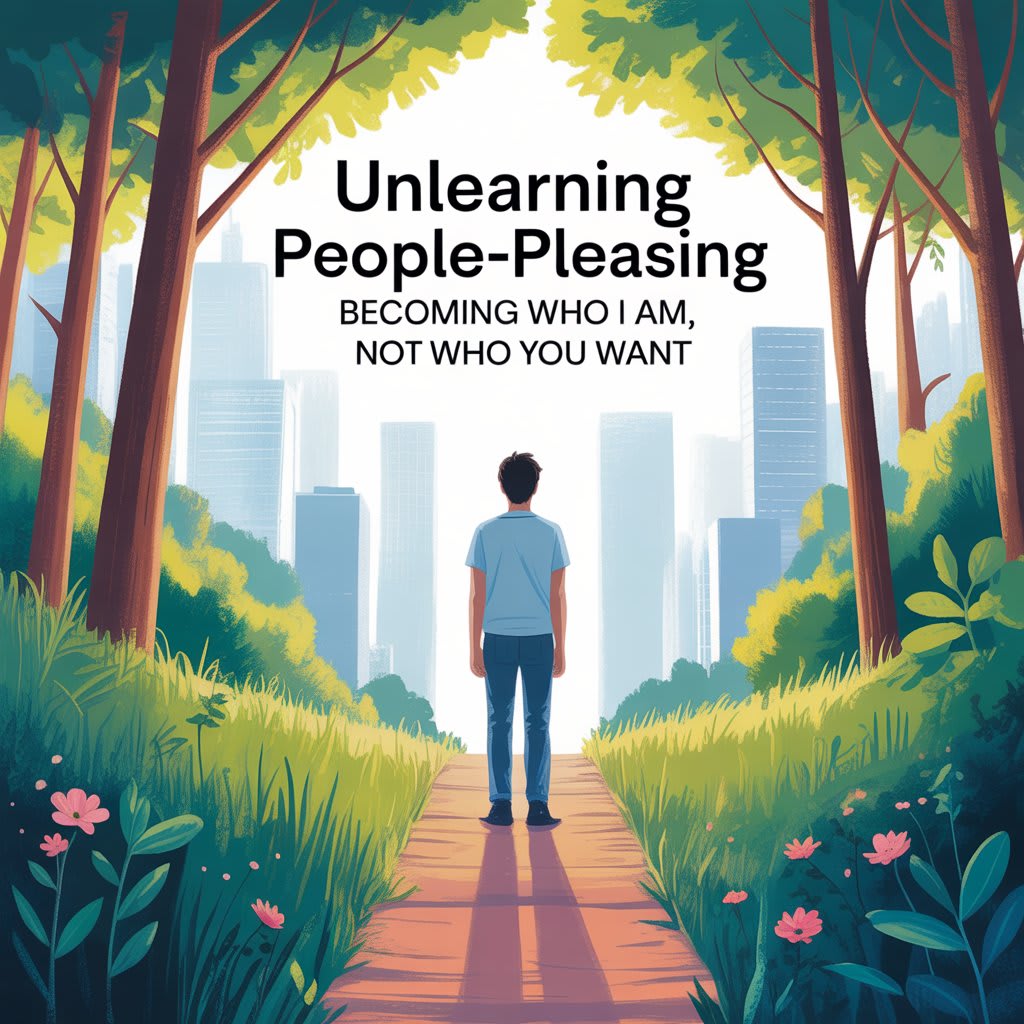
For most of my life, I wore the invisible badge of a people-pleaser. I smiled when I wanted to scream, agreed when I disagreed, and sacrificed my own comfort to earn someone else’s approval. I became a master of morphing into what others wanted me to be. But beneath the polished surface, I was exhausted. I didn’t know who I truly was—I only knew who I was supposed to be for everyone else.
Unlearning people-pleasing wasn't a single decision. It was a journey, one filled with discomfort, reflection, grief, growth, and ultimately, freedom. This is my story of becoming who I am—not who you wanted, not who society shaped, but who I was always meant to be.
The Roots of People-Pleasing
People-pleasing often stems from childhood. As children, we are hardwired to seek love, validation, and approval—especially from parents, teachers, and authority figures. When love feels conditional—only given when we behave, perform, or obey—we begin to equate approval with self-worth.
For me, it started innocently. I was the “easy” child. The quiet one. The one who didn’t cause trouble. I was praised for being obedient, polite, and helpful. Over time, I internalized the belief that being “good” meant being agreeable. I feared conflict. I feared disappointing others. And most of all, I feared rejection.
In school, I became the dependable student who always said yes. In friendships, I swallowed my opinions to avoid disagreements. In romantic relationships, I blurred my needs and boundaries in the name of love. I performed kindness, but I wasn’t kind to myself.
The Hidden Costs of People-Pleasing
At first glance, people-pleasers look kind, selfless, and easy-going. But behind the curtain is a deep loss of self.
I struggled with decision-making because I constantly second-guessed myself. I over-apologized, even when I wasn’t wrong. I felt responsible for other people’s emotions, blaming myself if someone was upset—even if it had nothing to do with me. I felt like a fraud, afraid that if I stopped being agreeable, people would stop liking me.
The worst part? I didn’t know who I was without the mask. I couldn’t answer simple questions about my preferences, dreams, or values. My identity was so wrapped up in pleasing others that I had lost sight of myself.
And then it all came crashing down.
The Breaking Point
There wasn’t one dramatic moment—it was a slow unraveling. The constant “yeses” led to burnout. Suppressed emotions turned into anxiety. Smiling through disappointment became depression. The turning point came in the quiet. One day, I looked in the mirror and realized: I didn’t recognize myself anymore.
That realization was terrifying—and liberating. I knew I had to stop living my life as a reaction to other people’s expectations. I had to find out who I was underneath the performance. I had to begin the difficult process of unlearning.
Step One: Awareness
The first step in any transformation is awareness. I started paying attention to the moments I said “yes” when I meant “no.” I noticed how my body felt when I prioritized someone else’s comfort over my truth. I kept a journal and wrote down every time I felt resentful or exhausted after helping someone. It was a wake-up call.
I realized that people-pleasing wasn’t kindness—it was fear. I wasn’t helping out of love, but out of anxiety. I was trying to control how others saw me, manage their feelings, and avoid conflict. That’s not generosity—that’s self-abandonment.
Step Two: Understanding the Why
To change a pattern, we have to understand its function. I had to explore where this behavior came from. Through reflection (and later, therapy), I discovered that I feared rejection because I had linked my worth to how others treated me. Deep down, I believed that if I wasn’t likable, I wasn’t lovable.
People-pleasing became my shield. If I could just be easy to love—by avoiding conflict, by being helpful, by always agreeing—then I wouldn’t be left behind. But that belief kept me imprisoned in roles that didn’t reflect my truth.
Understanding the “why” didn’t excuse the behavior, but it gave me compassion for myself. I wasn’t weak—I was surviving in the only way I knew how.
Step Three: Learning to Sit with Discomfort
Unlearning people-pleasing meant getting comfortable with being uncomfortable.
I had to accept that not everyone would like me. Some people would be disappointed. Some would call me selfish. Some relationships would fade. And all of that had to be okay.
I began practicing small “no’s.” Declining invitations I didn’t want. Speaking up when I disagreed. Stating my needs without over-explaining or apologizing. Each time I honored myself, it felt both terrifying and empowering.
The discomfort didn’t go away overnight. But over time, my nervous system began to trust that setting boundaries didn’t mean I’d be abandoned. I was safe to be myself.
Step Four: Rebuilding My Identity
As I stopped trying to be what others wanted, I began discovering who I actually was.
I asked myself questions I had long ignored:
What do I want?
What are my values?
What brings me joy?
I explored hobbies, friendships, and passions that were aligned with me, not the image I had carefully curated. I allowed myself to be messy, complicated, opinionated, assertive—human.
And slowly, I found myself.
Not the version you wanted.
Not the version I performed.
But the version that had always been waiting to be seen.
Step Five: Accepting Imperfection
Recovering from people-pleasing isn’t a straight path. I still catch myself slipping into old patterns—over-apologizing, second-guessing, shrinking. But now, I see it. I can pause. I can choose differently.
I’ve learned that I don’t have to earn love through sacrifice. I don’t have to be perfect to be worthy. I don’t have to say yes to belong.
I am enough, even when I say no.
What I Gained from Letting Go
Letting go of people-pleasing has been the most liberating decision of my life. Here’s what I’ve gained:
Authentic Relationships: When I show up as myself, I attract people who value the real me—not the version I used to perform.
Emotional Freedom: I no longer carry the burden of managing everyone else’s emotions.
Confidence: Knowing and honoring my boundaries has strengthened my self-trust.
Clarity: Without the noise of other people’s expectations, I can finally hear my own voice.
Most importantly, I’ve gained myself. And that is priceless.
Final Thoughts: Becoming Who I Am
Unlearning people-pleasing is not about becoming selfish. It’s about becoming self-aware. It’s about choosing authenticity over approval, truth over comfort, and alignment over applause.
It takes courage to stop performing and start living.
It takes strength to say: “This is who I am, even if it’s not who you want.”
But I promise you—on the other side of that fear is a version of you that is whole, radiant, and free.
And you deserve to meet them.
About the Creator
Keep reading
More stories from Aiman Shahid and writers in Families and other communities.
The Joy of Missing Out: Why Saying 'No' is Self-Care, Not Selfish
Introduction: Saying “No” in a World That Glorifies “Yes” We live in a culture that celebrates busyness like a badge of honor. Social media constantly reminds us of the parties we weren’t invited to, the vacations we couldn’t afford, or the opportunities we missed. The Fear of Missing Out (FOMO) has become a buzzword, embedding itself into our everyday decisions—from weekend plans to career moves.
By Aiman Shahid6 months ago in Families
Wise~Guys
— Look Behind what's in Front of You ~ Make Good Choices — Hey, So how you Doin'..! Made~Men — Mobster Movies romanticise a distinctive, elegant appearance, impeccable attire style, along with the 'Families' expressive lingo. Making their 'Bones' gave them Panache — with vintage fedoras, tailored pin-striped suits, mirror-polished wing-tip shoes adorned with tassels; with their 'Gun Moll' gorgeous dates on their arms.
By Jay Kantor18 days ago in Families




Comments
There are no comments for this story
Be the first to respond and start the conversation.