
Uh Oh, Number Two (or Not!): A BCBA's Hugely Relatable Guide to the Potty-Training Puzzler
A judgment-free, real-talk guide for exhausted parents trying to get their kid out of diapers without losing their minds — from a behavior expert who’s seen it all.
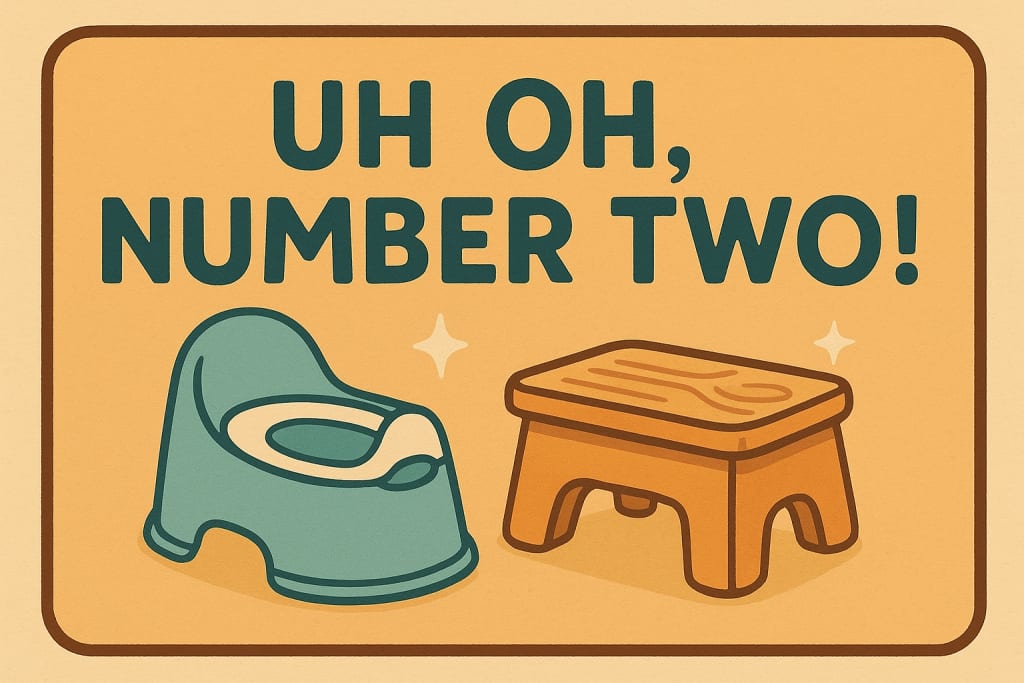
Let's dive into the glamorous world of potty training, shall we? A time filled with tiny triumphs, the occasional "code brown" situation you never saw coming, and enough laundry to make you question your life choices. If you've ever stared longingly at a fully trained toddler in the park, whispering, "What's your secret?!" you're in the right place.
Seriously, if I had a nickel for every parent who's uttered the phrase, "I've tried everything," while gesturing wildly at a pile of unused (or very used) pull-ups, I'd be funding my early retirement on a tropical island. So, let me just say this loud and clear for the folks in the back: If your amazing, unique human hasn't quite mastered the porcelain throne by the time the parenting books said they "should," take a deep breath. You are not behind, you are not lazy, and your child is definitely not staging a tiny rebellion against your bathroom expectations.
As a BCBA (that's Board Certified Behavior Analyst, still sounds a bit like bathroom consultant, doesn't it?), I've navigated the choppy waters of potty training with countless families. We've weathered the tears (mostly yours, let's be honest), the power struggles that rival a medieval siege, and those unforgettable "Wait, HOW did it get there?!" moments. Potty training? It's personal, it's messy, and it's often way more misunderstood than that abstract art your kid brought home.
So, let's flush away the myths and get down to the nitty-gritty (pun intended!) of what actually works, what definitely doesn't, and how to keep your sanity somewhat intact during this… fragrant phase.
First Things First: Ditch the Imaginary Potty Finish Line
Those age ranges in the parenting books? Think of them as suggestions, not strict deadlines enforced by the "Potty Police." Some kids are ready to ditch diapers before they can even hold a decent conversation. Others? They're perfectly happy in their absorbent cloud for a good long while. And guess what? Newsflash: They all eventually figure it out. Yes, even that kid you saw in the grocery store who looked like they were old enough to drive.
Potty training isn't just about the number of candles on their birthday cake. It's a whole cocktail of developmental milestones:
Body Awareness: Knowing when their bladder or bowels are saying, "Hey, something's happening down here!"
Readiness: Showing actual interest in the potty, not just using it as a hat.
Motor Coordination: Having the dexterity to pull down pants (a surprisingly complex skill for little fingers!).
Emotional Safety: Feeling secure and not pressured about the whole process. Tears and fear are like kryptonite to potty progress.
Language Comprehension: Understanding what "pee-pee" and "poo-poo" actually mean and where they're supposed to go.
Routine Stability: Thriving on a predictable schedule, which helps their bodies (and brains) get into the potty groove.
If even one of these ingredients is missing from your child's developmental mix, the potty-training recipe might just need a little more time in the oven. And that's absolutely okay. It's not a reflection on your parenting skills (unless your skill is raising a wonderfully unique individual on their own timeline!).
What NOT to Do (Even When You're Questioning Your Life Choices)
The Punishment Puddle (Avoid at All Costs!): Accidents happen. They're practically part of the potty-training initiation. Punishing them with shame or anger is like pouring gasoline on a small fire. It breeds anxiety, fear, and a reluctance to even try the potty.
The Comparison Trap (Social Media is the Enemy Here!): "Little Timmy down the street has been fully trained since he was 18 months!" Great for Timmy's parents. Your child is not Timmy. Every kiddo dances to the beat of their own internal drummer (and sometimes that drummer is playing a very slow, diaper-filled rhythm). Comparing just adds unnecessary pressure for everyone.
The Self-Shame Spiral (You're Doing Great, Seriously!): Feeling like a potty-training failure? Stop right there! You are in the trenches, offering support, cleaning up messes, and probably singing questionable potty-themed songs. That's not failure; that's dedication!
What You Can Do: Your Step-by-Step Potty-Training Toolkit
Become a Sign Detective: Look for those subtle (and sometimes not-so-subtle) clues that your child might be inching towards potty readiness:
Staying dry for longer stretches? That's a good sign their bladder is maturing.
Hiding behind the couch to do their business? They're starting to recognize the sensation.
Showing curiosity about the toilet? Jackpot!
Attempting to pull their pants up or down? Dexterity practice!
Mimicking you in the bathroom? They're observing and learning! If you're not seeing these yet, don't panic. Just keep offering gentle exposure (like letting them see you use the toilet – no need for a play-by-play commentary, though!).
Routine, Routine, Routine (But Keep it Relaxed!): Set up regular potty times, like after meals (that digestive system is predictable!), before naps, and after waking up. Encourage them to just sit for a few minutes, even if nothing happens.
Keep it casual: "Let's just have a little sit on the potty. If pee-pee or poo-poo wants to come out, great! If not, that's okay too!"
Every sit is a tiny success in building the routine. Think of it as practice for the main event.
Make it a Visual Fiesta: Little brains love visuals!
Potty Charts: Stickers are like gold to toddlers! Even just sitting on the potty gets a sticker in the beginning.
Potty Books: Reading a special potty book during sitting time can make it more engaging (and less like solitary confinement).
Timers: "We'll sit for as long as the little hand goes around once." The timer becomes the boss, not you nagging.
Celebrate the Effort, Not Just the Outcome: Did they tell you they needed to go (even if they didn't quite make it in time)? Huge win! Did they try to wipe (bless their enthusiastic but often inaccurate efforts)? Celebrate that! Did they sit on the potty without a wrestling match? You deserve a medal! Praise the trying, not just the perfectly executed potty mission. "You told me you had to go! That was so helpful!"
Keep Calm and Clean On (Accidents Will Happen!): They will. Oh boy, will they. Approach accidents with a neutral attitude. Clean it up together (if they're willing), offer a little help, and just reset. Avoid the "I told you so!" moments. They don't help anyone feel better (least of all you, having to scrub carpet). "Oops! Pee went on the floor. Let's try to get it in the potty next time. Want to help me wipe it up?"
When to Enlist the Professionals (No Shame in the Help Game!)
Consider reaching out for some expert backup if:
Your child shows genuine fear or resistance towards the toilet that goes beyond typical toddler hesitation.
They're dealing with frequent constipation or seem to be intentionally holding their stool.
Accidents are increasing or there's no progress over a significant amount of time.
Your little one is over 5 and showing absolutely zero signs of readiness.
Your pediatrician, a BCBA specializing in early childhood, or an occupational therapist can offer tailored strategies and support. You're not failing by asking for help; you're being a proactive superhero parent!
Final Thought: You're Raising a Human, Not a Potty-Training Robot
Potty training isn't just about teaching your kid where to deposit their bodily fluids. It's about fostering body awareness, building confidence, and encouraging independence. It's a big developmental leap, and every child takes it at their own pace.
It's okay to feel frustrated. It's okay to take breaks (for both of you!). And yes, it's even okay to have a little cry when that pull-up leaks all over your favorite rug.
But please, please don't let their potty timeline define your parenting journey.
You're not behind. You're not bad at this. You're guiding a tiny human through a HUGE transition, and that takes time, patience, and more paper towels than you ever thought possible.
You've got this. And remember, eventually, they will be flushing on their own (and probably leaving the seat up, just to keep things interesting!).
About the Creator
James C.
I faced Valley Fever, came close to losing everything, and found strength in family and faith. I share real, raw stories of survival, healing, and parenting — to inspire anyone going through tough seasons. You’re not alone.
Wise~Guys
— Look Behind what's in Front of You ~ Make Good Choices — Hey, So how you Doin'..! Made~Men — Mobster Movies romanticise a distinctive, elegant appearance, impeccable attire style, along with the 'Families' expressive lingo. Making their 'Bones' gave them Panache — with vintage fedoras, tailored pin-striped suits, mirror-polished wing-tip shoes adorned with tassels; with their 'Gun Moll' gorgeous dates on their arms.
By Jay Kantor18 days ago in Families
Filial Piety: Appreciating the Cycle of Asian Justice
Filial Piety is the central part of a Confucian value system concerned with the need to produce beneficial patterns from children who are expected to care for their parents. According to Confucius, a variety of virtues are needed to maintain a strong society: filial piety, righteousness, love, loyalty, sincerity, justice, tranquility, moderation, and harmony.
By WILD WAYNE : The Dragon King2 days ago in Families



Comments
There are no comments for this story
Be the first to respond and start the conversation.