
To Love A Winged Thing
For what you are, not for what you may give.
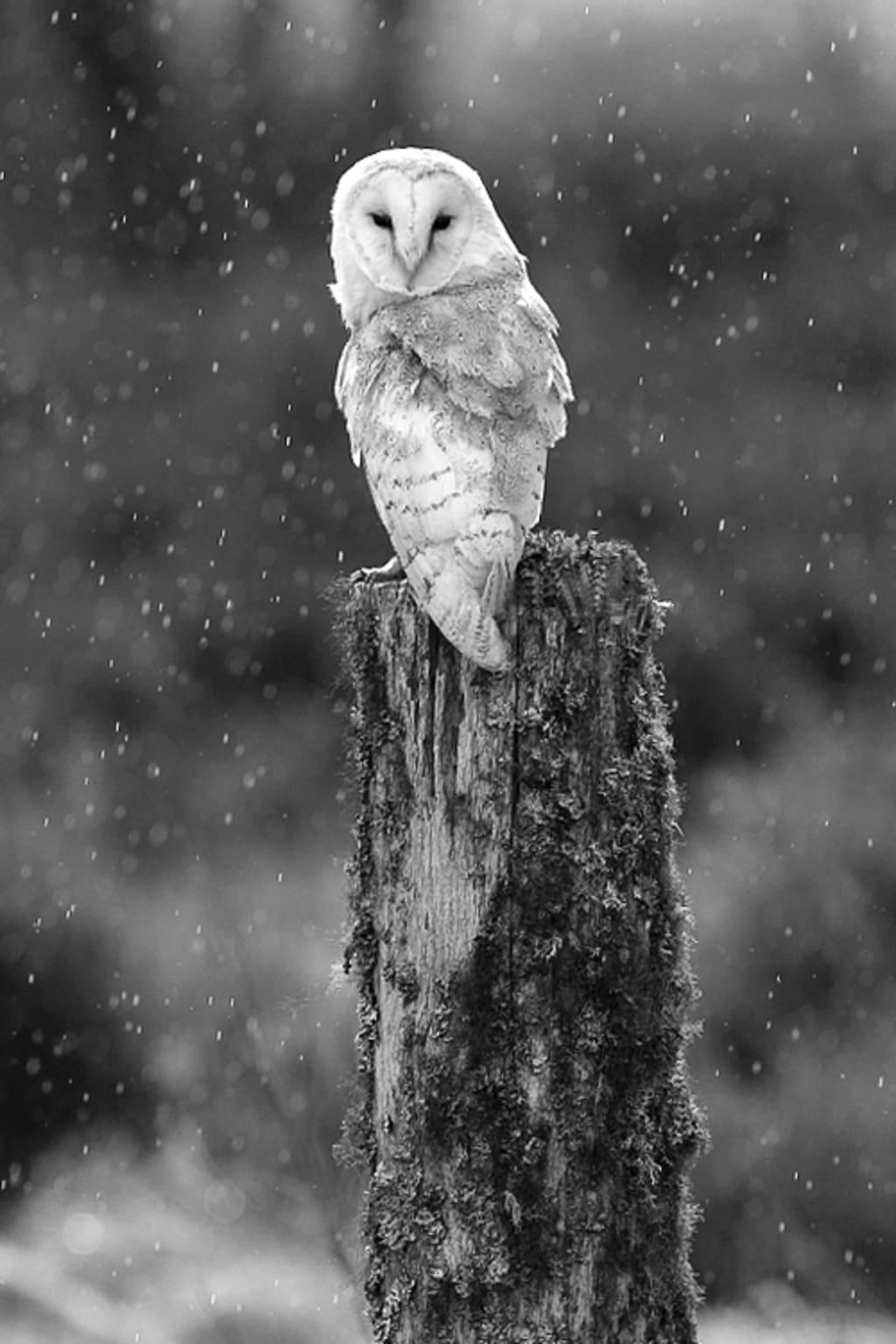
Fred had never known a person to love owls the way Alice did. He knew women sometimes seemed to pluck an arbitrary animal out of the pool of nondescript interests to serve as a placeholder for any actual personality, and he had always found it rather trite. But Alice loved owls, really loved them, loved birds of all kinds, actually. Alice had an owl as a pet growing up, a massive gray Boreal female, creatively christened Hoot. A peculiar choice in childhood companions, but foundational nonetheless. Pet was perhaps not an entirely apt description, as the owl was free to roam where it pleased, but Alice insisted that it had always returned to her eventually. Fred withheld his ironic remark when she had told him that particular anecdote, because Alice was so much the same; always flitting off to another time or place or even train of thought, leaving him behind. But she returned, every time, and that was what mattered, in the end. He thought he rather understood her thing about owls- there was some kind of careful pride in being the force that made the wild bend, in being shown that you were strong enough to overpower nature itself. Of course in the end, he learned he had been wrong about pretty much everything, but unfortunately, that epiphany is one we all must have before we can start to get anything right.
They met in college but did not begin a relationship until a decade later, as they had rather disliked each other at first. Fred thought Alice was ditzy and, quite frankly, a bit insane; Alice found Fred to be incredibly bland and mundane. Say what you will about Cupid’s morality, but it is difficult to deny his sense of humor. First they were nearly incompatible, and then they ended up attending the same work luncheon after eleven years of never even crossing the other’s mind, and then, suddenly, they were in love.
This is the abridged version, of course. There was a good deal in between, and I don't mean to negate its importance- the small matters matter, too, perhaps all the more for our dismissal of them. After all, what is death when compared to a single Sunday morning full of sunlight, with freshly cooked food made by someone who smiles at you over the edge of their mug? Nothing, really, and Fred told himself that every day, but he supposed that if he really believed that, it would probably have hurt less.
They had twenty good years together, but everyone always says that after their spouse passes. No one ever tells you, “Well, we were married for half my life, and it was all a miserable waste of time. But she’s dead now, and good goddamn riddance!”. Nothing paints love in a prettier picture than death and television. But he had loved her, so it was twenty years of owl-related everything, because that is the sort of nonsense you put up with when you find a person’s questionable mental instability endearing. Owl calendars, owls printed on her shoes and teacups, owl wallpaper covering the house they bought that was far away enough from both of their parents that they felt equally relieved and terrified. Everything, everything, owls.
They had two children together, both already out of the house before Alice passed, though only by a month’s margin. Suddenly, Fred’s life became extremely quiet, punctuated by the clock that chimed a different bird call every hour. Eventually, four a.m made a distinct, musical sound in his head. He took to pacing his room, but the repetition began to bore him, so he began to make use of his back porch, which was wide enough to allow him to walk several paces before being forced to turn around. It was two weeks after he had developed this habit, and forty-seven days since Alice had passed. A balmy night like any other, except for the spine-tingling sensation that he was being watched.
And he was. Fred tensed. His joints didn’t move like they used to. He turned to the lawn, to the groves, and from the trees peered a set of wide, gleaming eyes that caught the faint kitchen light through the windows. Fred stood still, squinting, suddenly and inexplicably holding his breath. It was an owl, the color of snow and ghosts. They stared at each other for a while, both immobile.
“Uh, hello,” Fred said to it, though he couldn’t have explained why, feeling both foolish and desperate. It watched him for another moment, then stretched its wings and flapped twice, gliding away silently, without so much as a rustle of branches, ignoring his calls for it to return.
By the time the owl came back, he had resigned himself to the knowledge that it never would. Life feels incredibly longer and lonelier without sleep, like your soul ages twice as quickly. This time, the owl fluttered to a lower branch of the proud pines, and Fred could see the polished gleam of its beak.
“Hey, there,” he said, trying to sound soothing, like Alice would have. She always knew how to speak to animals and children, though why he had the desire to do the same now, of all times, he was clueless. The owl gave a soft, low hoot that shocked him so badly he nearly dropped his cigarette. Alice had hated the cigarettes. He ground it out beneath his toe, in case the smoke scared the bird away. “I didn’t think you’d come back.”
The bird stared at him silently, with an air of regal composure. “You know, it’s a pity you didn’t show up a bit sooner. My wife, she would’ve loved you,” he continued, surprising himself. The owl shifted its weight on the branches, huge golden eyes like beams in the dark. “But she, uh… she died, a little while ago. Stroke.” The breeze whispered back, but the owl did not, and Fred cleared his throat, announced, “Alright, I’m going to bed.” And then wondered why he had said it at all.
He had decided to call the owl Hooter, a poke at Alice that only he and her memory would appreciate. The owl never so much as landed on the deck, remaining in its shelter of branches, but Fred didn’t mind; it was still the best company he had, and he didn’t like what that said about him. Sometimes he would speak to it, occasionally it would hoot as if in response, mostly they sat in silence, both aware and unbothered by the other’s presence. The nights became peaceful, if not more rejuvenating. He still couldn’t rest. He would pad, barefoot, to the back deck, and find Hooter there in the trees, slowly edging closer to the house. On Alice’s birthday, he brought the bird a seed cake. On the bad nights, he brought himself a bottle and toasted to aviary therapy and dead wives, and in the days he found himself perusing her books, looking for white owls and slips of her soul. He felt suddenly like he was seeing birds everywhere; every time one flitted across the sky he caught himself glancing up, watching its path against the sun.
Time passed in much the same way for a while, and then, one night, Hooter was nowhere to be found. Fred brushed the absence off as the unpredictability of the wild, but by the third night, he had become slightly uneasy. He felt like he was in a zoo himself, following the same patterns and routines until his mind drifted away from the monotony, soaring above him as if it had wings. On the fourth night, Hooter returned, but something had changed. The owl wasn’t alone.
Fred felt like a sulky teenager on Valentine’s day, watching them huddled on the branch together as he sat alone on his porch. The new owl was slightly ashier than Hooter, and smaller, and Fred glared at it for interrupting and returned to the isolation of his bedroom. Then again it was gone, and he was left with the silent, glowing company of his voiceless companion.
It began to rain more, and on the rainy nights he would watch Hooter from behind the shelter of his windows. The bird was behaving strangely one night, swooping down from its perch as if to lunge for prey but then returning right back to its previous spot, and Fred realized it was building a nest. She was building a nest. It made him want to smile, and it made him want to cry.
The night he saw the eggs, he tallied up how long it had been since he had seen his children. Somehow he hadn’t so much as spoken to either since the funeral. He thought he had answered their calls, but the telephone sounded like everything else, now; the ringing cry of birds.
“Kids, huh?” he called to Hooter, who was warming her eggs serenely under a bright, full moon. She had chosen the branch closest to the house, so close he could nearly reach out and run a hand over her feathers. He stayed at the edge of the deck, flicking ash off his cigarette. “I’ve got two of them, myself. Haven’t heard from them in a while.” Hooter just watched him reproachfully, yellow eyes full of stern judgement. At least, he thought they were. Fred took another drag.
He waited for the eggs to hatch every moment, and they never seemed to. Sometimes he would drive home from his job in sales during his lunch hour to check, but they remained whole and motionless. He wondered what they were waiting for, how they knew the exact moment to emerge. He wondered if they were just rocks that Hooter had gathered, and whether he and his bird were both insane.
A new month and moon rose. Hooter cleaned her feathers with her sharp beak, her efforts occasionally punctured by a soft, low note. Fred was certain that by now, he would have been able to pick out her call from hundreds.
“I don’t think you’re her,” he admitted to the bird, after months of swallowing it down. “But sometimes I wish I did.”
Hooter looked up at him, just like someone who was about to speak. Then she opened her wings and flew to the desk railing, only a pace away from where Fred leaned. She had very long talons, he noticed, and he tried to keep very still. She teetered closer, her steps cautious and slow. He reached out a slightly trembling hand, and stroked the top of her white head. There was something magical about it, after all.
The next night, the eggs hatched. It started with little more than a crack, but Fred gave a silent victory dance, and as the tiny owl crawled out, he touched his cheeks and found them wet, as if someone had been shedding his own tears for him.
He watched the hatchlings grow with awe and trepidation. He watched their mother teach them to fly, and then to hunt, and knew every day he was one day closer to coming home to a very literal empty nest. The day he did was the anniversary of Alice’s death, and Fred cursed God and all his creations and awoke on his deck the next morning, shaking and wet from rain. He went inside his house and picked up his telephone.
Hooter came back at the end of the season, accompanied by three slightly smaller pairs of blinking eyes. Fred pointed at them excitedly for his children, who thoughtfully pretended to be as enthusiastic as he was, calling to the owls in the trees, and finally, he understood.
About the Creator
Keep reading
More stories from writers in Families and other communities.
Wise~Guys
— Look Behind what's in Front of You ~ Make Good Choices — Hey, So how you Doin'..! Made~Men — Mobster Movies romanticise a distinctive, elegant appearance, impeccable attire style, along with the 'Families' expressive lingo. Making their 'Bones' gave them Panache — with vintage fedoras, tailored pin-striped suits, mirror-polished wing-tip shoes adorned with tassels; with their 'Gun Moll' gorgeous dates on their arms.
By Jay Kantor19 days ago in Families
Caregiver Burnout Explained: Smart Apps That Reduce Stress and Save Time
That moment you blink awake and realize you’re already done for the day! It is indeed a worse feeling. The caregiving never takes a day off, even when you desperately need one. Over time, emotional pressure quietly builds. You manage appointments, emotions, and expectations, often without support. That steady weight leads many caregivers toward caregiver burnout, even when love stays strong. Technology now offers gentle help. Caregiver burnout apps for stress relief supports you through demanding days.
By Centre of Healing Minds4 days ago in Families




Comments
There are no comments for this story
Be the first to respond and start the conversation.