
“The Year I Learned to Listen to My Own Voice”
→ A story about realizing how much of your life has been shaped by others’ expectations — and what happens when you finally start living by your own rul

The Year I Learned to Listen to My Own Voice
For most of my life, I lived like background music — pleasant, faint, and easy to ignore. I didn’t mind it at first. It felt safe to be agreeable, to be the person everyone described as “so easy to get along with.” I thought that was a compliment. I didn’t realize it was also a quiet warning: be careful not to disappear.
I learned early that approval felt like oxygen. Every gold star, every “good job,” every nod of agreement became proof that I was doing something right. So I kept doing it. I chose the “sensible” degree because it would make my parents proud. I dated people who fit what others said was “good for me.” I even laughed at jokes I didn’t find funny, spoke softer when people spoke louder, and apologized when I wasn’t wrong. It wasn’t dishonesty; it was survival — or so I thought.
Then came last year. The year everything got too loud to ignore.
It started quietly. I remember sitting at my desk one morning, staring at a spreadsheet that didn’t matter, realizing I didn’t know why I was still there. I had the kind of job that looked impressive on paper but hollow in the chest. My friends called it “stable.” My parents called it “smart.” My heart called it silent.
That silence grew heavier each week. It was like living underwater — I could see the surface, see people laughing and moving above, but my voice wouldn’t rise through the weight of it. I stopped sleeping well. I stopped writing. I stopped asking myself what I wanted, because I already knew: I wanted permission. Permission to quit. Permission to disappoint. Permission to start over. But permission never came.
So I did something strange — something small, almost reckless. One morning, instead of driving to the office, I drove to the beach. It was early, the kind of dawn that paints everything in gray and blue. I sat on the sand, the wind cold against my face, and asked out loud, “What do you want?”
It startled me — how strange my own voice sounded. Like I hadn’t heard it in years.
I didn’t get an answer that day. But something shifted. I started paying attention to the tiny moments when my chest tightened — when I said yes but meant no, when I stayed quiet but wanted to speak. Those moments became my compass. They didn’t shout; they whispered. And I began, for the first time, to listen.
Listening meant unlearning. It meant realizing how much of me was built from borrowed bricks — the expectations of parents who wanted safety, friends who wanted sameness, society that wanted quiet compliance. Every decision I’d made felt like it belonged to someone else. So I began dismantling it, piece by piece.
I stopped filling my days with noise. I spent weekends alone, walking, journaling, sitting with discomfort. I started writing again — not for an audience, not for applause, just for the release of hearing my own thoughts take shape on paper. Some nights, I’d read them back and cry. Not because they were sad, but because they sounded like me.
Listening to myself didn’t make life easier. It made it louder. Suddenly, the gap between who I was and who I wanted to be became impossible to ignore. I ended a relationship that looked perfect from the outside. I left a job that had become a cage lined with compliments. People didn’t understand — they thought I was being impulsive, ungrateful, dramatic. Maybe I was. But for once, I didn’t let their voices drown out mine.
There were days I doubted everything. Days when the silence after those decisions felt unbearable — when I missed the comfort of approval, when I wanted someone to tell me I’d made the right choice. But the truth is, no one could do that for me anymore. Their reassurance no longer fit the shape of my life.
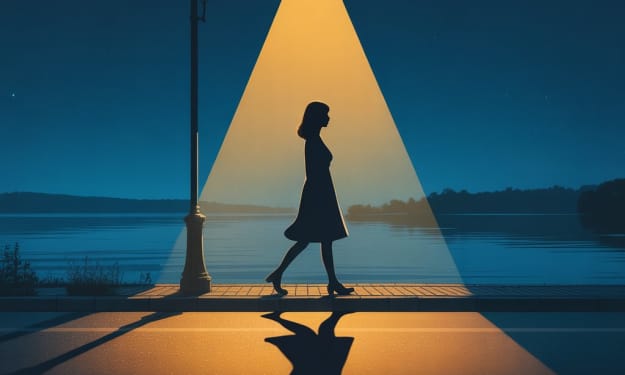
I remember one evening vividly. I was walking home after another uncertain day, feeling lost and foolish, when it began to rain. The kind of sudden, unapologetic rain that soaks you through before you can react. I just stood there, laughing — not because it was funny, but because for once, I didn’t rush for cover. I let it happen. The cold, the mess, the unpredictability — all of it felt like life finally happening to me, not at me.
That’s when I realized listening to your own voice isn’t about confidence or rebellion. It’s about trust. It’s trusting that quiet instinct that says, “This isn’t right.” It’s trusting the small tug that says, “Try this instead.” It’s trusting that even if no one else understands, you still deserve to follow it.
Now, a year later, my life is far from perfect — but it’s mine. My days are slower. My choices are smaller, but they’re deliberate. I wake up and ask myself, “What feels true today?” Sometimes the answer is to write. Sometimes it’s to rest. Sometimes it’s just to breathe. And every time I listen, the world feels a little more like home.
I used to think my voice had to be loud to matter — that I had to shout to be heard. But I’ve learned that my voice doesn’t need to compete; it just needs to be mine.
And when you finally hear it — when you truly listen — it’s not a roar or a song.
It’s a whisper that feels like coming back to yourself.
About the Creator
Wise~Guys
— Look Behind what's in Front of You ~ Make Good Choices — Hey, So how you Doin'..! Made~Men — Mobster Movies romanticise a distinctive, elegant appearance, impeccable attire style, along with the 'Families' expressive lingo. Making their 'Bones' gave them Panache — with vintage fedoras, tailored pin-striped suits, mirror-polished wing-tip shoes adorned with tassels; with their 'Gun Moll' gorgeous dates on their arms.
By Jay Kantor19 days ago in Families
Bettijo Hirschi
Introduction Bettijo Hirschi is a multi‑talented creative professional from the United States. She works as a designer, art director, photographer, writer, and event planner. Bettijo has built a long career in creative work and media. People know her for her artistic skills, her work in magazines and television, and her lifestyle blog. She is also known in recent news because of changes in her personal life.
By Farhan Sayed4 days ago in Families


Comments
There are no comments for this story
Be the first to respond and start the conversation.