
The Weight of Summer
One Season, One Secret, One Chance to Grow Up

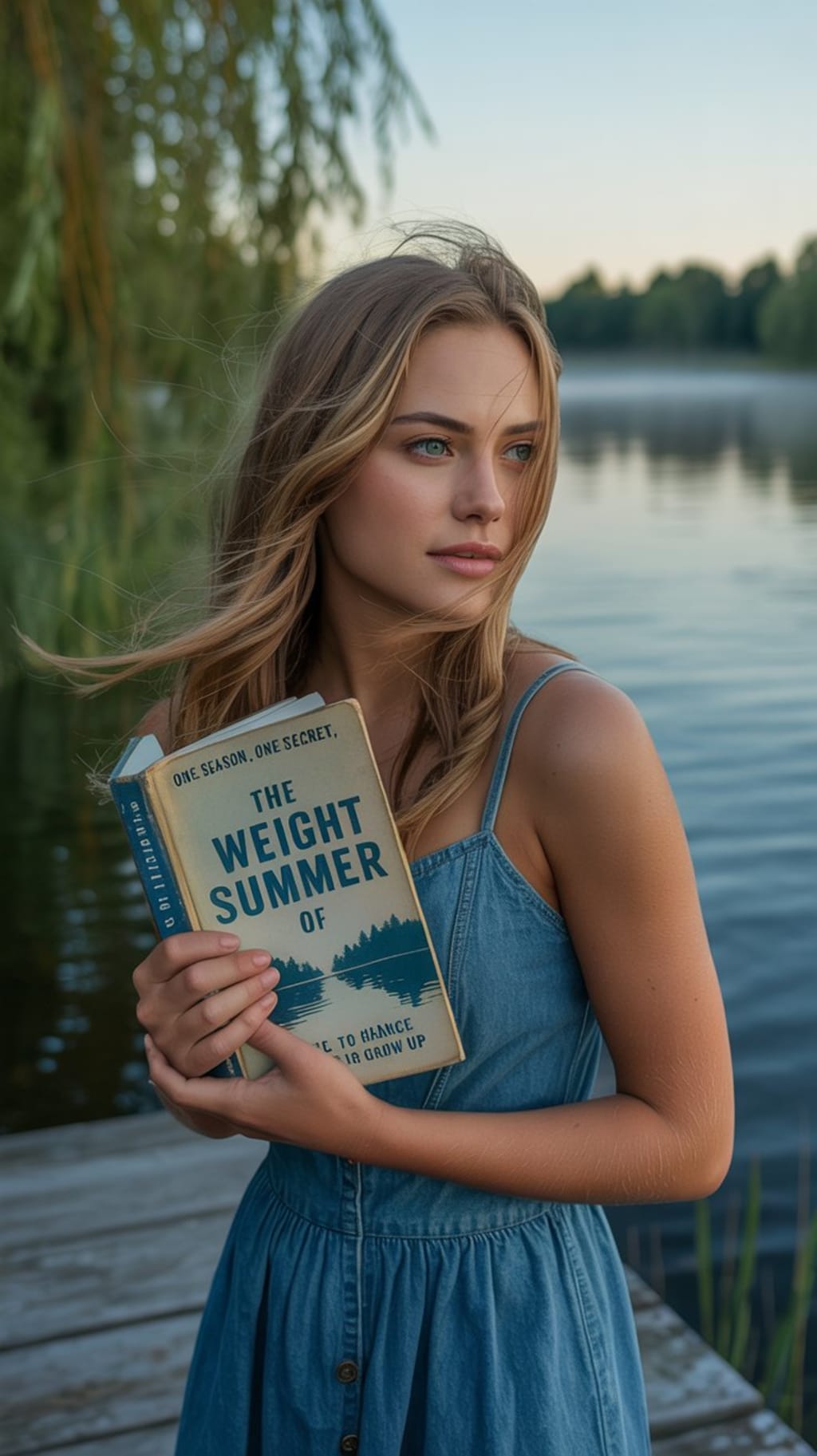
The cicadas sang like they were trying to drown out the silence that clung to the Morgan farmhouse. Ava stood at the edge of the gravel driveway, suitcase in one hand, sweat already crawling down her neck, and the realization settling deep: this summer wasn’t a break—it was a sentence.
Her mother had called it “a chance to reconnect,” but Ava knew better. She was being exiled for mouthing off, for skipping too many classes, for that one blurry party photo. Her punishment was three months with the grandfather she hadn’t seen in five years.
He greeted her with a nod, more grunt than words. His hands were dark with soil, the lines in his face carved deep like dry riverbeds. He wasn’t cruel—just silent, like the house, like the fields that rolled out behind it.
Days passed slowly, thick with heat and humidity. Ava kept mostly to herself, sneaking Wi-Fi off the neighbor’s signal and flipping through old books in the attic when her phone died. But the house held whispers, too—old photos of a girl who looked like her, a broken picture frame buried behind boxes, and an unopened letter yellowing with time.
It was addressed to her mother, from her uncle Jake—the one who died before Ava was born.
One evening, after a dinner of overcooked beans and stiff cornbread, she brought it up.
“Why do you have a letter from Jake you never gave Mom?”
Her grandfather’s hand paused mid-reach for his glass. He didn’t look at her. “That letter was never meant to be opened.”
“But it was sealed.”
“It stays that way.”
And that was it. No anger. No explanation. Just a wall slamming shut.
But Ava couldn’t leave it alone. That night, she crept into the attic with a flashlight and a butter knife. Her heart thudded like thunder as she slit the envelope open.
The letter was short—only a few lines.
Dear Sarah,
If you're reading this, I probably didn’t make it home. I told Dad the truth, but I know he won’t tell you. I wasn’t drunk. The brakes failed. I tried to warn him about the truck. Don’t let him carry the guilt. And don’t carry it yourself.
I love you. Tell Ava about me someday.
—Jake
Ava sat there frozen, the flashlight trembling in her grip. She’d always heard the story the same way—Uncle Jake had driven drunk into a ravine. That’s why her mom couldn’t talk about him. That’s why Grandpa never mentioned his name.
But it wasn’t true. Jake had tried to protect them even as the truth was buried along with him.
The next morning, Ava left the letter on the kitchen table and went out to the field, where her grandfather worked beneath the rising sun. She didn’t speak. Just watched.
Finally, he said, “You read it.”
She nodded.
He leaned on his shovel, staring at the soil. “He was barely twenty. Told me the brakes were going. I said I’d get to it. Didn’t listen. I thought he was just being reckless.”
His voice cracked like dry bark. “After the crash, I didn’t want your mother to know I failed him. Figured it was easier to say he’d been drinking. She hated me for it anyway.”
“She still does,” Ava said softly.
“I know.”
They stood in silence. Then he looked at her—really looked. “You look like him, you know.”
“I wish I’d known him.”
“He would’ve liked you. Wild heart. Stubborn as hell.”
They both chuckled, a sound so strange and new it almost startled Ava. It felt like something breaking open, like the first breeze after a long, heavy storm.
That afternoon, they repaired the old swing in the backyard together. Ava climbed aboard, legs outstretched to the clouds, and her grandfather pushed gently from behind, his hands steady.
In the evenings that followed, he began to talk more—about Jake, about her mother, about how silence had grown too loud in the years since.
And Ava, too, began to change. She wrote long letters to her mom, opened up her sketchbook again, even joined the neighbors for iced tea and stories on the porch.
The weight of that letter—the secret it carried—had cracked something open. And in that space, something softer bloomed. Forgiveness. Understanding. Maybe even hope.
By summer’s end, the house no longer felt like exile. It felt like history—heavy, flawed, but hers. Ava stood at the bus stop, suitcase in hand again, but this time her heart was full.
“Tell Mom,” she said, hugging her grandfather tight. “It’s not too late.”
He nodded, eyes glassy. “Thanks for opening it, kiddo.”
The cicadas were still singing, but now they sounded more like a chorus—no longer drowning out the silence, but filling it.
And as the bus pulled away, Ava didn’t feel like the same girl who had arrived.
She’d come with resentment.
She left with roots.
About the Creator
Wise~Guys
— Look Behind what's in Front of You ~ Make Good Choices — Hey, So how you Doin'..! Made~Men — Mobster Movies romanticise a distinctive, elegant appearance, impeccable attire style, along with the 'Families' expressive lingo. Making their 'Bones' gave them Panache — with vintage fedoras, tailored pin-striped suits, mirror-polished wing-tip shoes adorned with tassels; with their 'Gun Moll' gorgeous dates on their arms.
By Jay Kantor20 days ago in Families
Forever Mommy
You are placing bricks, one on top of the other, oblivious to the couples pressing their noses to the glass that separates them from you. The room on this side of the glass has many more like you, in all shapes, sizes, colours, and ethnicity scattered on tables, chairs and mats, playing and laughing unaware of the fate that awaits you on the other side of the glass. The couples on the other side are seated in a waiting room awaiting their turn to view from the glass and choose their prospective offspring. It’s a thrift store of the unwanted and used.
By Poonam Desai4 days ago in Families
Smart phones, Humans and Aliens.
WARNING. I will be tapping into one of your favorite creative tensions: The absurdity of humans worshipping their glowing rectangles as if they were tiny oracles. There’s something deliciously poetic about that contradiction, and it lends itself beautifully to an instructive proviso.
By Novel Allen4 days ago in Poets



Comments
There are no comments for this story
Be the first to respond and start the conversation.