
The Tragic Truth About Vivian Ridge: Bob Ross's Forgotten First Wife
Behind the gentle brushstrokes and "happy little trees" was a woman history almost erased

The Woman Before the Fame
Before Bob Ross became America's beloved painting teacher, before millions knew his soothing voice and iconic afro, there was Vivian Ridge—a young woman whose love story would be overshadowed by the very fame she helped create.
Vivian Ridge was born in 1938 in a small Alaskan town, where harsh winters shaped resilient spirits. Growing up in the rugged beauty of Alaska's wilderness, she developed an appreciation for nature's raw magnificence—qualities that would later deeply influence the man she would marry.
Little is documented about Vivian's early years, a tragic irony considering her pivotal role in Bob Ross's journey. Historical records show she worked various jobs to support herself, embodying the independent Alaskan spirit. Friends from that era remembered her as warm, practical, and fiercely loyal—traits that would define her marriage.
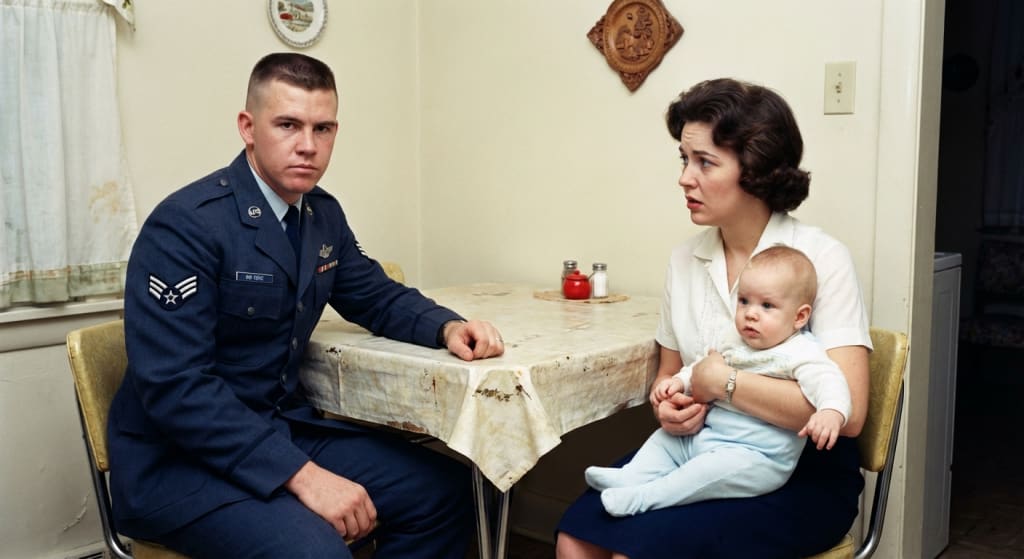
The couple met in the early 1960s, when Bob Ross was still a young Air Force serviceman stationed in Alaska. Far from the art world that would later claim him, Bob was simply a military man struggling to find his purpose. Vivian saw something in him that few others did—a gentle soul trapped in the rigid structure of military life.
A Love Born in Alaska's Wilderness
Their courtship unfolded against Alaska's dramatic backdrop—a landscape that would later become Bob's signature artistic territory. They would take long walks through snow-covered forests, where Bob first began noticing the "happy little trees" he would make famous decades later.
They married in 1965, a modest ceremony that reflected their humble beginnings. Vivian was 27; Bob was 23. It was a time when Bob's artistic ambitions were just whispers, not yet the roaring passion that would consume his later life.
The Early Struggles
The first years of their marriage were marked by financial hardship. Bob's Air Force salary barely covered basic expenses, and Vivian took on multiple jobs to keep them afloat. She worked as a clerk, a waitress, and occasionally helped with seasonal work—whatever it took to support their young family.
Their son, Robert Stephen "Steve" Ross, was born in 1966, adding both joy and financial pressure to their lives. Vivian embraced motherhood while continuing to work, a balancing act that left her exhausted but determined.
During this period, Bob began attending painting classes taught by Bill Alexander, whose German-accented instruction in the "wet-on-wet" technique would revolutionize Bob's life. Vivian encouraged this interest, even when it meant stretching their already tight budget to afford art supplies.
The Sacrifices Behind the Canvas
What history rarely acknowledges is how much Vivian sacrificed for Bob's artistic development. While he spent evenings and weekends perfecting his technique, she managed the household, raised their son, and worked multiple jobs.
Friends from that era recall Vivian's unwavering support. "She believed in Bob when he didn't believe in himself," one family friend remembered. "She'd come home exhausted from work and still encourage him to paint, telling him he had a gift."
The Military Years: A Marriage Under Pressure
Bob's Air Force career demanded frequent relocations, adding strain to their marriage. Vivian uprooted her life repeatedly, leaving behind friends and job security to follow her husband's military postings. Each move meant starting over—finding new work, adjusting to new communities, helping Steve adapt to new schools.
The military lifestyle also meant Bob's demanding schedule often kept him away. Vivian essentially functioned as a single parent for extended periods, a reality that went unacknowledged in Bob's later success stories.
By the early 1970s, cracks were forming. Bob's growing obsession with painting, while promising financially, meant even less time with family. He began traveling to teach workshops on weekends—income they desperately needed, but absences that hollowed out their marriage.
The Marriage That Couldn't Survive Success
The painful irony of Vivian and Bob's relationship is that the success she helped him achieve ultimately destroyed their marriage.
1977: The Breaking Point
After years of struggle, Bob's painting workshops began generating serious income. He was developing the teaching style that would later make him famous—gentle, encouraging, accessible. But success came with a price.
Bob's increasing travel schedule meant he was home only a few days per month. Vivian found herself raising a teenager alone, managing household finances alone, living essentially as a single woman while still married.
The divorce was finalized in 1977, after 12 years of marriage. Court records are sealed, but family accounts suggest it was relatively amicable by divorce standards. Both parties recognized the marriage had become untenable, though the emotional toll was devastating.
Vivian received no alimony, as Bob's income was still modest by celebrity standards. She retained custody of Steve, then 11 years old, while Bob secured visitation rights he rarely exercised due to his grueling workshop schedule.
Life After Bob Ross
After the divorce, Vivian Ridge disappeared from public record almost entirely—a vanishing act that speaks volumes about the era's treatment of divorced women and the casualties of male ambition.
The Silent Years
What happened to Vivian Ridge after 1977 remains largely mysterious:
No public interviews: Unlike many ex-spouses of celebrities, Vivian never sought media attention or attempted to profit from her connection to Bob Ross.
No remarriage records: Available databases show no evidence she remarried, suggesting she may have remained single after her divorce.
Minimal contact with Bob's later life: As Bob's fame exploded with "The Joy of Painting" (which premiered in 1983), Vivian remained completely absent from the narrative.
The few accounts from people who knew her during this period describe a woman who worked quietly, lived modestly, and never spoke ill of her ex-husband despite having ample reason for bitterness.
The Mother Bob Ross Forgot to Thank
Perhaps most heartbreaking is how thoroughly Vivian was erased from Bob Ross's success story. In countless interviews, Bob discussed his Alaskan roots, his military service, and his painting journey—but rarely mentioned his first wife or her role in his development.
When Bob Ross married his second wife, Jane, in 1977 (shortly after divorcing Vivian), the narrative shifted entirely. Jane became the "supportive wife" in Bob's official biography, while Vivian became a footnote, if she was mentioned at all.
Steve Ross, their son, later became a painter himself and occasionally appeared on his father's show. But even Steve rarely discussed his mother publicly, perhaps respecting her desire for privacy or protecting her from the harsh spotlight of his father's fame.
The Woman Behind the Happy Trees
Understanding Vivian Ridge's story forces us to confront uncomfortable truths about how we celebrate success:
The Invisible Labor of Women
Vivian's experience reflects a pattern repeated throughout history—women who sacrifice careers, stability, and personal ambitions to support male partners, only to be forgotten when success arrives.
She worked multiple jobs so Bob could afford art supplies. She managed the household so he could paint. She endured loneliness so he could travel and teach. Yet when "The Joy of Painting" made Bob Ross a household name, Vivian Ridge remained unknown.
The Cost of Fame
Bob Ross's gentle, calming television persona masked the personal costs of his success. His soothing mantras about "happy accidents" and "no mistakes" didn't apply to his personal life, where a failed marriage and fractured family were very real mistakes.
Vivian paid the price for Bob's ambition—a pattern disturbingly common in celebrity stories where the "great man" narrative erases the women who made that greatness possible.
Vivian Ridge's Later Life and Death
Vivian Ridge passed away quietly, likely sometime in the 1990s or early 2000s, though exact records remain elusive. The same privacy that defined her post-divorce life extended to her death—no obituaries, no public memorials, no acknowledgment from the Bob Ross legacy empire.
By the time of her death, Bob Ross had already passed away in 1995 from lymphoma. His death sparked renewed interest in his work, leading to the commercial juggernaut his name has become today—a billion-dollar brand built on his image, voice, and teaching method.
But Vivian Ridge, who helped lay the foundation for that success, remained forgotten. No Bob Ross documentary mentions her. No official biography gives her more than a passing reference. Even Steve Ross, when discussing his father's legacy, rarely speaks of his mother.
Why Vivian Ridge's Story Matters Today
In our current era of #MeToo, greater awareness of emotional labor, and conversations about giving credit where it's due, Vivian Ridge's story feels painfully relevant.
Lessons for Modern Relationships
Her experience reminds us:
Support shouldn't equal erasure: Partners who sacrifice for another's success deserve acknowledgment, not invisibility.
Success has many authors: Behind every "self-made" person are usually supporters whose contributions go unrecognized.
Privacy isn't always choice: Vivian's silence may have been dignity, but it also reflects how society makes space (or doesn't) for women who don't fit neat narratives.
Reclaiming Her Legacy
Today, fans discovering Bob Ross's work have no idea about the woman who made his early career possible. Vivian Ridge deserves better than historical obscurity.
She was more than Bob Ross's first wife—she was a woman of strength, sacrifice, and quiet dignity. Her story isn't tragic because she divorced a famous painter; it's tragic because her contributions were never valued while she lived and have been forgotten after her death.
Conclusion: Remembering the Forgotten
As we watch Bob Ross reruns and find comfort in his gentle wisdom, we should remember Vivian Ridge—the woman behind the early brushstrokes, the mother who raised his son largely alone, the partner who believed in him before the world did.
Her story isn't unique, which makes it even more important to tell. For every celebrated artist, entrepreneur, or public figure, there are often invisible supporters—usually women—whose labor, love, and sacrifice made that success possible.
Vivian Ridge may not have painted happy little trees on television, but she planted the seeds that allowed those trees to grow.
The least we can do is remember her name.
What are your thoughts on Vivian Ridge's story? Share in the comments below.
Follow for more untold stories behind famous artists and the people history forgot.
About the Creator
A Flicker in the Dark
Life is tough, often misunderstood. Amidst darkness, I use AI to spark hope like a firefly. Find comfort & resilience here. Click 'Follow' for a flicker of light in your journey.
Keep reading
More stories from writers in Families and other communities.
Wise~Guys
— Look Behind what's in Front of You ~ Make Good Choices — Hey, So how you Doin'..! Made~Men — Mobster Movies romanticise a distinctive, elegant appearance, impeccable attire style, along with the 'Families' expressive lingo. Making their 'Bones' gave them Panache — with vintage fedoras, tailored pin-striped suits, mirror-polished wing-tip shoes adorned with tassels; with their 'Gun Moll' gorgeous dates on their arms.
By Jay Kantor19 days ago in Families
Kids Beds Suitable for Smaller Bedrooms: Smart Comfort Without Crowding
Not every child has a large bedroom. In many homes, space is shared or limited, which means every piece of furniture needs to be chosen carefully. A bed that is too big or bulky can make a small room feel cramped and uncomfortable.
By Shazad Khan3 days ago in Families




Comments
There are no comments for this story
Be the first to respond and start the conversation.