
Many, if not most of us, have fond memories of our childhood. We laughed and giggled as we learned to swim in public pools, played kick-the-can during the summer months until dark and, during frigid winter months, sledded down steep hills, built snowmen, ice skated, or learned how to ski.
Scattered around the world, however, a handful of the population will never experience a traditional childhood, as every breath they take is a win and every operation they survive a victory.
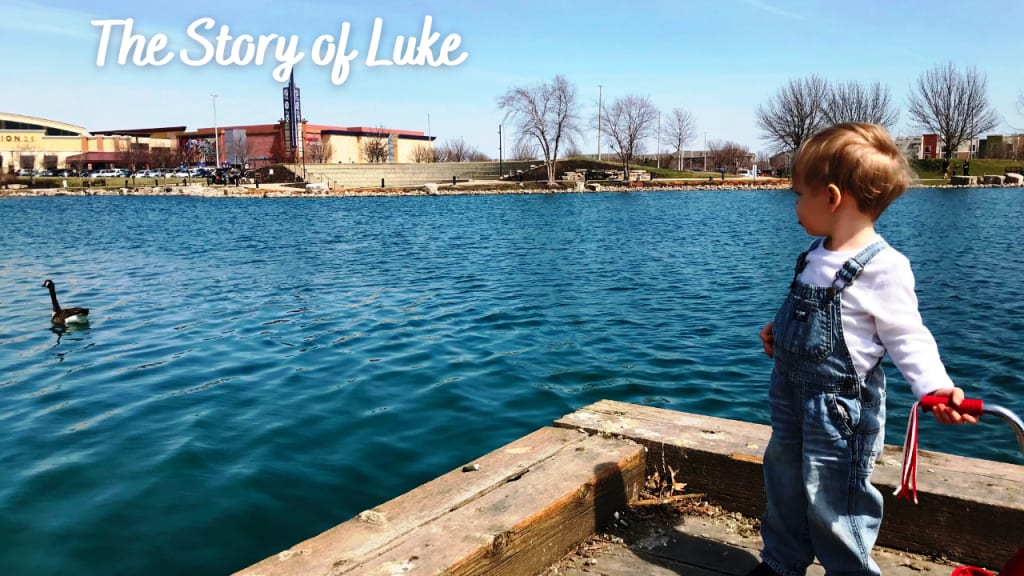
Such is the story of Luke.
The day my grandson Luke was born I was told he had “stomach issues” and was in the pediatric intensive care unit.
The next day, I learned his diagnosis; Eagle Barrett Syndrome, more commonly referred to as Prune Belly Syndrome (PBS), a rare disease thought to be genetic.
I quickly went to the net, typing Prune Belly Syndrome into the browser, and clicked on symptoms and signs of PBS…partial absence of some or most abdominal muscles giving rise to a wrinkled or prune-like appearance…attachments of the muscles to the bones are present, but the muscles diminish in size and thickness…abdomen appears large and lax….the abdominal wall is thin and the intestinal loops can be seen through…flaring of the rib margins or a horizontal depression under the chest (Harrison groove) can appear…enlargement of the bladder…bladder distention…Distention of the kidney with urine (hydronephrosis)…musculoskeletal abnormalities, especially club foot….
I closed my computer, tears trickling down my cheeks. I couldn’t finish reading the diagnosis, let alone the prognosis. The Department of Human Services was already involved in Luke’s life and, it was debatable whether my newborn grandson’s parents would be able to care for him. If Luke was placed in foster care, he could very well be lost to our family forever.
After I I calmed down, I opened the computer again. When I read that twenty-percent of PBS babies wouldn’t survive birth, and another thirty-percent would never reach the age of two, I teared up again, thinking about how Luke fought for his life.
The next few hours were spent questioning if I was mentally and physically equipped to take care of a child. If something happened to him under my care, I would never forgive myself. On the other hand, if something catastrophic happened under a stranger’s roof, it would be even more difficult to forgive.
Was I prepared to take on the responsibility of caring for a child in my golden years, let alone a newborn with special needs? It had been over thirty years since I'd changed a diaper, warmed up a bottle, or rocked a baby to sleep.
I am a widow who retired as director of marketing for long-term care centers three-years before Luke was born. I was nestled into my retirement home and finally had the time to begin my career as an author. I was happy and content to spend my days and nights writing, developing plots, attending book signings, and being a guest speaker in high school classrooms.
It didn't take long to make a decision. Even though I'd never met my grandson, he was a part of me.
I then asked my son Anthony if he would help if I was approved to bring Luke home.
“I’m on board," he told me with little hesitation.
Three days later, Anthony and I met the newest member of our family.
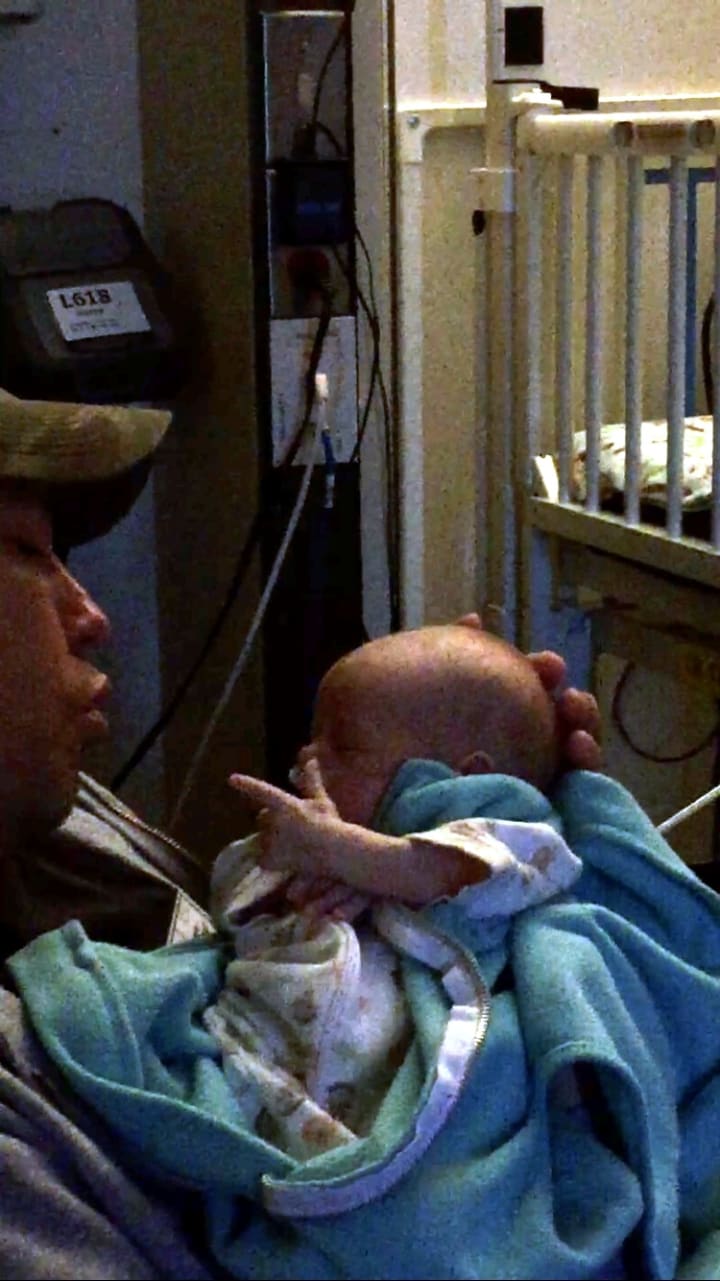
I'd thought I was mentally and emotionally prepared until I stepped into Luke’s room. Red and green lights flashed above the crib on what seemed like a dozen monitors. When my eyes settled on the tiny bundle hooked up to oxygen, I felt dizzy and placed a hand over the top railing of the crib.
Anthony and I barely spoke on the way home, my mind racing. I felt guilty leaving Luke and desperately wanted the chance to give him the life every child deserves. Early the next morning, I contacted the NICU nurses’ station.
“I want my grandson,” I told Luke's nurse.
During a chat with Luke’s social worker, she told me Luke would be placed in a foster home as soon as possible, hoping to reunite him with his parents in the near future.
“What do I do next?” I asked.
After submitting a plethora of paperwork, including my consent for a background check, my home was inspected for safety. Three days later, I was approved to bring Luke home.
It was then I was able to access the University of Iowa Hospital patient portal to read Luke’s diagnosis.
• Bladder outlet obstruction: blockage at the base or neck of the bladder that reduces or stops the flow of urine into the kidneys.
• History of Meconium aspiration: inhaling feces before birth, blocking oxygen from going into the lungs
• Pneumonia
• Eagle-Barrett Syndrome:
• Bilateral congenital hydronephrosis- swelling of one or both kidneys. Kidney swelling happens when urine can't drain from a kidney and builds up in the kidney as a result.
• Bilateral intra-abdominal testicle: both of Luke’s testes were undecided
• Acute pyelonephritis: severe kidney infection
• Stage I Kidney Disease
• Lack of abdominal muscles
I bowed my head, asking for strength.
There was little time to prepare for a newborn. First, I needed to clear out a bedroom for a nursery. After my desk, chair, and files in my office were moved to the lower level, I made a list; crib…mattress sheets...blankets...changing table…diapers, the list went on and on.
Luke would continue to be oxygen, and would only be weaned off if/when his lungs grew stronger. He would come home equipped with a monitor that would measure oxygen intake. If the number fell below a certain level I would need to call 9-1-1.
I placed a rocking crib next to my bed so I would hear the monitor if it went off, and to also keep a watchful eye over Luke in case he became entangled in the oxygen cord.
And then cleared a corner in my bedroom for a five-foot tall oxygen canister, equipped with a 60-foot cord so Luke and I could travel around the house together. A dozen or more portable oxygen tanks would soon line the walls of my closet.
A three-day prep course on how to take care of Luke was required before I would be able to bring him home. During those three days, I would be the only family member allowed to be with Luke as this would be our bonding time.
Appointments were scheduled with Luke’s primary physician, kidney and urology specialists for once a month for a year. We would need to travel ninety miles to the hospital for all-day appointments that would include urinary and blood analysis, scans, and lung tests.
While I was in training, I learned life-saving procedures, how to attach the oxygen tubes to the sides of Luke’s cheeks so they wouldn't come off, and wrap his big toe with tape to monitor oxygen levels. My mind was on overload when the nurse educated me on the signs of kidney failure.
The night before Luke’s release, I was reminded of what I already knew.
“You understand that your grandson may never be able to hold up his head, sit, crawl, walk, or….”
The words trailed off as I gazed upon the cherubic face of this beautiful boy.
The next morning, I dressed Luke in his homecoming outfit and wrapped him in a soft, cuddly baby blanket. I placed the thick two-to-three-inch packet of how to care for Luke in my suitcase before we were transported to the front door of the hospital via a wheelchair. I could feel my heart speed up when reality hit and I realized I was now solely responsible for the little guy I held in my arms.
After I gently put a sleeping Luke into a car seat, I buckled him in, leaned over, and whispered, “You and me, buddy, we’ve got this.”
I was afraid to sleep for the first few weeks, fearing I would miss a small cry, or Luke might get tangled up in the oxygen cord. I spent most my nights watching over him, gently rocking the basket.
The one thing I did know is that I would do everything in my power not to allow PBS to define my grandson.
Luke didn’t know it yet but we were on a mission.
Soon after Luke came home, I put him on his tummy on the carpet or my bed. Face-to-face, I would talk to him softly, prompting him to lift his head to begin the process of strengthening neck muscles.
Without core muscles, it is difficult to master those things most of us take for granted such as sitting, crawling, or walking.
When Luke was eight weeks old, I moved his changing table next to a window, hoping the light would encourage him to look outside. His head wobbled and bobbled, only able to withstand a few seconds before his muscles gave out. Each day, however, he became more determined to see the great outdoors.
Once he’d strengthened neck and shoulder muscles we moved on to sitting.
Lukas was three-months-old when I purchased a Hugaboo and placed the circular donut-like pillow in the corner of a couch. I would put him down in the middle hole and then tug his feet through the leg openings. Sitting next to him, we would play with a toy or listen to Baby Einstein music. At first, he fell forward, backward, and side-to-side. Each day that went by I noticed an improvement.
Next, I contacted a lady on Etsy and asked if she could make a cushioned seat that would fit into the carrier of shopping carts. She agreed, and also stitched four small matching pillows I put behind his back, in front of his tummy, and on either side of Luke. Although he was growing stronger I never knew when his muscles would give out. Oxygen tank in hand, we would take off to discover the world at least once or twice a week.
When a friend popped by she was amazed at Luke’s progress. I had her lie on her back, put her hands behind her head, and try to do a sit-up using no stomach muscles. It was then she realized how difficult it is function with the lack of abdominal support.
Our family celebrated when, at seven-months old, Luke was taken off oxygen. His lungs were as strong as his will-power. Onward we go.
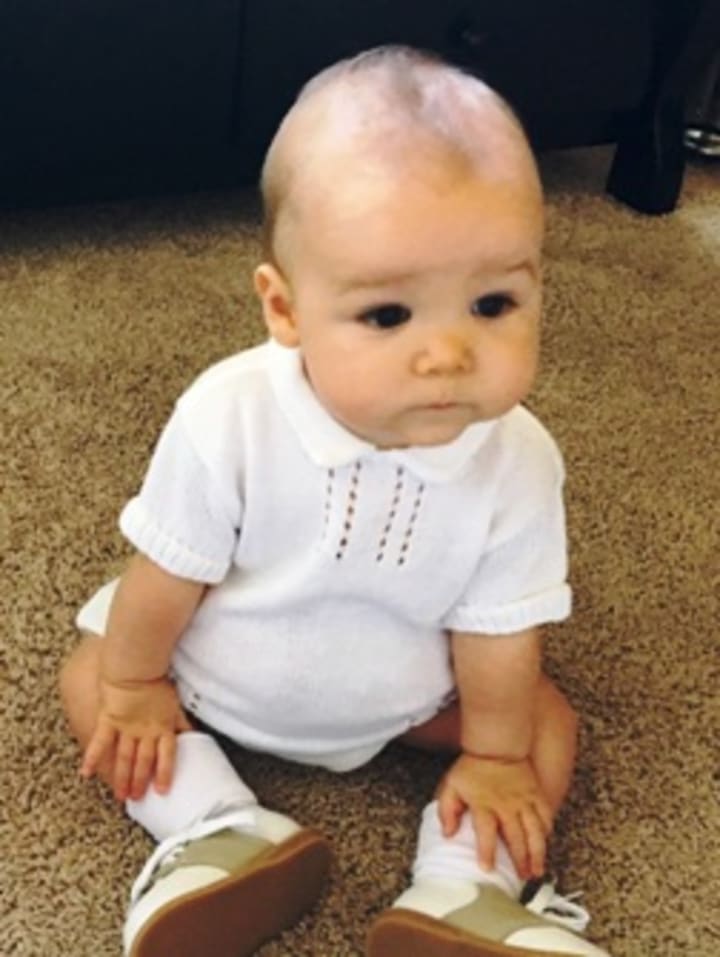
Trying to crawl was a bit more complicated as now Luke’s arm, shoulder, and leg muscles needed to become even stronger to balance his weight.
Little by little, it became easier for Luke to hold up his upper torso with his arms which included a bulky, oversized midriff. Once he felt comfortable, we moved on to leg muscles.
I would lay Luke on his back, bend his knees, and put his feet flat on the floor. Next, I lifted his legs, put the palms of a hand on each foot, and play tug of war pushing his feet against my hands as I pushed back. Each day, I made 'the tug' more difficult.
He started by rocking on all fours, progressed to the Army crawl, and, in no time, was zipping around the house.
When Luke was a little over a year-old I introduced him to walking. Balancing would be tricky. Every part of his body needed to be perfectly aligned and in sync. He would need to walk with his toes turned out a bit so the back muscles would carry much of his weight. Think of a tightrope walker; arms out to the sides, toes pointed slightly out, slowly, carefully making their way across the rope to the other side.
I began by standing Luke up, his back and heels against a wall. I set his bare feet a few inches apart and then turned his toes slightly out. After I took hold of his hands to keep him balanced, I tugged him gently toward me one step at a time. One small foot after the other he was able to take four or five steps before tiring.
We progressed to short walks around the house as I held onto him. And, when he refused to take my hand, I knew I was no longer in charge. This pint-sized child was determined he could do this on his own.
The falls were numerous with bruises on the forehead and bumps on the back of his head but he wasn't about to give up.
I will never forget the day I saw Luke slowly but steadily walking toward me, his face beaming.”
“Anthony,” I called to my son who Luke calls Papa, “Hurry!”
As Anthony and I cheered and clapped, I knelt down next to Luke. “I’m so proud of you," I whispered, my voice breaking.
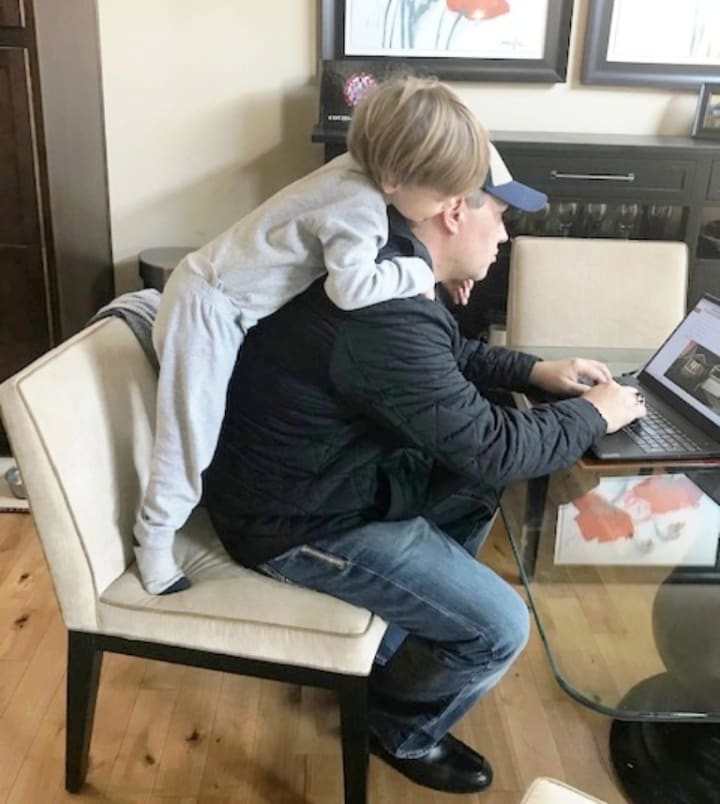
When Luke turned two, we drove to Iowa City for a dreaded but much-needed operation. He would undergo an abdominoplasty, more commonly known as a tummy tuck.
The surgery would be a bit more complicated than removing excess skin and fat as the surgeon would stretch side muscles over Luke’s tummy to safeguard vital organs. With no protection over the kidneys and bladder, one hard blow could mean major damage or worse.
While in the family waiting room, I paced, tried to read, texted friends and family, and then paced again. Seven hours later when I was told Luke's operation went well is when I stopped holding my breath. Now he would begin the recovery process, which would take anywhere from three to seven days in the hospital.
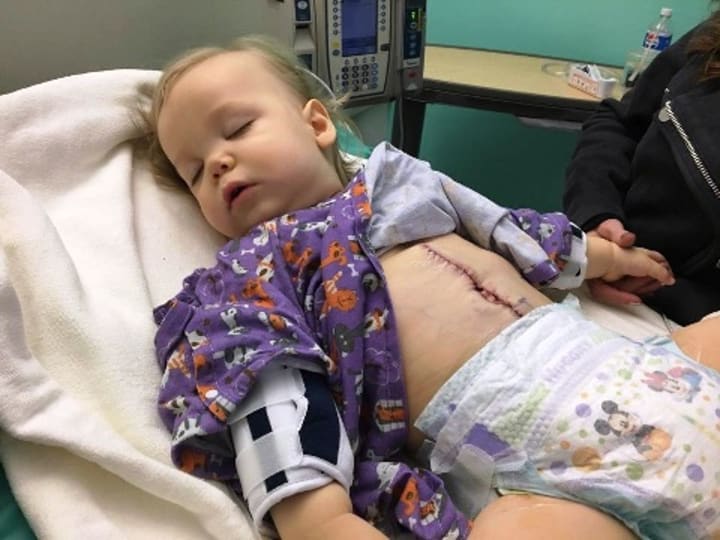
Two days after the operation, complications set in when Luke’s lungs started to fill.
Unless there was major improvement over the next few hours Luke would be transferred to ICU.
I went into panic mode but for some odd reason remembered an article I'd read about using a vibrating massager on pneumonia patients to help clear their lungs.
I asked a nurse if she knew if there was a massager somewhere in the hospital.
“I think I saw a couple of them in a storage room,” she responded. “But we don't use them anymore.”
“Could you try and find me one?” I asked.
A couple of hours later, she returned with a dilapidated machine that looked as if it was on its last leg. I plugged it in, but it wouldn’t start. After jiggling it a few times, it began to hum.
I leaned Luke forward and, supporting his chest with the palm of my hand, shook the device until it started. Every hour on the hour I gently ran the massager over his upper back for 10 to 15 minutes throughout the night.
Early the next day, Luke was taken to x-ray. Exhausted and anxious when the nurse returned with him, I asked, “Is he okay?”
“His lungs are almost clear.” She smiled and nodded at Luke. “No ICU for this boy.”
My next goal was to find this Luke something he would eat. As most of us know hospital food isn’t the tastiest. He hadn’t eaten for almost three days. I took off walking in an unfamiliar city. When I came upon the first convenience store, I stocked up on pudding, Luke's favorite cookies, and crackers.
“Want a cookie?” I asked when I walked into his room, noticing the dark circles underneath Luke's eyes. I took out an Oreo. Three cookies later, he was ready for pudding.
During the time Luke was in the hospital, I took him for wagon rides twice a day, stuffing a pillow behind his back. Soon he was able to take short walks in the hallways and, after a ten-day stay, Luke was discharged.
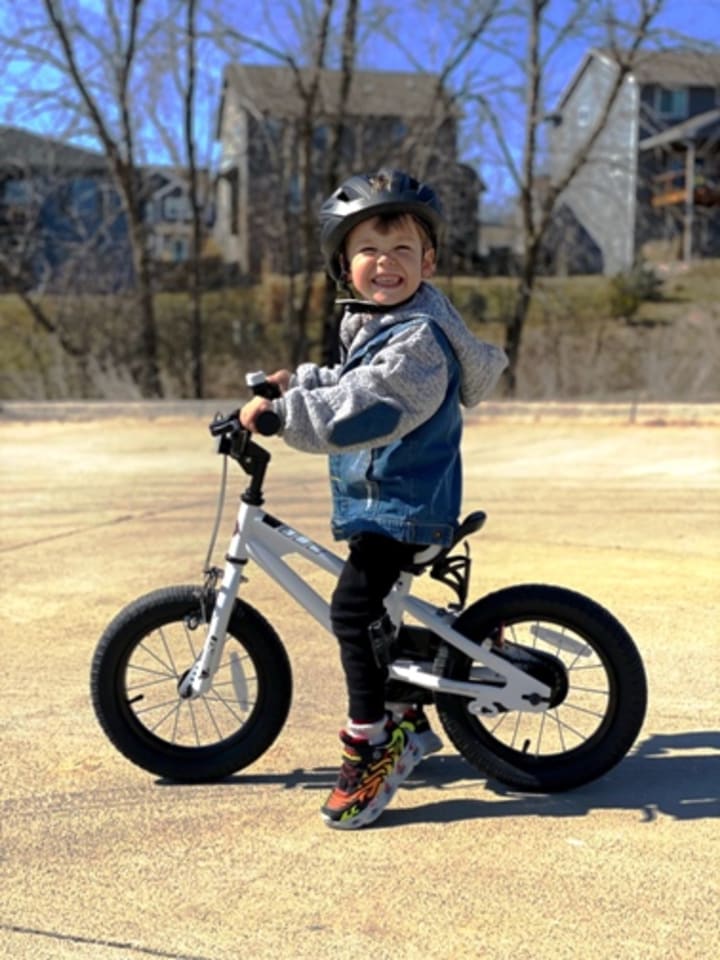
Since that time, Luke has learned to hit a ball off the tee, master a balance bike before moving onto a two-wheeler, and practices kicking balls in preparation for his first soccer practice. He loves to dance, sing, do somersaults, and walk the balance beam; something that came easily because of his highly developed balancing skills.
There are 7,000 known rare diseases in the world, most of which have no specific treatment plan.
Because PBS is rare, there is little funding for research that could possibly change the future of a PBS child. It’s up to caregivers to connect with a doctor familiar with PBS. In third-world countries, it's next to impossible to find a physician familiar with this syndrome, leaving family members feeling helpless, frightened, and isolated.
Soon after Lukas came home I joined a private PBS Facebook page that became my greatest resource. I found the advice, experiences, losses, and hope from parents of PBS children and adult survivors invaluable.
Every year we lose PBS babies and those who fight a courageous and painful battle. Many mothers are advised to abort a child that is less than perfect. Some are lost due to sudden kidney failure, or rejection of an organ transplant.
Most with this debilitating syndrome endure multiple surgeries throughout their lifetimes, spending more days of the year in the hospital than at home.
SURROUNDED BY LOVE
Front row Mama Kimberly, Luke, Uncle Andy, and Aunt Chris. Back Row: Papa Anthony, Luke's step-brother Bryce, and Luke's daddy Adam.
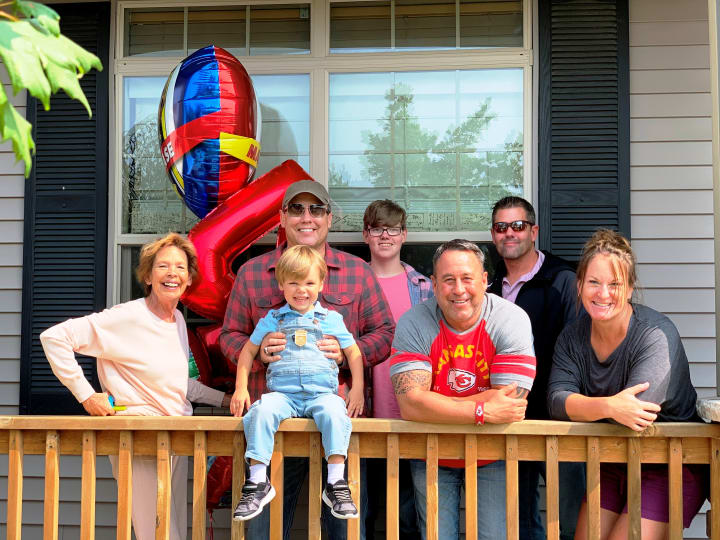
I am grateful for the privilege to not only love and care for Luke but help him overcome what sometimes felt like larger-than-life challenges. No one knows what the future holds for Luke or others born with Eagle Barrett Syndrome. But for now, I am thankful for each day I spend with Luke.
About the Creator
Kimberly Shursen
Author Kimberly Shursen is the mother of three adult children and a grandchild she adopted at birth.
An advocate for children's rights, and director/marketing, Shursen is a seasoned author of political, legal, and psychological thrillers.
Keep reading
More stories from Kimberly Shursen and writers in Families and other communities.
Wise~Guys
— Look Behind what's in Front of You ~ Make Good Choices — Hey, So how you Doin'..! Made~Men — Mobster Movies romanticise a distinctive, elegant appearance, impeccable attire style, along with the 'Families' expressive lingo. Making their 'Bones' gave them Panache — with vintage fedoras, tailored pin-striped suits, mirror-polished wing-tip shoes adorned with tassels; with their 'Gun Moll' gorgeous dates on their arms.
By Jay Kantor23 days ago in Families
Why Are Teachers Leaving Education?
As someone who is new to teaching, I will not sit here and pretend to fully understand everything veteran teachers have endured over the years. I do not yet have decades of experience to draw from. However, I can speak honestly about what I have observed in my year and a half in the classroom, and what I have learned in that short time is both eye opening and concerning. Teaching today is no longer just about teaching content. It has evolved into a profession that often requires educators to act as the judge, the juror, and the executioner, so to speak, all while being expected to maintain patience, professionalism, and compassion at every turn.
By Kimberly Nightengale6 days ago in Families
📢 Raise Your Voice Thread: 01/22/2026
Our “Raise Your Voice Threads” are hosted most alternating Thursdays at 12PM ET to offer creators more avenues to uncover exceptional stories on Vocal. As we are continuously searching for fresh creators and inspiring stories, this thread provides an opportunity to exchange and discuss the stories that have moved and motivated us on Vocal.
By Raise Your Voice by Vocala day ago in Resources




Comments
There are no comments for this story
Be the first to respond and start the conversation.