
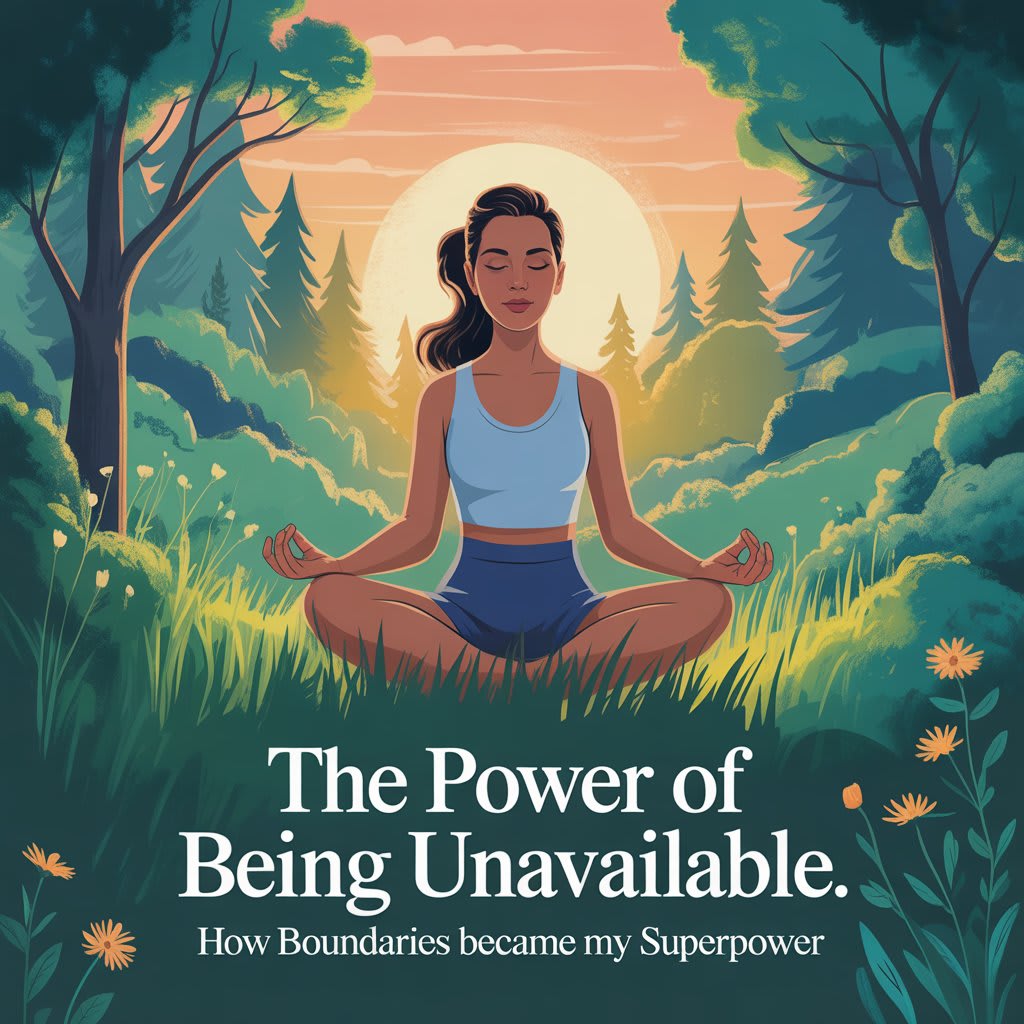
The Power of Being Unavailable: How Boundaries Became My Superpower
Explore how saying “no,” logging off, or not being instantly reachable transformed your peace and productivity.
For the longest time, I thought being available made me valuable.
If someone called, I answered—even if I was in the middle of something. If a friend needed a favor, I said yes—even when I was exhausted. I responded to texts at midnight, checked emails before I even got out of bed, and said “of course” far too often when I should’ve said “not right now.”
But over time, I began to notice a slow erosion of something important: myself. My energy felt fractured. My time was no longer mine. I didn’t realize it right away, but my willingness to be constantly available was costing me more than I imagined.
And then, I discovered the quiet, transformative power of being unavailable.
The Lie of Constant Availability
Society wires us to believe that being available equals being kind, dedicated, reliable—even successful. We’re taught to respond instantly, keep our notifications on, say yes to opportunities, and never leave anyone waiting.
The problem? This constant availability isn’t sustainable, nor is it healthy.
I began to feel drained, overstimulated, and overwhelmed. I was burning out, not from doing too much—but from not protecting myself enough. Every “yes” I gave others was a “no” to myself.
What finally broke me wasn’t some big dramatic event. It was small things, like dreading phone calls or cringing every time my phone buzzed. I realized I had lost the ability to be present—because I was trying to be everywhere for everyone.
The First “No”: A Turning Point
The first time I chose to be unavailable, it felt like rebellion.
A friend called late at night while I was journaling—something I had finally started doing for my own peace. I hesitated. Normally, I would’ve answered without question. But this time, I paused. I put my phone on Do Not Disturb.
I chose me.
I didn’t apologize the next day. I didn’t explain. I simply texted, “Hope everything’s okay—was winding down last night. Talk soon?”
It felt radical. But it also felt right.
That single act became a seed. And over time, I grew a garden of boundaries.
Understanding What Boundaries Really Are
Let’s be clear—boundaries are not walls. They’re not about pushing people away or being cold. Boundaries are bridges between your well-being and the world. They’re the guidelines you set for how you want to be treated, how you want to spend your time, and how much of yourself you can give without running dry.
Boundaries say:
“I care about you, but I also care about myself.”
“I’m not rejecting you—I’m protecting me.”
“My availability is a resource, not a guarantee.”
Learning to set boundaries wasn’t easy. At first, I felt guilty. I worried people would think I was selfish, rude, or distant. But the more I practiced, the more I saw the truth: when I protect my peace, I have more to give—freely, joyfully, and on my terms.
How Being Unavailable Changed My Life
1. I Reclaimed My Time
Time is a currency I was spending recklessly. I began to audit my day—how much of it was dictated by others’ needs versus my own? Slowly, I started scheduling quiet hours, phone-free evenings, and slow mornings. I didn’t need to fill every moment or reply to every ping. I just needed to be.
2. My Relationships Got Healthier
Surprisingly, saying “no” didn’t weaken my relationships—it strengthened them. The people who respected my boundaries stayed. The ones who didn’t slowly faded, and that was okay. I no longer operated from fear of abandonment or the need to be liked. I showed up authentically, and that created deeper, more honest connections.
3. I Found Mental Clarity
Without the constant noise of messages, requests, and digital demands, my mind became quieter. I could hear myself again—my thoughts, my needs, my creativity. Being unavailable gave me the mental space to make better decisions and tune into what really mattered.
4. I Felt Empowered
Every time I chose rest over obligation, solitude over social pressure, or silence over response, I felt stronger. I realized that availability wasn’t what made me lovable or successful—my boundaries were.
The Guilt Trap: Why We Struggle With Boundaries
We’re often praised for being selfless, responsive, and “easygoing.” But at what cost? Many of us are stuck in the guilt loop—believing that if we say no, someone will suffer. That it’s our job to fix, respond, be there, always.
Let me tell you something: you are not responsible for managing everyone else’s comfort.
When you constantly abandon yourself to please others, that’s not compassion—it’s codependency. And while it feels noble, it’s actually draining the very energy you need to live your own life.
Creating Boundaries That Stick
If you’re ready to explore the power of being unavailable, start here:
1. Define Your Non-Negotiables
What parts of your day or life are sacred to you? Morning walks, creative time, weekend rest? Block those off—mentally and literally.
2. Communicate Clearly
You don’t owe everyone an explanation, but clarity helps. Say things like:
“I’m offline after 8 p.m.”
“I don’t check messages during work blocks.”
“I need this weekend for rest—I’ll check in Monday.”
3. Start Small
Begin with micro-boundaries. Silence your phone for an hour. Decline one invitation. Delay a response. Build your muscle gradually.
4. Expect Pushback
Some people won’t like your boundaries—especially if they benefited from you having none. Stay grounded. Their discomfort doesn’t mean you’re doing something wrong.
When Being Unavailable Is a Love Language
Here’s something I never expected: being unavailable is sometimes the most loving thing I can do.
When I rest, I show up for my people more present. When I say no, I leave room for a more meaningful yes. When I disconnect, I reconnect—with myself, my creativity, my peace.
Being unavailable isn’t selfish—it’s sovereign. It’s a declaration that I’m not a product, a service, or a resource to be accessed 24/7. I’m a human being with needs, rhythms, and worth outside of my usefulness to others.
Conclusion: My Boundaries Are My Superpower
I used to think power looked like doing it all. Now I know real power is choosing what not to do. It’s choosing silence over speed, stillness over scrambling, solitude over overstimulation.
Boundaries gave me back my time, my mind, my energy—and most importantly, myself.
So no, I won’t always reply right away. I might not answer the phone every time. I’ll skip the event, ignore the email, miss the call. Not because I don’t care—but because I do.
The power of being unavailable isn’t about saying “no” to the world—it’s about saying “yes” to yourself.
And that, I’ve learned, is the most radical thing you can do.
About the Creator
Keep reading
More stories from Aiman Shahid and writers in Families and other communities.
Unlearning People-Pleasing: Becoming Who I Am, Not Who You Want
For most of my life, I wore the invisible badge of a people-pleaser. I smiled when I wanted to scream, agreed when I disagreed, and sacrificed my own comfort to earn someone else’s approval. I became a master of morphing into what others wanted me to be. But beneath the polished surface, I was exhausted. I didn’t know who I truly was—I only knew who I was supposed to be for everyone else.
By Aiman Shahid6 months ago in Families
Wise~Guys
— Look Behind what's in Front of You ~ Make Good Choices — Hey, So how you Doin'..! Made~Men — Mobster Movies romanticise a distinctive, elegant appearance, impeccable attire style, along with the 'Families' expressive lingo. Making their 'Bones' gave them Panache — with vintage fedoras, tailored pin-striped suits, mirror-polished wing-tip shoes adorned with tassels; with their 'Gun Moll' gorgeous dates on their arms.
By Jay Kantor17 days ago in Families



Comments
There are no comments for this story
Be the first to respond and start the conversation.