
The Positive Effects That Being Childless Has Had on My Mental Health
Everyone's mental health is affected in their own unique ways, regardless of whether or not they have children

Thankfully, I have never attempted to conceive a child.
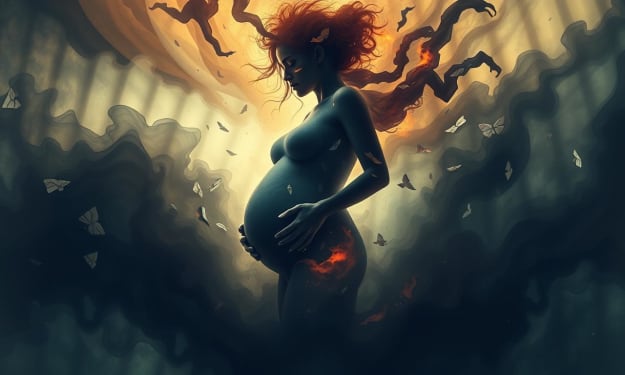
Tokophobia is a term that describes a pathological fear of pregnancy and sometimes even newborns. I suffer from this condition.
There are ways to overcome my fear of starting a family if I wanted to have children. However, because having children has never even been an option for me, I have no choice but to accept it as a fact of life.
Trying to articulate the ways tokophobia impacts me is one huge gaslighting trip. Because the fact is that I would consider ending my life if I ever succeeded in becoming pregnant. I do not say this carelessly or flippantly. And yet, the few times I’ve opened up the vortex of my feelings to a trusted person, I’ve been brushed off with a “Oh no, I’m sure you would feel very differently.”
Very few people believe me.
I got it. Pregnancy provides most people great joy and tenderness. It’s something so eagerly desired by many while cruelly denied to some. Therefore, it is not always easy to comprehend that this illness may put certain individuals, such as myself, in such a state of hopelessness.
It’s a fact that may be unpleasant for those around me to sit with; therefore, maybe it's just easier for them to deny me my sentiments.
My not having children has put me on the outside of society.
And yet, while I have struggled with the loneliness of exclusion, I realize that for me, being a mum would have been worse and certainly have cost me not only my mental health but probably even my life.
The mental health and reproduction conundrum
Some people suffer with their mental health because they don’t have children. Some people suffer because they have them.
And then there are persons like me who have their idiosyncrasies already and realize adding a baby into the mix would be like pouring petrol over a naked flame.
Just to be clear—to all you parents out there—I salute you. I could not do what you do.
You might be reading this and thinking, “Oh, but children would make your life better. Mine do.” If that’s the case, I’m glad for you, and I believe you—for you—but my truth is different from your truth. No component of the parenting experience appeals to me.
Pronatalists would claim I’m selfish, immature, reckless, and doomed to unhappiness.
But I say I know my boundaries.
If I could bring up real facts and tell you I was clinically depressed or had bipolar disease, then maybe more people would understand and appreciate my childfree stance. But I can’t.
What I can tell you is that I am an extremely sensitive person, the features of which bleed into those of autism in women.
I have never sought a diagnosis for any of my eccentricities. But as an avid reader with a degree in psychology, a strong understanding of mental health, and having been in therapy for several years, I recognize I have patterns of cPTSD, anxiety, neurodivergence, and seasonal affective disorder.
The outer world perceives me as a confident, self-assured, capable, assertive, high-achieving individual. And I am, yet that is just a slice of me. Sometimes, life overwhelms me, and I retreat into my inner world, hardly able to talk. While other times I could be holding court in a public speaking event and seem like I’ve got my stuff together.
I couldn’t meet my survival needs while having healthy and happy children.
And while I didn’t opt out of parenting especially to preserve my mental health, seeing all the ways my mental health is safeguarded by not having them certainly confirms my position.
There will be no generational trauma here.
I recently spent a few days with one of my favorite children of all time.
Despite my affection for this tiny human, I still felt my patience slipping and found his incessant turmoil exhausting. Even worse, thoughts flashed into my mind that resembled the ways my father parented me: authoritarian and draconian, full of shoulds and expectations.
If a few days had that effect on me, I can’t even grasp what the inevitable shackle of being a mother would do to me and how generational pain would flow into any innocent, naive child of mine.
Some parents simply can’t cope, and their children become one of the over one hundred thousand children in the UK who wind up in foster care.
If my life had been different, perhaps my kids would have been part of that number.
I consider myself fortunate and privileged to live in an era and nation where it is possible to live consciously childfree.
I need time to myself—quiet time with no interruptions.
This time is non-negotiable. Sometimes, I find tranquility running on mountain trails, other times in the swaying of the waves as I sea swim or paddle in my kayak, or by sipping a coffee and sitting thoughtfully in my garden.
However, I find my peace; I require several hours of it every day to function and stay on an even keel.
The lengths I need to go to to operate properly as a human being are not conducive to having children.
Erratic energy, loudness, and commotion leave me shut down and on edge; I can’t cope with it; it makes me retreat. And isn’t that energy the very beautiful essence of children? We must cultivate, support, and appreciate this essence for healthy child development.
I was a hyperactive and loud youngster myself, and I know that me as an adult could not manage with me as a child for lengthy periods of time.
Self-knowing is self-growing.
Many of my acquaintances tell me they only like their children.
Yet, it feels like there’s an expectation that all parents enjoy all children. Whereas those of us without kids are generally believed to be child haters, you know, Cruella de Vil sorts.
I do not like all children—there, I said it. In fact, I don’t trust anyone who professes they adore children. Because, as we all know, we vibe with some kids and not with others. Kids are humans. We don’t like all people, and not all people like us.
No part of me ever looks at a baby and thinks it’s cute or wants to hold it.
And this is ok.
But just because I am not all gushy and gooey about every kid doesn’t mean I despise them. I am generally the first to play with them at gatherings or make a funny face at the kid weeping in the shop. I find it easy to empathize and connect with kids. Heck, some of my police career was spent working in child protection.
I want all children to be safe, cherished, and happy.
I will dance, sing, play, and be funny. I will hold their hands, wipe their tears, and help them build forts.
I appreciate spending time with the children in my life, but I also enjoy handing them back and walking away, likely already flustered and having to regain my inner equilibrium.
For a long time, my lack of desire for children caused me significant concern. I felt ridiculed for my authenticity and bullied by others who only viewed me as a womb.
Over the years, while trying to describe my lived experiences of the way women consciously forgoing children are excluded in society, some folk close to me have told me I’m too sensitive or that it’s just my imagination.
So, while the infamous statements of J.D. Vance referring to women without children as “childless cat ladies” who are “miserable at their own lives” are both nasty and hurtful, they also support the messaging that I, and women like me, are so used to hearing. That those of us without children are less than.
But it was arguably the statements of his wife that I found most enlightening.
While in damage containment mode, Usha Vance sprang to her husband’s defense and, in an interview with Fox News, said, “My husband only meant to insult people who actively choose not to have kids, not people who are trying but are unsuccessful.”
The assumption that everyone wants children and everyone should have them is foolish and dangerous.
What the Vances and their ilk fail to grasp is that we are all different. For some of us, it is having kids, not not having them, that would make us miserable in our own lives.
Imagine the shift in global happiness, including the happiness of children, if reproduction was seen as an option—with no assurances—and not a condition to being respected and accepted in society.
About the Creator
Wise~Guys
— Look Behind what's in Front of You ~ Make Good Choices — Hey, So how you Doin'..! Made~Men — Mobster Movies romanticise a distinctive, elegant appearance, impeccable attire style, along with the 'Families' expressive lingo. Making their 'Bones' gave them Panache — with vintage fedoras, tailored pin-striped suits, mirror-polished wing-tip shoes adorned with tassels; with their 'Gun Moll' gorgeous dates on their arms.
By Jay Kantor23 days ago in Families


Comments
There are no comments for this story
Be the first to respond and start the conversation.