
The Old Woman and Her Three Daughters
A timeless tale about love, pride, and the true meaning of wealth.


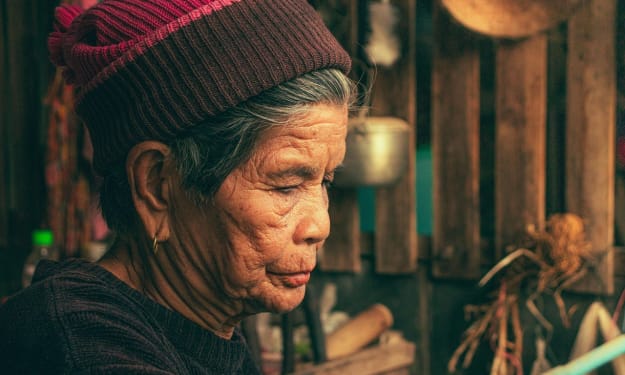
Once upon a time, in a quiet village surrounded by golden wheat fields, there lived an old woman named Mira. Her hands were wrinkled from years of weaving baskets and her back bent slightly from a lifetime of work, but her eyes still sparkled with wisdom and kindness. Mira had three daughters—Rina, Kala, and Devi—each different in heart and mind.
Rina, the eldest, was ambitious and sharp-tongued. She dreamed of living in the city, wearing silk clothes, and never worrying about food or money again. Kala, the middle daughter, was soft-spoken and dutiful, always helping her mother in the fields. Devi, the youngest, was carefree and curious, often lost in her imagination, singing to the birds or talking to flowers as if they were friends.
Though their paths and personalities differed, Mira loved them all dearly. But as she grew older, she began to worry. “When I am gone,” she often thought, “will they remember the value of love and unity? Or will they let the world harden their hearts?”
One day, Mira decided to test her daughters.
She called them together and said, “My dear children, I am growing weak. I can no longer work as I once did. Each of you must go into the world for a year and earn your living. When you return, bring me something that shows what you’ve learned.”
The daughters agreed, though with different emotions. Rina saw it as a chance to prove her worth. Kala saw it as a duty. Devi saw it as an adventure.
Rina’s Journey
Rina went to the city, where the air buzzed with noise and ambition. She found work in a merchant’s shop, selling fine cloth and jewelry. Her quick wit and beauty attracted customers easily, and soon she was earning more money than she had ever dreamed of.
But with success came pride. She stopped writing letters home, thinking her mother’s simple life beneath her now. When the year ended, she returned home in a glittering sari, her arms full of gold bracelets.
“Mother,” she said proudly, “I bring you riches so you’ll never live in poverty again.”
Mira smiled gently but said nothing. She placed the jewelry in a wooden box and turned to wait for her other daughters.
Kala’s Journey
Kala traveled to a nearby town, where she worked as a caretaker for an old couple. She cleaned, cooked, and tended their garden. Her heart was patient, her hands gentle. The old couple grew to love her as their own child, and when she left after a year, they gave her a small box of seeds.
“These seeds,” they said, “grow into flowers that never fade. Plant them where love is strong, and they will bloom forever.”
Kala returned home, bowed to her mother, and said, “I bring you these seeds, Mother. They taught me that kindness, like flowers, grows when you tend it with care.”
Mira smiled again, her eyes warm with pride.
Devi’s Journey
Devi wandered far and wide, with no plan and little money. She sang for her meals, helped strangers in need, and slept under the stars. She faced hunger, storms, and loneliness, yet she never lost her laughter.
One evening, she came upon a village struck by drought. The people were desperate; their wells were dry. Moved by their suffering, Devi gathered the children and taught them songs to keep their hope alive. Her cheerfulness spread like sunlight through clouds, and though the drought did not end, the people found the strength to endure.
Before leaving, the villagers gave her a small clay pot filled with clear spring water—their most precious gift.
“Take this,” they said. “It reminds us that even when life seems dry, kindness can bring back the water of hope.”
When Devi returned home, she handed the pot to her mother with tears in her eyes. “I bring you hope, Mother,” she said softly. “For I have learned that joy shared is never lost.”
The Lesson
When all three daughters had returned, Mira called them to sit beside her under the old banyan tree. She placed Rina’s gold, Kala’s seeds, and Devi’s pot before them.
“My daughters,” she began, “each of you has brought me a treasure. But now I must show you something.”
She took a handful of the gold and dropped it into the clay pot of water. The water turned murky, and the reflection of the sky disappeared. Then she took a few of Kala’s seeds and sprinkled them gently into the pot. Within moments, the seeds floated to the surface and began to sprout tiny green shoots.
“Do you see?” Mira said softly. “Gold can buy comfort, but it clouds the water of the soul. Seeds of kindness, however, bring new life, even in muddy waters.”
Rina lowered her gaze, ashamed. Kala smiled humbly, and Devi nodded with tears.
Mira continued, “You each walked different roads, but remember this: true wealth is not in what you earn, but in what you give. Gold fades, flowers wilt, and even water dries up—but the heart that gives love and hope never runs empty.”
The daughters sat silently, the wind rustling through the banyan leaves like a whispered prayer. That night, they cooked together, laughed together, and shared stories until the stars filled the sky.
Epilogue
Years later, when Mira passed away peacefully, her daughters buried her beneath that same banyan tree. Kala planted her magic seeds there, Rina poured her gold bracelets around the roots, and Devi poured the last drops of water from her pot.
By spring, a circle of bright, unfading flowers bloomed around Mira’s grave—a reminder that kindness and love are the only treasures that never die.
About the Creator
Keep reading
More stories from Ishaq khan and writers in Families and other communities.
A Mother’s Last Wish
In the remote village of Chakwal, life moved to the rhythm of seasons — the wind carrying the scent of wet soil and ripe wheat, and the canal’s gentle murmur providing a constant lullaby. Among the narrow mud-brick lanes lived Amma Farida, an 80-year-old mother whose strength and wisdom were known to all. Her hands were worn and calloused from decades of tending fields and household chores, yet her touch remained soft and tender. Her eyes, though clouded with age, held a spark that spoke of years of unbreakable love and tireless sacrifice.
By Ishaq khan4 months ago in Families
The Hidden Truth About Construction Manager Secrets Most Professionals Never Share
Construction projects look organized from the outside. Buildings rise, teams work, and schedules appear clear. Yet behind every project, there are decisions and strategies that many people never see. Experienced industry leaders often rely on methods rarely discussed openly. These hidden ideas are often called construction manager secrets. They are the lessons learned from years of managing teams, budgets, and deadlines. Construction managers must balance many responsibilities simultaneously. They handle workers, suppliers, safety rules, and client expectations. The job requires both leadership and careful planning. While many guides explain the basics of construction management, they often miss the deeper realities of the work. Top managers know that success comes from experience and practical knowledge. They understand how to avoid costly mistakes and keep projects moving forward. These insights shape how great managers lead their teams and deliver successful projects.
By Paul Wiedmaier2 days ago in Families



Comments
There are no comments for this story
Be the first to respond and start the conversation.