
The Last Letter in the Desk Drawer
When a struggling writer inherits her grandmother’s house, she discovers a series of letters that change everything she thought she knew about love, war, and her own identity.

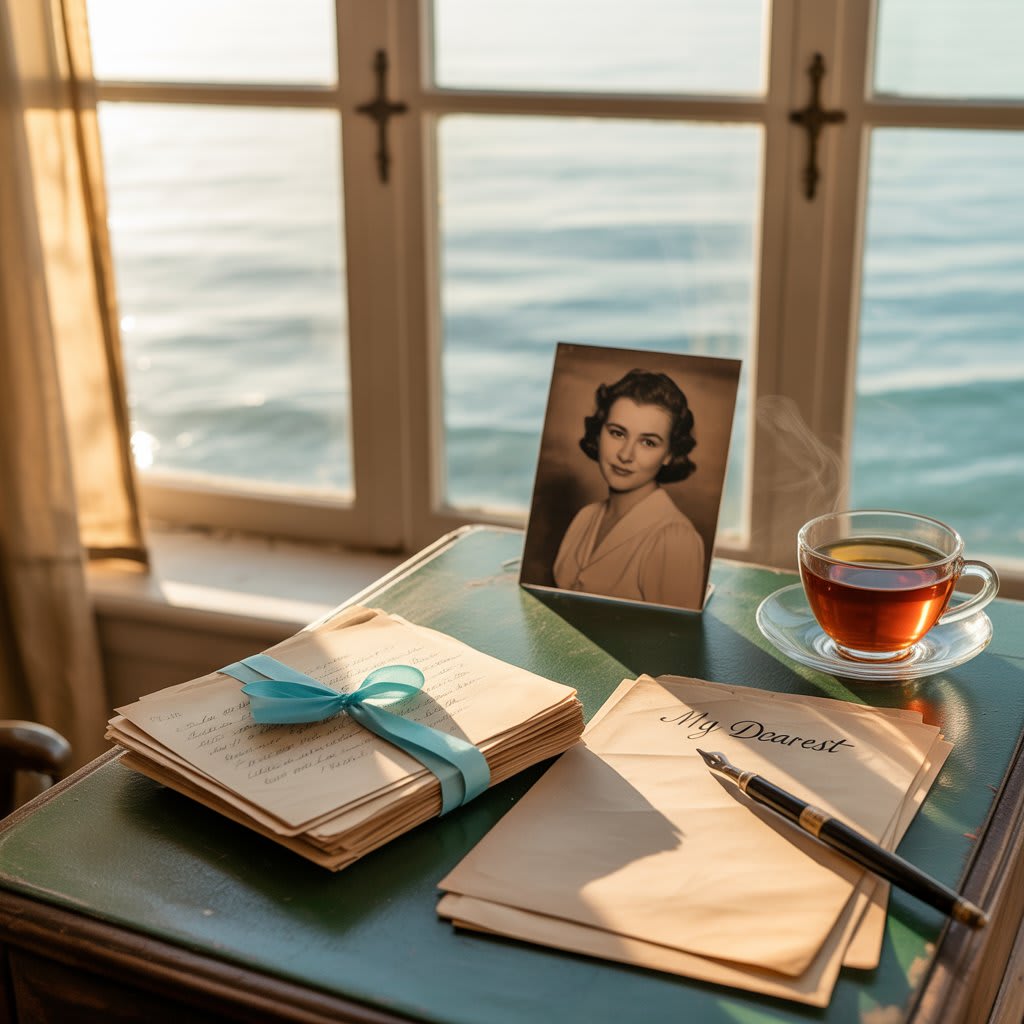
Emily hadn’t expected to inherit anything.
Her grandmother, Eleanor Hawthorne, had been a woman of few words and fewer affections. She was known around the sleepy seaside town of Merrow Bay as a fierce gardener, a devout letter writer, and a woman who never remarried after her husband vanished during World War II.
Emily remembered visiting her only a handful of times—quiet afternoons spent staring at doilies, sipping bitter tea, and being told to speak less and read more. At the time, she hated it. Now, years later, she missed it more than she expected.
The call came on a gray Wednesday. Eleanor had passed in her sleep, and the will was clear: the house, the garden, and everything inside belonged to Emily.
No one contested it. No one wanted it.
The house smelled like lavender and old books. Dust clung to the lace curtains, and the garden outside had gone wild without Eleanor’s careful pruning. Emily wandered through the rooms with both awe and a strange weight on her chest. It was like walking through a museum of silence.
She didn’t plan to stay long. Just long enough to clean out the house, maybe sell it, maybe keep it. She was between novels, between relationships, between versions of herself. The house, she figured, might offer some sort of pause.
On the third day, she found the desk.
It was tucked into a corner of Eleanor’s upstairs study, beneath a small arched window that looked out over the sea. The wood was polished, the drawers stiff. Inside were papers—meticulously organized letters, all bundled in pale blue ribbons, dated between 1942 and 1945.
They were addressed to:
"My Darling E.H."
Emily expected war correspondence. What she didn’t expect was poetry.
The letters were written by someone named James, a soldier stationed in France. They were vivid, emotional, filled with longing and wit.
"The war is louder than my thoughts, but you—Eleanor—you are the quiet that saves me."
Each letter painted Eleanor not as the cold, distant figure Emily remembered, but as a woman burning with life, intelligence, and laughter. A woman who had once been deeply, achingly loved.
The letters stopped in early 1945.
Emily searched for replies—any trace that Eleanor had written back—but found nothing. No letters sent. No photos. Only one drawer remained unopened.
It was locked.
She spent two days looking for the key. It turned up inside a jar of sewing needles in the basement. Eleanor had always been secretive.
Inside the drawer was a single envelope. Unsealed. Addressed not to Eleanor—but to Emily.
It was dated six years ago.
“My dearest granddaughter,”
“If you’re reading this, I’m gone. I never said it enough, but I saw you. Even when you thought I wasn’t watching. You have his eyes—James’. And his stubbornness. Yes, that’s not a coincidence.”
“James Hawthorne was not my husband. He was my love. My true, reckless, impossible love. Your grandfather was a good man who gave me stability, but James… he gave me a reason to breathe during the war.”
“We met before he left for France. He wrote to me every week. I never wrote back—not because I didn’t love him, but because I was afraid. Of the war. Of what people would say. Of who I was supposed to be.”
“When I found out I was pregnant, I married someone safe. James never knew.”
“That child was your father.”
“I don’t ask for forgiveness. But I hope you understand.”
“Some stories never get told. But I want you to write mine.”
“There is one more letter. The last one James ever sent. I couldn’t open it. Maybe you can.”
Emily held the envelope in trembling hands.
It was yellowed, unopened, addressed in the same script: To Eleanor Hawthorne. France, 1945.
She opened it slowly, like it might break.
“My dearest Eleanor,”
“I don’t know if this letter will reach you. The war is ending, they say. But even in the quiet, there’s uncertainty.”
“I don’t know what awaits me when I return. I’ve heard rumors. You’re married now. Maybe even expecting.”
“If that’s true, I won’t come back. But I want you to know I never stopped loving you.”
“I’ve written to you every week because it kept me alive. And if this is the last letter you ever receive from me, let it carry this truth: You made the war beautiful, even in its darkness.”
“And if, by some miracle, there’s a child in the world who shares your eyes—I hope they know they were born of something real.”
“Goodbye, my Eleanor. Love always—James.”
Emily cried that night.
For James. For Eleanor. For the silence between them.
And for herself—because somehow, in the middle of someone else's story, she had found the beginning of her own.
She stayed in the house.
She trimmed the garden, aired out the rooms, and turned the study into a writing room. And one day, with the letters stacked neatly beside her and the sound of the sea outside the window, she began to write.
Not fiction.
But truth.
About the Creator
AFTAB KHAN
SUBSCRIBE ME AND READ STORY
Storyteller at heart, writing to inspire, inform, and spark conversation. Exploring ideas one word at a time.
Writing truths, weaving dreams — one story at a time.
From imagination to reality
Keep reading
More stories from AFTAB KHAN and writers in Families and other communities.
The Quiet House on Elm ridge Lane
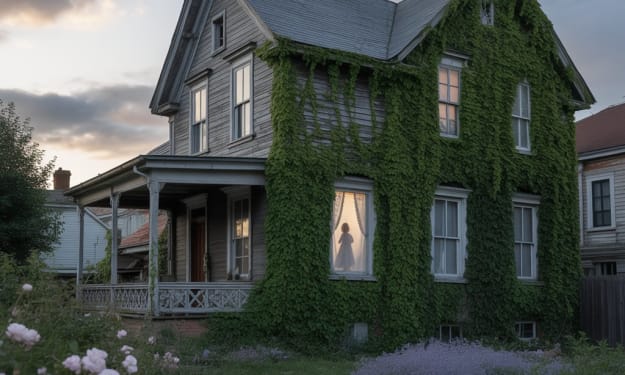
Every town has a house it whispers about. In Millbrook, that house was 47 Elmridge Lane. It sat at the edge of town like a secret someone tried to bury but forgot to dig deep enough. The yard was wild—thistles sprouting like sentinels, ivy crawling up the walls like green veins. The shutters hung crooked, sighing in the wind. And always, the curtains moved, even when no one was home.
By AFTAB KHAN6 months ago in Families
Wise~Guys
— Look Behind what's in Front of You ~ Make Good Choices — Hey, So how you Doin'..! Made~Men — Mobster Movies romanticise a distinctive, elegant appearance, impeccable attire style, along with the 'Families' expressive lingo. Making their 'Bones' gave them Panache — with vintage fedoras, tailored pin-striped suits, mirror-polished wing-tip shoes adorned with tassels; with their 'Gun Moll' gorgeous dates on their arms.
By Jay Kantor16 days ago in Families



Comments
There are no comments for this story
Be the first to respond and start the conversation.