
The Kaleidoscope of Childhood: A Journey into Kids Behavior
How Understanding Emotions Shapes the Path to Growth

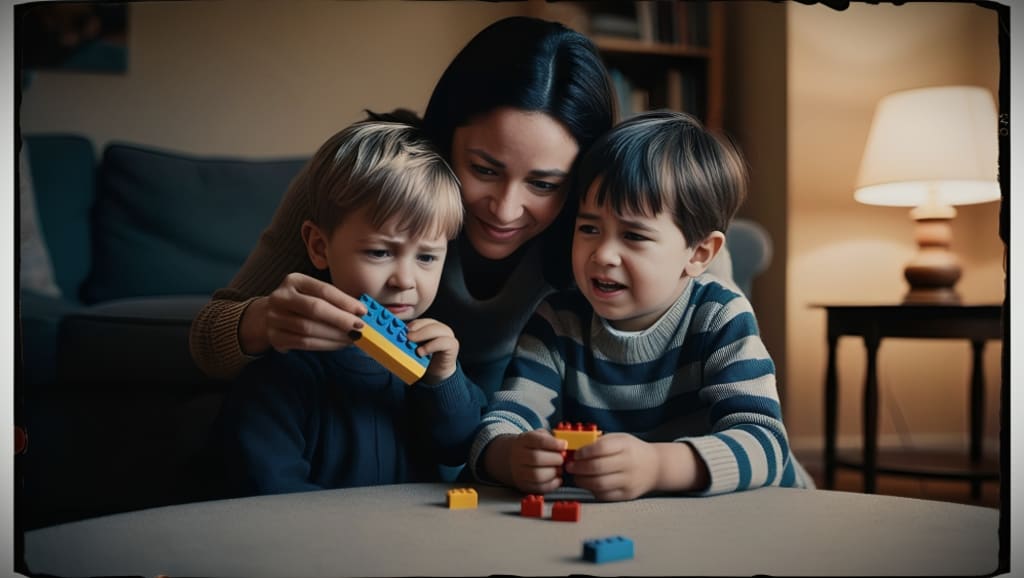
The world of childhood is like a kaleidoscope-vibrant, shifting, and intricate. To parents and caregivers, the patterns of children's behavior are almost like solving a mystery. Indeed, every tantrum, giggle, and question holds a deeper story, waiting to be understood. The story traces the journey of Mira, a mother, as she navigates through the kaleidoscopic and at times incomprehensible feelings of her seven-year-old son, Aarav, and discovers how empathy, patience, and self-awareness can make a great difference in his growing-up years.
Mira always thought parenting would come instinctively. She loved her son deeply, but she felt overwhelmed when Aarav began showing defiance and throwing tantrums over small frustrations. Each day brought new challenges. One moment, Aarav was sweet and cooperative, but the next, he was inconsolable over the wrong color cup for his juice.
On a gray afternoon, after an exhausting meltdown over a misplaced toy, Mira sank into the couch, staring at the raindrops sliding down the window. She whispered to herself, "Why is he like this? Am I doing something wrong?
Mira now began inquiring into the children's behavior. She once came across an article describing how children behave differently as compared to others because of their developing brains. This finally brought the pieces together in her mind. Aarav isn't being "difficult" on purpose-he is living emotions he did not yet know how to regulate and explain.
The next day, Mira tried something different. When Aarav became frustrated while building a LEGO set, instead of immediately offering solutions, she knelt beside him and said, "It looks like you're feeling upset because the pieces aren't fitting the way you want. That can be hard."
Aarav paused, his little fists unclenching. "Yeah," he mumbled, his eyes filling with tears.
Mira pulled him into a hug. "It's okay, to be upset. Let's sort this out together."
Much to her surprise, Aarav calmed down faster than usual this time. He even began explaining what was bothering him on his own without her prodding. For the first time, Mira felt a glimmer of hope.
Understanding Aarav's emotions didn't make every day perfect, but it changed Mira's perspective. She realized much of his behavior was because he felt unheard or misunderstood. In the process of acknowledging his feelings and not dismissing them, she was giving him emotional intelligence, a lifelong skill.
She also started setting limits with tact and firmness. One day when Aarav refused to put his toys away, Mira calmly said, "I know you want to continue playing, but it is time for cleaning up. Let us do it together." And he resisted at first, over time the routine wasn't a big fight.
And she learned that it was mainly her behavior that shaped Aarav's reactions much of the time. If she was stressed or impatient, Aarav clung to that mood, too. Mira learned to practice mindfulness, taking deep breaths and trying to respond calmly during those most challenging moments.
One evening, Aarav had a meltdown at bedtime because he just didn't want to stop playing. Mira was exhausted but remembered her promise to herself. She sat beside him and said, "I see that you're upset because you don't want the fun to end. It's hard to stop doing something you love."
Aarav nodded, tears streaming down his cheeks. "I just want more time, Mommy.
"I understand," Mira said softly. "How about we read an extra story tonight? That way, we can end the day with something fun."
The compromise worked. Aarav climbed into bed, and as Mira read to him, she felt a sense of accomplishment. Not because the situation resolved smoothly, but because she had handled it with compassion and understanding.
With time, Mira started observing the miraculous change in Aarav. He had become more expressive and told her how he was feeling instead of acting out on it. "Mommy, I'm angry because you said no to ice cream," he'd say, instead of throwing a tantrum.
Mira celebrated these small victories, knowing they were building blocks for Aarav's emotional growth.
The journey wasn’t without setbacks. There were days when Mira lost her patience or felt like giving up. But each time, she reminded herself that parenting wasn’t about perfection—it was about progress.
One day, as Mira watched Aarav playing with a younger cousin, she saw him gently comfort the child after a fall. “It’s okay,” Aarav said, patting the toddler’s back. “You’re sad, but it’ll get better.”
Mira's heart swelled with pride. She now knew the worth of what she had been doing all this while. By teaching Aarav to understand and handle his emotions, she was giving him the power to relate to others and cope with life's ups and downs with empathy.
Mira's story is one of growth not just for Aarav, but also for herself. She learned that understanding children's behavior is a journey of self-discovery, patience, and unconditional love. Through the kaleidoscope of childhood, she found that every twist and turn revealed not just the beauty of her son's emotions but the resilience of her own heart.
About the Creator
Dinesh Maurya
I'm a passionate writer, creative storyteller, and motivational enthusiast who has carved out engaging narratives to inspire and educate. I can offer linguistic expertise combined with richness in culture in my work.
Keep reading
More stories from Dinesh Maurya and writers in Families and other communities.
Love Letters Never Sent
Love Letters Never SentA Tale of Love, Loss, and Unspoken Words Lena sat by the window, her fingers tracing the edges of a yellowed envelope, its seal unbroken. The words inside had been waiting for years—words she had never gathered the courage to send. Outside, the city pulsed with Valentine’s Day joy. Lovers exchanged roses, laughter, and whispered promises. Candlelit dinners were being prepared, chocolates gifted, and confessions of love whispered into the night. But Lena's world remained frozen in time, trapped between what was and what could have been.
By Dinesh Maurya10 months ago in Families
Wise~Guys
— Look Behind what's in Front of You ~ Make Good Choices — Hey, So how you Doin'..! Made~Men — Mobster Movies romanticise a distinctive, elegant appearance, impeccable attire style, along with the 'Families' expressive lingo. Making their 'Bones' gave them Panache — with vintage fedoras, tailored pin-striped suits, mirror-polished wing-tip shoes adorned with tassels; with their 'Gun Moll' gorgeous dates on their arms.
By Jay Kantor19 days ago in Families
Wild Card Weekend Recap: What Happens Now?
I think I figured out why I love Wild Card Weekend so much. It's because it's the first playoff anything of the calendar year. The NFL season starts in the fall, and once upon a time, the champion was crowned either on or slightly before New Year's. The evolution of the NFL schedule has resulted in the playoffs starting just into the New Year, and currently, the final week of the season falls on the first weekend of the New Year, with Wild Card Weekend coming a week after that. So yes, chronologically, the NFL's Wild Card Weekend serves as the first playoff anything of the calendar year.
By Clyde E. Dawkins7 days ago in Unbalanced




Comments
There are no comments for this story
Be the first to respond and start the conversation.