
The Journey That Changed Everything
A mother, a daughter

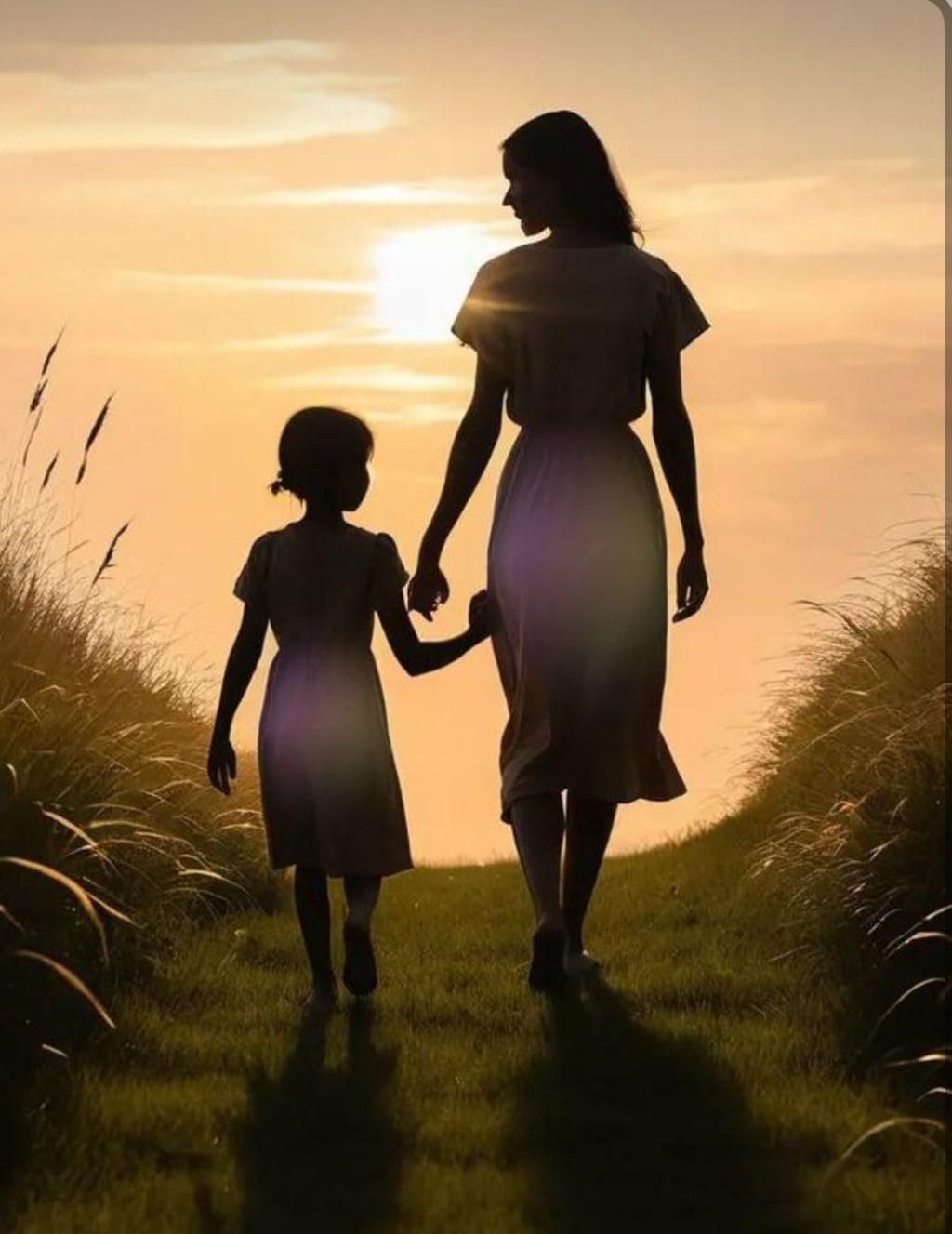
A mother, a daughter, and the long road from Bishkek to the Pilat hills.
Every change that comes when you find yourself in another country feels extraordinary. You wake up more alert, more curious; your mind stretches in directions you never planned. Your social circle shifts, and with every shift you shift, too. You learn to adapt not once, but again and again — with every new person, every new document, every new street you must learn to pronounce. Even the water tastes different. The air moves differently across your face. Nothing is the same, and that is exactly what starts to change you.
There were nights when I prayed and asked forgiveness for leaving my beautiful, known, predictable life in Bishkek. Everything there had a name, a history, a memory attached to it. But I left for my daughter — my only, beloved child. I wanted her to study abroad, to grow in a place that might one day offer her European citizenship and a sense of belonging the world seemed unsure how to give her. She was neither Lebanese nor Kyrgyz; she carried both and neither. People would look at her and guess — “Chinese? Korean?” — and I would smile, because how could I explain all the roads inside one girl?
Back home we began ballet when she was in first grade. I can still hear the studio: the sharp clap of the teacher’s hands, the dust of rosin rising from the floorboards, the smell of old varnish and effort. I dreamed of Paris — a ballet school with light streaming through tall windows, music, possibility. But her teacher was strict, shaped by a Soviet discipline that allowed no softness. By the end of primary school my daughter had stopped wanting to dance.
“Mama, I don’t want to go,” she said once, tying her shoelaces slower than slow.
“Just today,” I said. “Maybe you’ll feel different after class.”
She shook her head. “No. It hurts inside.”
That was when the dream changed shape. If she wouldn’t dance there, maybe she would dance somewhere else. I started searching for ballet schools in Paris, reading requirements late at night while she slept. That’s how I stepped onto a path I thought would lead to Paris — a path that led instead to an entirely different life.
We did not land in Paris. We found ourselves in a regular French school system, with papers to sign and meetings to attend in a language neither of us yet spoke. We settled far from the city, in Givors, on the edge of the Pilat mountains. The land there rises and folds like fabric thrown over hidden objects: green fields, groves, flat high meadows, and winding roads curling up and down like ribbon. In the early mornings the fog hangs low, and when the sun lifts, the hills glow. I remember thinking, If home can be beautiful in more than one place, maybe we will be all right.
Every school day became a choreography of driving. My daughter didn’t want to eat in the school cafeteria — new food, new smells, new noise.
“Can I eat with you at home?” she asked.
“Of course,” I said. And so we did.
I drove her to school in the morning, brought her home for lunch, drove her back for the afternoon. On some days I waited in the car outside, engine off, hands around a warm cup, listening to children pour out at recess like birds startling from a field. My own studies had to fit in the empty spaces of her schedule; when her timetable settled, only then could I attend my classes.
Later I enrolled her in tennis. Movement, yes — but on her own terms. That’s when I met Oksana. Soon we were two mothers in one car (or sometimes two cars in convoy), laughing, swapping words in mixed languages while our children rode in the back toward courts in Vienne. News from her home country was frightening, heavy — yet on those drives we made a small pocket of lightness. We were safe in France, and we knew it.
France, in turn, opened unexpected doors. There were community programs — food assistance, language courses, social support. You registered, waited for your day, showed your papers, came back again. It took patience, but the system worked; slowly, routines formed. We learned where to go, whom to ask, when to queue. Free groceries helped. Free classes helped. So did the people — kind, busy, practical, human.
Weeks blurred into months; months stretched into years. Our children grew taller; their language grew faster. Inside myself, I kept saying thank you — not always out loud, but often in prayer. People kept appearing at just the right time: someone to translate a letter, someone to explain insurance, someone who knew where the good second-hand winter coats were. Sometimes grace looks exactly like bureaucracy that finally says “approved.”
Strange little mercies stacked up: no parking fines, though I was sure I’d misread the signs; state medical insurance granted when we most needed it; a neighbor who lent winter tires; a teacher who stayed late to help my daughter catch up. And somewhere along the way my daughter began to speak French better than I did — first in small bursts, then whole conversations, then translating for me.
There are days when I look back and it feels as if the road we walked had already been trodden by invisible feet, as if someone moved ahead of us clearing stones. Each turn opened another view: a classroom, a tennis court, a new friend, a new word, another document stamped. This was not the Paris ballet future I once imagined, but it has been — in its own way — a wider stage.
And we are still walking.
About the Creator
Rebecca Kalen
Rebecca Kalen was born and raised in Kyrgyzstan. After graduating from the National University, she worked as an English teacher and later in business. Life led her to choose family over career, a decision that shaped who she is today.
Keep reading
More stories from Rebecca Kalen and writers in Families and other communities.
Wise~Guys
— Look Behind what's in Front of You ~ Make Good Choices — Hey, So how you Doin'..! Made~Men — Mobster Movies romanticise a distinctive, elegant appearance, impeccable attire style, along with the 'Families' expressive lingo. Making their 'Bones' gave them Panache — with vintage fedoras, tailored pin-striped suits, mirror-polished wing-tip shoes adorned with tassels; with their 'Gun Moll' gorgeous dates on their arms.
By Jay Kantor17 days ago in Families




Comments
There are no comments for this story
Be the first to respond and start the conversation.