
The Influence of Social Media on Youth Mental Health
Navigating the Digital Maze: The Double-Edged Sword of Social Media on Youth Mental Health

1. Introduction: The Connection Between Social Media and Mental Health
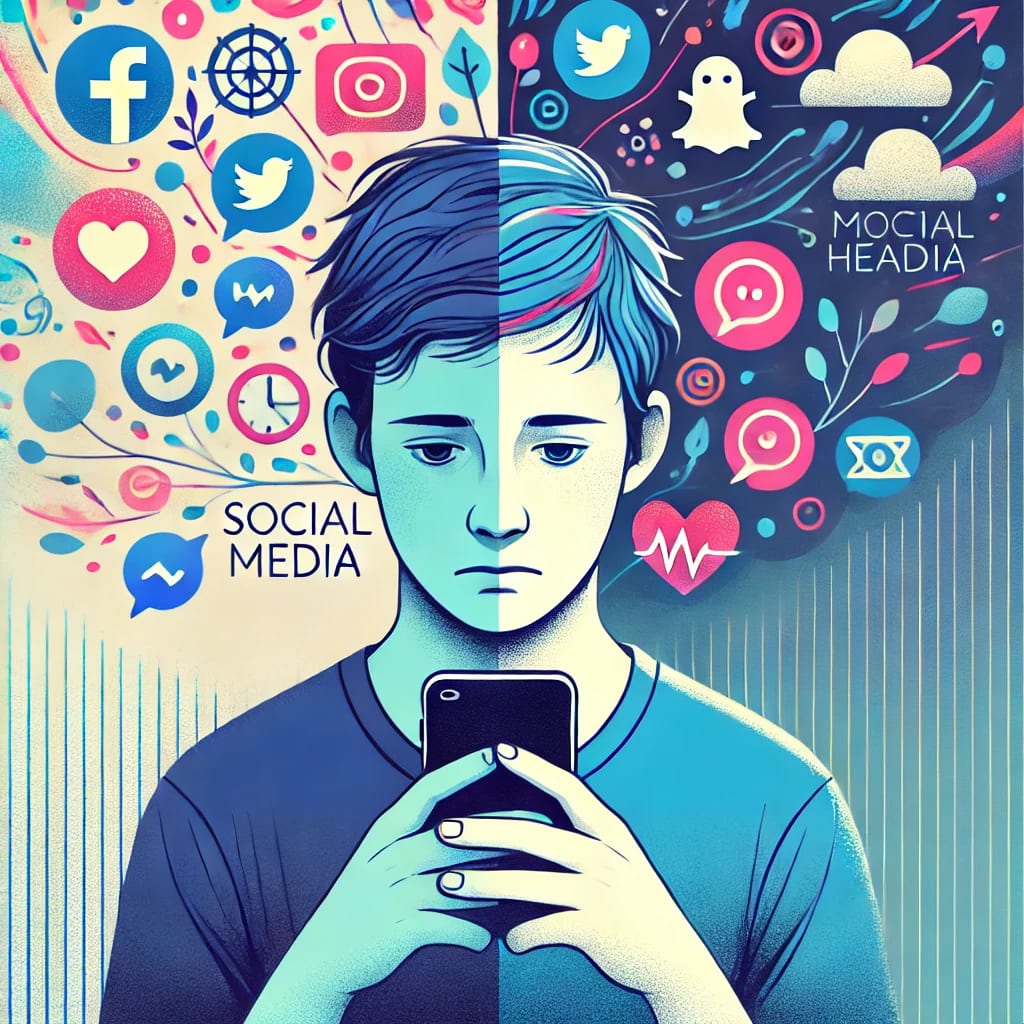
In the digital age, social media has revolutionized how young people interact, communicate, and perceive the world. These platforms offer instant access to information, social connections, and self-expression, becoming a virtual environment that constantly accompanies the growth and personal development of young people. However, while social media has enriched the social lives of the younger generation, it has also raised numerous concerns about its impact on mental health. This article will explore in depth how social media affects the psychological well-being of young people, considering both the positive and negative aspects, and proposing practical solutions for a more mindful and healthy use of these technologies.
2. The Benefits of Social Media: Beyond Entertainment
Despite the often-discussed risks, social media provides a myriad of benefits that are frequently overlooked in discussions dominated by its potential downsides. Firstly, these tools serve as an unprecedented educational resource. Young people can access information on any subject with a simple click, attend online courses, follow expert lectures, and acquire skills beyond the traditional school curriculum. The democratization of information through social media enables young people to explore personal interests and grow their knowledge autonomously and proactively.
Moreover, social media acts as a platform for advocacy and social engagement. Movements such as #FridaysForFuture or #MeToo have gained global traction thanks to social media, allowing young people to unite, express their opinions, and actively participate in social and political causes. This involvement not only fosters greater social awareness but also contributes to shaping active and engaged citizens.
Social media also provides a creative outlet. Platforms like YouTube, Instagram, and TikTok enable young people to share their artistic passions, from music to photography, writing to dance. This creative expression not only enhances self-esteem but can also pave the way for professional opportunities in creative fields, promoting both personal and professional fulfillment.
3. The Negative Effects of Social Media on Mental Health
However, the benefits of social media should not overshadow its potentially harmful effects on the mental health of young people. One of the most concerning issues is the addiction to social media, a condition increasingly recognized by mental health professionals. This addiction is fueled by the very structure of social platforms, which use immediate reward mechanisms—such as notifications, “likes,” and comments—to keep users constantly engaged. The instant gratification provided by these mechanisms can lead to compulsive use, interfering with daily activities and creating a difficult-to-break cycle of dependence.
In addition, social media can contribute to disconnection from reality. While social platforms offer a refuge where young people can create and curate their online identities, they can also distort the perception of reality. The constant exposure to filtered and idealized content can make young people feel disconnected from their real lives, fueling feelings of dissatisfaction, anxiety, and depression. This phenomenon is particularly dangerous during adolescence, a critical period for the development of personal and social identity.
Another significant negative effect is misinformation. While social media provides access to a vast sea of information, it is also a fertile ground for the spread of fake news, conspiracy theories, and harmful content. Young people, often less experienced in assessing the credibility of sources, can be particularly vulnerable to these forms of manipulation, which can negatively impact their mental health and emotional well-being.
4. The Psychological Impact of Aesthetics and Comparison
Social comparison, a natural yet intensified phenomenon on social media, can have a devastating psychological impact on young people. The visual nature of social platforms like Instagram and TikTok accentuates the tendency to compare oneself with others, especially concerning aesthetics and lifestyle. Idealized aesthetics presented on social media can lead young people to develop body dissatisfaction, low self-esteem, and, in some cases, eating disorders. The excessive use of filters and image-editing tools exacerbates the problem, creating a discrepancy between the online image and reality that can be difficult to manage, especially for young people in their formative years.
But comparison is not limited to physical appearance. Social media also encourages competition in terms of popularity and social success, measured by “likes,” comments, and follower counts. This race for virtual success can lead young people to measure their worth by superficial standards and feel inadequate if they do not reach the same levels of popularity as others. The pressure to maintain a perfect image and lead an active and interesting social life can increase stress and frustration, exacerbating existing psychological issues such as anxiety and depression.
5. The Role of Parents and Educational Institutions
The role of parents and educational institutions is crucial in mitigating the negative effects of social media on youth mental health. Supervision and dialogue: Parents need to be present and involved in their children’s online activities, not just through monitoring, but by establishing open and honest dialogue about the risks and pressures associated with social media. It is essential for young people to feel supported and understood in their digital experiences rather than judged or surveilled.
Digital awareness education: Schools have the responsibility to provide digital education that goes beyond technical skills, including aspects related to mental health and risk management online. Teaching young people how to identify and respond to misinformation, manage their online image, and develop a balanced use of social media is critical to preparing them to navigate the digital world safely and mindfully.
Creation of support resources: Educational institutions must also ensure access to psychological support resources for students. This can include individual counseling, support groups, and mental health awareness programs. A school environment that promotes mental health and provides adequate resources can make a difference in preventing and addressing problems related to social media use.
6. Prevention and Intervention Strategies: Towards Mindful Use
To help young people harness the benefits of social media without compromising their mental health, it is necessary to adopt a holistic approach that involves individuals, families, and communities. Self-regulation and balance: Young people should be encouraged to set clear limits on their time spent on social media and balance their digital activities with meaningful offline experiences. Promoting the importance of spending time with friends and family in real life, engaging in physical activities, and pursuing hobbies away from screens can help reduce social media dependency and improve overall well-being.
Critical awareness and resistance to social pressure: Educating young people to critically evaluate online content is essential to counteract the negative influence of social comparison. Helping them develop self-esteem based on internal values rather than external validation can make them less vulnerable to the pressures exerted by social media. Additionally, teaching resilience and stress management strategies can strengthen their ability to cope with the emotional challenges associated with the use of digital platforms.
Psychological support and normalization of mental health conversations: It is crucial that young people have access to appropriate psychological support and that the conversation about mental health is normalized. Families, schools, and communities must collaborate to create a supportive environment where young people can openly discuss their problems without fear of stigma or judgment.
7. The Future of Social Media and Mental Health: Towards Responsible Use
Looking to the future, it is clear that social media will continue to evolve and play a central role in young people’s lives. However, to ensure that these platforms do not compromise users’ mental health, it is necessary for technology companies, governments, and communities to work together to promote responsible and safe use of digital technologies. Responsible innovation: Social platforms must commit to creating safer and more supportive online environments by introducing tools and policies that protect young people from the risks associated with excessive social media use. This could include designing interfaces that reduce the risk of addiction, promoting educational and positive content, and facilitating access to psychological support resources.
Regulation and user protection: Governments must update policies and regulations to address the new challenges posed by technological evolution, ensuring that users’ rights, particularly minors, are protected. This may include regulations that require platforms to be more transparent about their algorithms and data collection mechanisms, as well as the introduction of measures to prevent the spread of misinformation and harmful content.
Education and cross-sector collaboration: It is crucial that digital education continues to evolve, with particular attention to mental health and critical awareness. Collaboration between governments, educational institutions, technology companies, and families will be essential to create a digital ecosystem that supports the mental well-being of young people. Only through a coordinated and multidisciplinary approach will it be possible to mitigate the risks associated with social media use and promote a healthy and safe online environment for future generations.
Conclusion: A Balanced Approach to Social Media
In conclusion, social media is an inevitable and increasingly influential component of modern youth life. When used with awareness and responsibility, it can offer numerous advantages, including social connections, creative expression, and access to information and educational resources. However, it is essential to recognize the potential risks associated with excessive or inappropriate use of digital platforms. Through education, psychological support, and the adoption of prevention strategies, it is possible to promote a balanced and positive use of social media, ensuring that young people can take advantage of the opportunities offered by technology without compromising their mental health.
About the Creator
Fabio Smiraglia
I am a passionate content writer with extensive experience in crafting engaging texts for blogs, websites, and social media. I love telling stories, informing, and connecting with audiences, always with creativity and precision.
Keep reading
More stories from Fabio Smiraglia and writers in Families and other communities.
Biotechnologies and Personalized Medicine: The Future of Healthcare
Introduction Medicine has undergone numerous revolutions over the centuries, from the use of medicinal herbs to the advent of modern surgery, to the discovery of antibiotics and vaccines. Today, we stand on the brink of another revolution: that of personalized medicine, made possible by advances in biotechnology. This innovative approach promises not only to improve the effectiveness of treatments but also to minimize side effects by tailoring therapies to the genetic specifics of each individual. However, this new frontier in medicine not only opens up extraordinary prospects but also poses new challenges related to ethics, accessibility, and data management.
By Fabio Smiragliaabout a year ago in Futurism
Wise~Guys
— Look Behind what's in Front of You ~ Make Good Choices — Hey, So how you Doin'..! Made~Men — Mobster Movies romanticise a distinctive, elegant appearance, impeccable attire style, along with the 'Families' expressive lingo. Making their 'Bones' gave them Panache — with vintage fedoras, tailored pin-striped suits, mirror-polished wing-tip shoes adorned with tassels; with their 'Gun Moll' gorgeous dates on their arms.
By Jay Kantor19 days ago in Families
Wild Card Weekend Recap: What Happens Now?
I think I figured out why I love Wild Card Weekend so much. It's because it's the first playoff anything of the calendar year. The NFL season starts in the fall, and once upon a time, the champion was crowned either on or slightly before New Year's. The evolution of the NFL schedule has resulted in the playoffs starting just into the New Year, and currently, the final week of the season falls on the first weekend of the New Year, with Wild Card Weekend coming a week after that. So yes, chronologically, the NFL's Wild Card Weekend serves as the first playoff anything of the calendar year.
By Clyde E. Dawkins7 days ago in Unbalanced



Comments (3)
Thanks for sharing.
Very educative, thanks for the analysis
Well said