
The Hardest Part Isn’t Moving—It’s Integrating
How I built a life (and friendships) from scratch in a foreign country


📘 Introduction — My Journey: From Kyrgyzstan to Lebanon, and Then to France
My name is Rebecca. I was born and raised in Kyrgyzstan, where I built my life, studied at university, and worked as an English teacher before moving into the business world. My husband is Lebanese, and together we raised our three children in Bishkek, the capital of Kyrgyzstan.
For many years, we lived a stable and fulfilling life. Our children grew up in Kyrgyzstan — they went to school there, made friends, and built strong roots. But in 2023, life took an unexpected turn. Because of rising tensions and the uncertain situation in the region, we made the difficult decision to leave our home. We sold our house, packed our memories, and moved to Lebanon — my husband’s homeland — in search of safety and stability.
At that time, our eldest son was already studying in Italy. Our second son had been accepted to a college in the United States and was preparing to leave. Our youngest daughter started attending a French school in Lebanon. We tried to settle and make it work, but shortly after arriving, Lebanon fell into deeper crisis — economically and socially — and became unsafe again.
That’s when we knew: we had to move once more, this time to France. Starting over again wasn’t easy — we arrived in Lyon with hope but very little else. We didn’t speak the language, didn’t know the system, and had no network. But we had each other, and we had experience. We had already rebuilt our lives once — and we were ready to do it again.
This book is my story — and also a guide for anyone who finds themselves in a similar situation. Whether you’re leaving home because of conflict, searching for better opportunities, or starting fresh in a new culture, I want to share what helped me survive, adapt, and move forward.
Chapter 1: Living in Lebanon — Between Loneliness and Adaptation
When we arrived in Lebanon, I thought things would slowly fall into place. After all, it was my husband’s homeland — he spoke the language, he knew the culture. But for me, it was completely unfamiliar. I didn’t speak Arabic. I didn’t have any friends. I had left behind everything I had built in Bishkek — my home, my job, my sense of stability.
I felt lost.
I was surrounded by people, but I was incredibly alone.
The relationship between me and my husband was complicated. We were under a lot of stress — moving countries, raising children, managing financial and emotional uncertainty. I didn’t feel supported, and at times, I felt invisible. I questioned my decisions every day.
Why did I leave?
Why did I give up my life in Kyrgyzstan?
At the same time, I was deeply curious. A part of me wanted to understand this new place — the culture, the food, the way people lived. But it was hard to feel at home in a country where you can’t understand a simple conversation on the street or ask for help at the market store
Learning the local language is not just important — it’s essential. Without language, you feel powerless. You become dependent on others. It affects your confidence, your mental health, your ability to integrate. It creates a wall between you and the world around you.
Lebanon taught me that emotional adaptation is just as important as practical adaptation. You can learn where to buy bread or how to take the bus — but if you don’t feel connected, if you don’t feel heard, you’re still a stranger in your own life.
A Wedding in Bishkek — Holding On to Our Roots
A year passed in Lebanon, filled with uncertainty, stress, and a search for stability. But life doesn’t stop — even when you’re in transition. And in the middle of everything, we were faced with something deeply personal and meaningful: it was time to marry our eldest son.
He had grown up in Bishkek. His fiancée was his childhood classmate. Their lives, and the lives of their families and friends, were deeply woven together — school memories, family dinners, summer vacations, neighbors who had watched them grow up. Our roots were there. Our community was there.
Despite all the chaos we were going through — the move, the war, the instability — we knew one thing for sure: this wedding had to happen in Bishkek.
It wasn’t easy to organize. We were between countries, dealing with immigration, living with limited resources. But love, tradition, and connection to home gave us the strength. We returned to Kyrgyzstan to celebrate this important moment with the people who had been part of our lives for decades.
It was more than just a wedding.
It was a way to feel grounded again.
To reconnect with the place where our hearts still lived.
To remind ourselves — and our children — where we come from.
About the Creator
Rebecca Kalen
Rebecca Kalen was born and raised in Kyrgyzstan. After graduating from the National University, she worked as an English teacher and later in business. Life led her to choose family over career, a decision that shaped who she is today.
Keep reading
More stories from Rebecca Kalen and writers in Families and other communities.
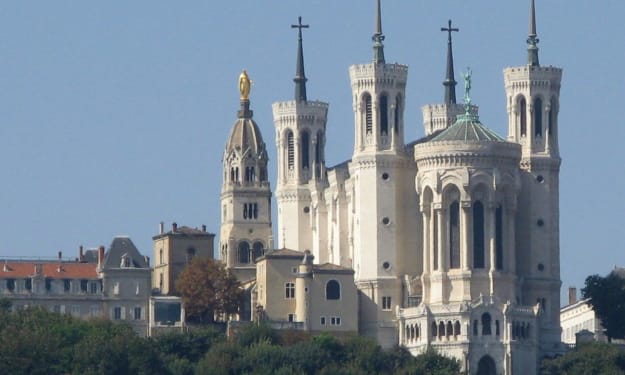
The Miracles of Fourvière
“There are places where prayer becomes breath, and hope becomes a path. For me, that place was Fourvière.” Ever since I first heard the story of the plague and the vow made by the people of Lyon, something stirred deep inside me. It felt as if that ancient promise was somehow the beginning of my own life in this city. From that moment on, I began to believe in miracles tied to the hill of Fourvière.
By Rebecca Kalen5 months ago in Families
Wise~Guys
— Look Behind what's in Front of You ~ Make Good Choices — Hey, So how you Doin'..! Made~Men — Mobster Movies romanticise a distinctive, elegant appearance, impeccable attire style, along with the 'Families' expressive lingo. Making their 'Bones' gave them Panache — with vintage fedoras, tailored pin-striped suits, mirror-polished wing-tip shoes adorned with tassels; with their 'Gun Moll' gorgeous dates on their arms.
By Jay Kantor17 days ago in Families
Why Are Teachers Leaving Education?
As someone who is new to teaching, I will not sit here and pretend to fully understand everything veteran teachers have endured over the years. I do not yet have decades of experience to draw from. However, I can speak honestly about what I have observed in my year and a half in the classroom, and what I have learned in that short time is both eye opening and concerning. Teaching today is no longer just about teaching content. It has evolved into a profession that often requires educators to act as the judge, the juror, and the executioner, so to speak, all while being expected to maintain patience, professionalism, and compassion at every turn.
By Kimberly Nightengaleabout 5 hours ago in Families



Comments
There are no comments for this story
Be the first to respond and start the conversation.