
The Garden Between Us
A Story of Roots, Rain, and the Resilient Bond Between a Mother and Her Son

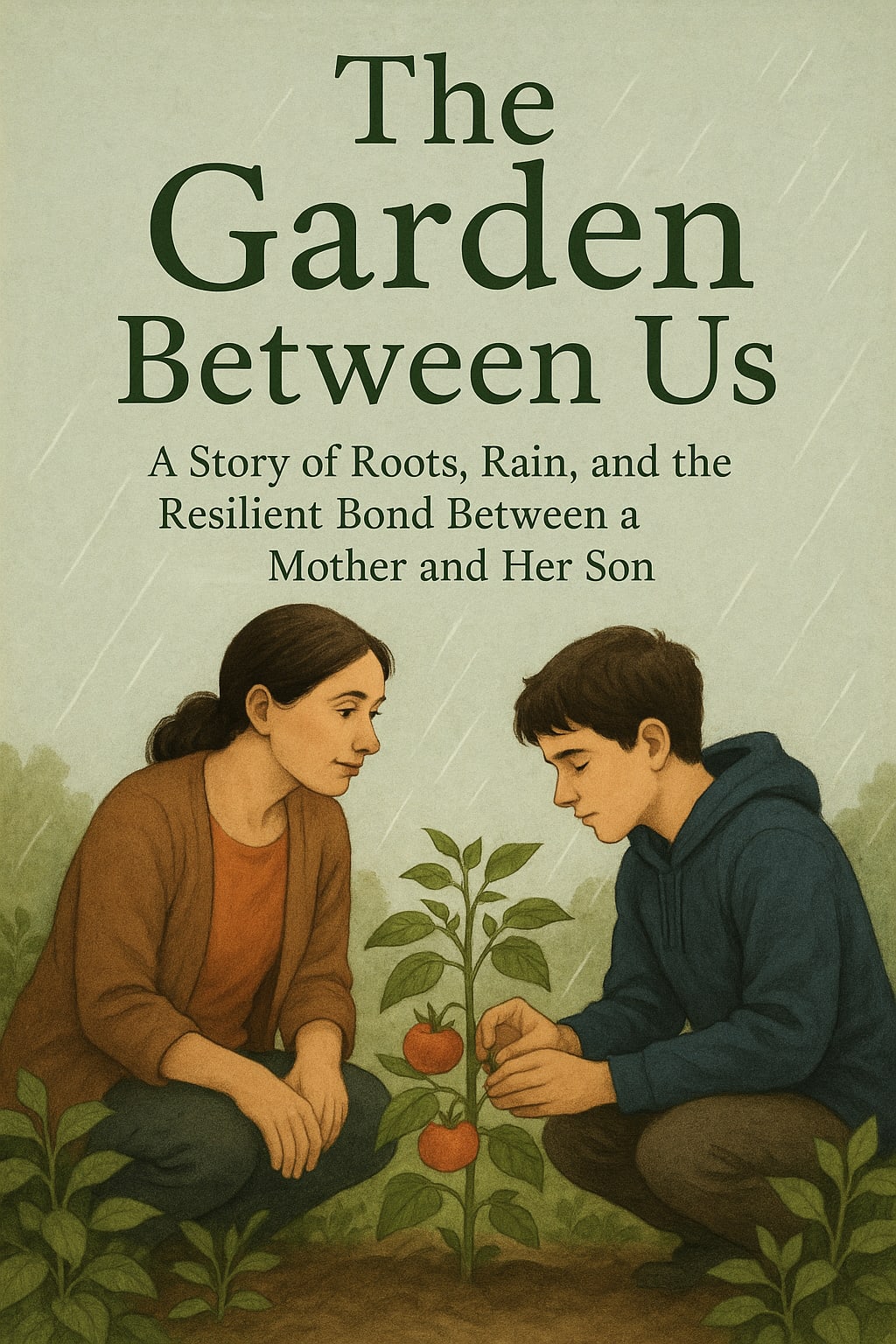
In the quiet town of Elmbrook, where the wind carried the scent of pine and lilac, there stood a little house with a sagging roof and a thriving backyard garden. The garden wasn’t beautiful in the magazine sense—there were no neatly-trimmed hedges or sculpted bushes. But it was alive. Tomatoes clung to thick green vines, beans danced between wooden stakes, and sunflowers stretched tall toward the sky like golden sentinels.
It belonged to Maria and her son, Jonah.
Maria had planted that garden the year her husband died—when Jonah was just five. At first, it was only meant to keep her hands busy, to silence the storm of grief that threatened to swallow her whole. But seasons passed, and as she dug, watered, and watched, the garden became something more. A sanctuary. A mirror of life’s tender resilience.
Jonah, now fourteen, had grown up alongside that garden. He remembered lying beside his mother on the soil as she explained how roots worked, how you had to water deeply so plants could grow strong. He remembered the excitement of the first strawberry harvest and the summer he tried to grow his own watermelon and ended up with nothing more than a green, tasteless orb.
But lately, things had changed.
Jonah was drifting. The garden didn’t hold the same magic it once did. He had earbuds in more often than not, his gaze glued to his phone screen. He had friends now who lived in other worlds—online realms filled with battles, loot, and bragging rights. He rarely came outside. His once-sticky fingers that plucked cherry tomatoes now clutched a controller or typed furiously in group chats. And Maria, for all her patience, felt the ache of distance growing between them.
It wasn’t that Jonah didn’t love his mother. He did. But he was caught in the strange in-between of adolescence, where you feel too big for childhood but too small for everything else. He couldn’t explain it, and he wasn’t sure he wanted to.
One Saturday in June, the kind that was too warm for spring and too wet for summer, the rain poured without mercy. Maria stood by the kitchen window, watching her tomatoes soak. Jonah sat at the table, silently slurping cereal, one earbud in.
“You know,” she said softly, “the basil’s going to drown if this keeps up. I might need to re-pot it tomorrow.”
Jonah didn’t look up. “Mmhmm.”
Maria waited. The moment passed like steam on a kettle. “I was thinking,” she tried again, “we could build that new trellis you talked about. For the snap peas.”
“I’m busy tomorrow,” Jonah mumbled.
“With what?”
He shrugged, eyes still down. “Just stuff.”
“Is it important stuff?”
“Why does it matter?” Jonah snapped. “You don’t need me for your garden.”
Maria stiffened. She didn’t yell. She never did. She just looked at him, her eyes a mix of fatigue and heartbreak.
“You’re right,” she said quietly. “I don’t need you. But I want you.”
Jonah winced. The words struck something in him he didn’t expect. He pushed his bowl away, muttered something incoherent, and retreated to his room.
That night, the rain continued. Maria lit a candle and sat by the window, remembering the time Jonah cried over a broken sunflower stem, the way he’d once asked if vegetables had feelings.
He wasn’t that boy anymore.
But she still was that mother.
---
The next morning brought a soaked, heavy sky. Puddles shimmered across the yard. The basil had indeed drowned. The tomato plants had tilted under their own weight. Maria grabbed her gloves and boots, determined to fix what she could.
She didn’t hear the door creak open behind her.
Jonah stood on the porch, hands in his hoodie pocket, watching her kneel in the mud.
“You’re doing it wrong,” he called out.
Maria looked up, startled. “Oh?”
“You’re retying the wrong stem. That one’s still solid.”
She blinked. “You remember?”
He shrugged. “Yeah. Kind of.”
Maria said nothing, just scooted over a little. “Want to help?”
Jonah hesitated, then stepped off the porch. His shoes sank in mud almost instantly.
Together, they worked in silence. Maria handed him twine, and he looped it clumsily. They picked off damaged leaves and righted the bean poles. He noticed she still hummed while she worked—some soft melody that had no lyrics, only warmth.
When the basil was beyond saving, she sighed. “Guess I’ll have to start over.”
Jonah squatted beside her. “We could plant new ones.”
“We?”
He nodded. “Maybe... if you show me again.”
She smiled. “Of course.”
They worked for hours, without screens or words. Just hands, dirt, and the rhythm of rebuilding. By late afternoon, the garden looked less like a storm’s victim and more like a place healing.
When they sat on the porch, caked in mud and sweat, Maria passed Jonah a cold glass of lemonade.
“Why now?” she asked softly.
Jonah stared at the horizon. “I don’t know. I just… missed it, I guess.”
She waited.
“And I missed you,” he added.
Maria’s eyes filled, but she didn’t let the tears fall. Instead, she reached over and squeezed his hand.
“We grow apart sometimes,” she said. “But roots, Jonah… roots run deep. They find each other again.”
He didn’t respond with words. He just nodded and let the moment plant itself inside him.
---
That summer, Jonah came outside more often. Not every day, and not without the occasional groan, but enough. He learned how to tell when squash was ripe, how to build a compost bin, and that his mother still sang when she thought no one was listening.
The garden flourished. And in its quiet corners, so did they.
Because sometimes, all a bond needs to bloom again is a little rain, a little dirt, and the willingness to dig deep together.
About the Creator
Keep reading
More stories from 🇲 🇮 🇳 🇩 🇺 🇳 🇫 🇴 🇱 🇩 🇪 🇩 and writers in Families and other communities.
Christmas Abroad: Celebrating the Holidays Without Family
I moved to South Korea in 2017. I was twenty-two years old and excited to start my career as an English Second Language Teacher. With a Bachelor's degree and six hundred dollars in my bank account, I set off for Busan.
By Kera Hollowabout a month ago in Families


Comments (1)
Best story