
The Forgotten Melody
A mother’s love, a son’s silence, and a song that echoed too late

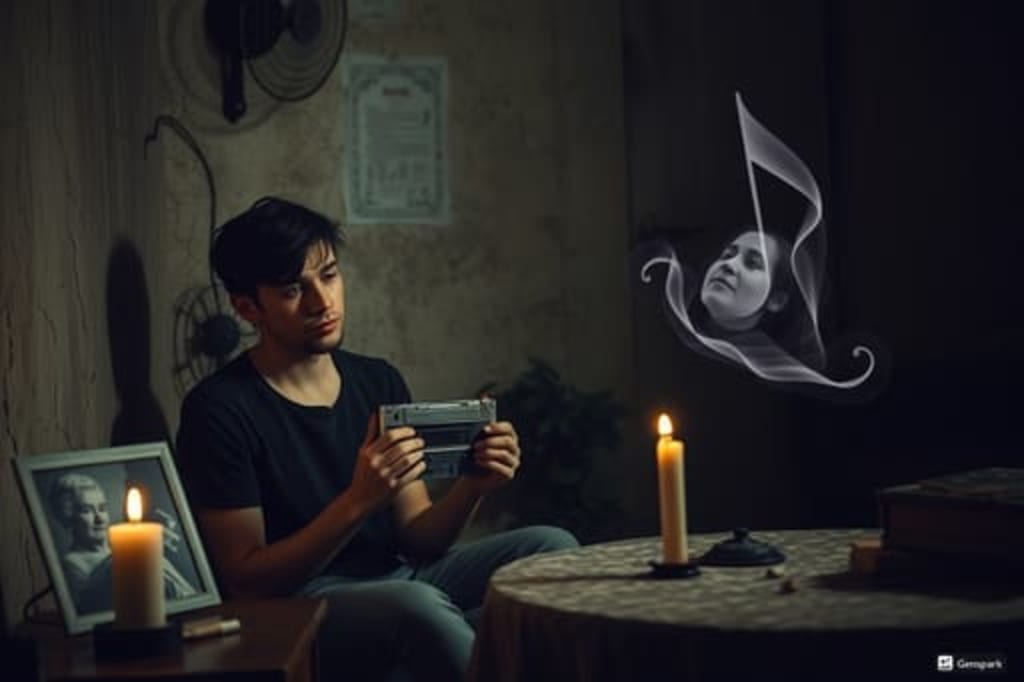
In a narrow alley of Lahore’s old city, in a crumbling yet charming house, lived an old woman named Safiya. Her life had become quiet, slow… almost like an old cassette tape playing the same few songs on repeat.
She used to be a classical singer once. Not famous. Not rich. But her voice could make even the pigeons stop to listen. Her son, Haris, was her only child—her pride, her melody.
Safiya had raised him alone. His father, a tabla player, had died in a road accident when Haris was only three. Since then, music had left their home… except in Safiya’s voice.
She sang lullabies to Haris. Songs of hope, pain, dreams. He’d sit on her lap, tug at her dupatta, and say, “Ammi, sing the moon song again.”
And she would smile, stroke his hair, and hum:
"Chandni raat mein, tu mere paas hai…"
Years passed.
Haris grew up. And music, once his comfort, became his shame.
“Ammi, people laugh when they know you sing old ghazals at weddings,” he once said as a teenager. “It’s embarrassing.”
Safiya had smiled. “But it paid for your books, beta.”
“I don’t want your singing to define me.”
Those words cut deeper than he ever knew.
---
Eventually, Haris got a scholarship and moved to Islamabad. His visits became rare. His calls, shorter.
He became a successful financial advisor, drove a black sedan, wore suits, and shook hands with people who never asked about his past.
Safiya, meanwhile, waited.
Every Eid, every birthday, she’d clean the house, cook biryani, wear her old red shawl, and hum his favorite songs.
Most years, she sat alone.
---
Then one winter, she fell ill. Her voice, once warm like honey, became brittle. The neighbors would hear her coughing late at night, followed by the soft whisper of a ghazal that barely made it through her lips.
Still, she waited.
One day, her neighbor knocked on Haris's office door in Islamabad, uninvited.
"She's not doing well, beta. You should come."
“I have meetings,” Haris replied coldly. “I’ll send money.”
The old man shook his head. “She doesn’t need money. She needs you.”
---
Two weeks later, Haris finally returned. The door creaked as he entered. The home was dark. The floor dusty. A candle flickered near her photo.
He stood frozen.
She was gone.
On the table, there was a worn-out cassette player and a letter in delicate handwriting:
> “My dear Haris,
I’m sorry if my singing embarrassed you. I only ever wanted to soothe your nights the way you soothed mine when I lost your father.
You are my greatest song, beta. I hope one day, you’ll hear me not with your ears, but your heart.”
Tears fell onto the page.
He pressed play.
From the cassette came her soft, trembling voice—singing the lullaby she used to hum when he was five:
"Chandni raat mein, tu mere paas hai..."
The voice cracked near the end. She was crying. Still singing.
He dropped to the floor, clutching the cassette player.
For the first time in years, he remembered her fingers stroking his hair, the smell of her dupatta, the warmth of her lap.
He remembered… love.
---
The next week, Haris quit his job.
He moved back to the old house. Cleaned it. Repaired it. Painted the walls she once leaned on.
And every evening, when the sun dipped behind the old mosque nearby, he sat near her photograph, played the cassette, and whispered, “Ammi, I hear you now. I’m sorry I didn’t listen before.”
---
Moral:
Love may be quiet, but regret screams forever. Listen before the voice fades.
About the Creator
Keep reading
More stories from Abdulrehma and writers in Families and other communities.
The Silent Goodbye
In the heart of a bustling city, where buildings grew taller and relationships shorter, lived a young man named Adil. A talented software engineer, Adil had everything a modern life could offer—an upscale apartment, the latest phone, a buzzing social circle. But there was one thing he didn’t have: patience for his father.
By Abdulrehma 8 months ago in Families
Christmas Abroad: Celebrating the Holidays Without Family
I moved to South Korea in 2017. I was twenty-two years old and excited to start my career as an English Second Language Teacher. With a Bachelor's degree and six hundred dollars in my bank account, I set off for Busan.
By Kera Hollowabout a month ago in Families
Center Stage with Paul Stewart
*** I'm keen to republish the interviews I did for my series with Vocal creators. It's been a few years and I thought it might be nice to revisit these wonderful conversations. I'll be releasing them one at a time for a few weeks/months.
By Heather Hublera day ago in Interview



Comments
There are no comments for this story
Be the first to respond and start the conversation.