
The Forgotten Home
Sometimes the places we leave behind remember us better than we remember ourselves.

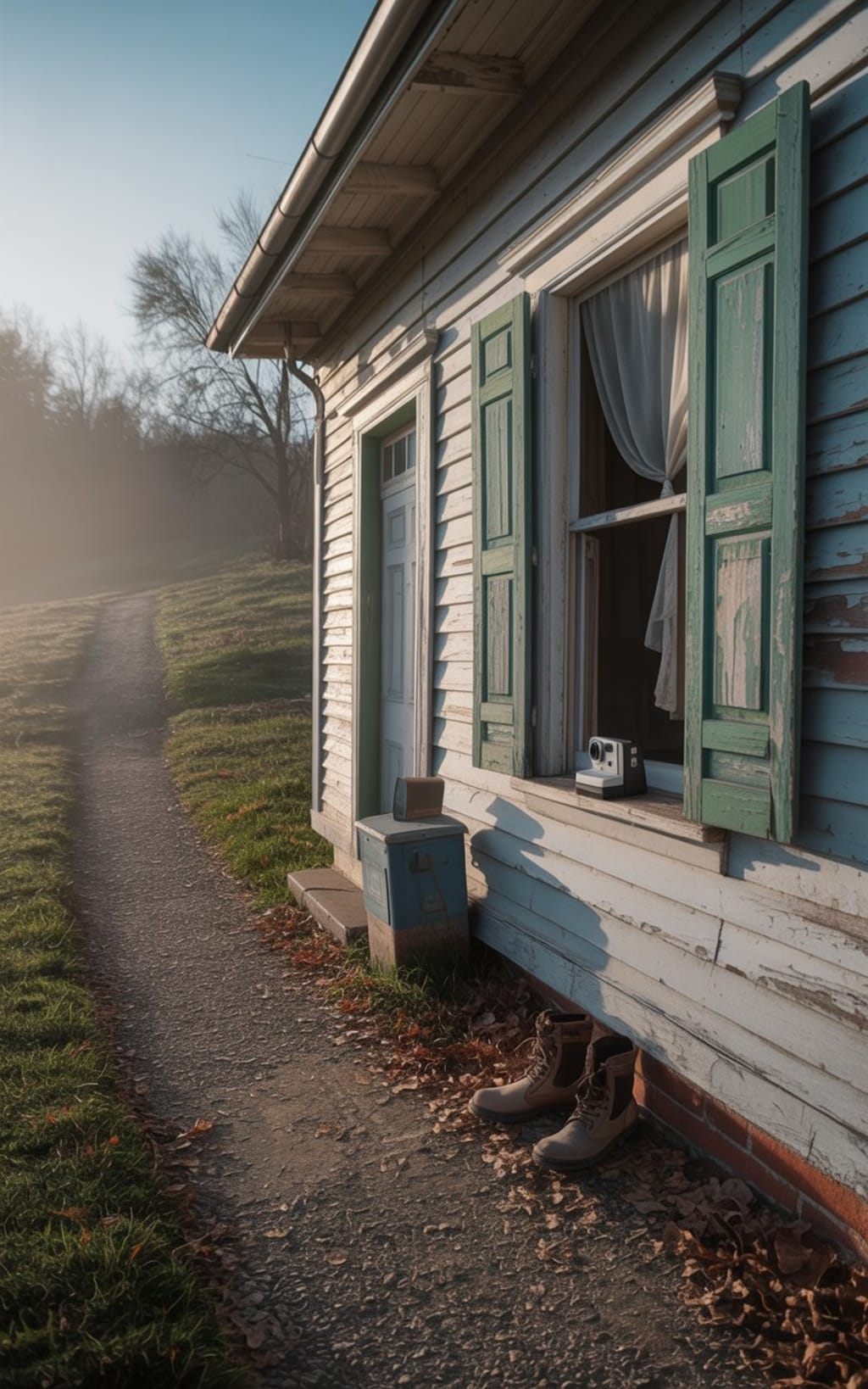
I hadn’t been back in twenty years. Not since Mom died. Not since we packed the last of the dishes into cardboard boxes and drove away from that creaking old house on the hill with the peeling green shutters.
They called it “a fresh start.”
But you don’t get to start fresh when pieces of your soul are still stapled to a place.
It all started with a letter—an actual letter, in a cream-colored envelope with faded handwriting. My name written in pen, not print. No return address, just a postmark from our old town.
Inside was a note:
"The house is still here. So is everything you left behind."
It wasn’t signed.
Just those words. Enough to pull something out of my chest I hadn’t felt in years. Guilt? Curiosity? Grief?
Whatever it was, it was strong enough to make me drive six hours the following weekend.
The town hadn't changed much. The same rusty sign welcoming visitors with “Population: Still Small.” The diner on the corner with the same cracked window. Even the gas station still sold jawbreakers by the jar.
But the house—that was what I came to see.
It stood like a tired sentinel at the end of a gravel path, surrounded by stubborn weeds and wind-chimed silence. Still weather-beaten. Still lonely. But still standing.
I parked and got out slowly, unsure what I’d say to a house I abandoned.
Its windows were foggy, like it had been holding its breath all these years.
The key was still in the planter under the third step. I felt childish using it, like the front door might scold me for being late.
Inside, it smelled like time. Dust, wood, a hint of mothballs, and something else—like lemon, like Sunday morning cleaning with Mom humming to herself.
The furniture was gone. The wallpaper was curling at the edges. But the bones of the house were untouched. The squeaky floorboard by the kitchen still squeaked. The dent in the wall from when my brother threw a baseball indoors was still there, too.
So was the hallway closet.
I opened it carefully.
Inside were boxes. Ours. The ones we never came back for. Toys. Books. Dad’s old flannel shirts. A polaroid camera with one film shot left.
And a shoebox full of letters—mine.
Letters I’d written to no one in particular as a child. Some were angry, some poetic, all untouched. I had signed one of them: “To future me, don’t forget where you came from.”
I sat on the floor and read them until the sun shifted through the blinds and turned the dust into gold.
That’s when I heard it.
A laugh.
Not a ghost’s laugh. A real, present, echoing laugh from outside the house.
I went to the front door and opened it slowly.
Across the street stood an old woman, arms crossed, grinning.
“I figured you’d come,” she said.
It took me a moment.
“Mrs. Dalloway?” I asked. Our old neighbor, who used to bring us pumpkin bread every Halloween. Her face was older now, thinner, but her eyes hadn’t changed.
She nodded. “The house was lonely. I thought maybe it was time to remind someone.”
“You sent the letter?”
She shrugged. “Someone had to.”
We sat on the porch that evening, drinking sweet tea from chipped mugs she brought over. She told me how she watched people come and go, how no one had ever stayed long.
“It waited for you,” she said simply.
I didn’t know how to respond to that.
“I thought leaving would make it easier,” I finally said. “To forget.”
Mrs. Dalloway looked at me with something close to pity. “You don’t have to forget something for it to stop hurting. You just have to make peace with remembering.”
I spent the night in the house. On the floor, wrapped in one of Dad’s old jackets, my head on a stack of memories.
I dreamed of warm pancakes. Of my brother’s toy train rattling through the hall. Of Mom, singing old jazz tunes in the kitchen, flour dusting her nose. I dreamed of laughter echoing off the walls, of the wind tapping gently on the shutters, not trying to scare but to soothe.
In the morning, I woke up crying. But it wasn’t the kind of crying that broke me.
It was the kind that emptied me. Soft and necessary.
Before I left, I took one thing with me: the polaroid camera.
I stood on the porch and snapped a photo of the house, just as it stood, framed by ivy and morning light. The film clicked, then began to develop in my hands—slowly, grainy, but real.
I left a note of my own on the kitchen counter:
“I remember. And I forgive myself for forgetting.”
It’s been three months since that trip.
I hung the photo on my fridge. Every morning I see that house—the forgotten home that waited, not just for me, but for the part of myself I buried with the boxes I never unpacked.
Sometimes, healing looks like returning to the places we swore we’d never go back to.
Sometimes, the most honest parts of ourselves live in the silence between those old walls.
And sometimes, the home we forgot doesn’t forget us.
About the Creator
Nomi
Storyteller exploring hope, resilience, and the strength of the human spirit. Writing to inspire light in dark places, one word at a time.
We Grew Up as “Siblings”… Then Fell in Love—What Happened Next Changed Everything
When my parents decided to adopt a child, I was old enough to understand what it meant—but too young to grasp how much it would change my life. I remember the day they brought them home. Everything felt different overnight. Suddenly, I wasn’t an only child anymore. I had someone to share my space, my routines, and eventually, my life with.
By Lukáš Hrdlička4 days ago in Families
What “Boutique” Really Means in Ella
In many destinations, “boutique” has become a catch-all term for anything small, stylish, or slightly quirky. But in Ella, the word carries real weight. It is not about trendy décor or curated playlists; it is about intimacy, landscape, and a kind of hospitality shaped by the mountains themselves. Ella’s boutique stays blend raw scenery with thoughtful design, creating experiences that feel personal, grounded, and deeply connected to the place. Here, boutique is not an aesthetic — it is an atmosphere.
By John Ashley5 days ago in Families

Comments
There are no comments for this story
Be the first to respond and start the conversation.