
The Father I Never Understood Until It Was Too Late
He wore one shirt for a year — and quietly saved our future.


I kept my father's dead body in front of me and said, "Those who owe me money, please tell me the money you owe. I will repay my father's debt."
The younger sister held my hand and said, "Brother, how will you repay? You yourself have not been able to get a job for 5 years. How will you repay the money while being unemployed?"
I told my sister, "I will repay it even if it takes a lot of trouble, sister."
That night, sleep didn’t visit me. The air felt heavier. My sister was of marriageable age. The burden of managing the family’s expenses seemed like climbing a mountain barefoot. But I was more frightened about how I’d ensure her future — how I’d manage to get her married.
The next morning, I opened the door to find a group of unfamiliar faces gathered outside. Their expressions were serious, yet not hostile. My palms started to sweat. I wiped them against my pants and stepped out.
One man stepped forward. He was wearing a white shirt, glasses slightly fogged up in the morning humidity.
"We’re from the bank," he said calmly. "Your father saved 7 lakh taka in the names of his son and daughter. Kindly visit the branch with your ID."
He turned and left.
I stood frozen. Before I could digest the shock, others began to speak.
A woman holding a worn-out ledger said, "He was part of our association. Every day for the past five years, he gave 20 taka. He never missed a day."
Another person added, "He said it was for his children. He used to say, ‘Even if I wear torn clothes, my son and daughter will never beg.’"
By evening, after speaking with all the small lenders and associations, I sat down with a calculator. My hands trembled as I punched in the numbers. When it was done, I stared at the total — 11 lakh taka.
My heart ached as I remembered a night years ago.
I was angry. Frustrated. The job rejections, the family’s growing struggle, my own insecurities — everything had piled up. I had shouted at my father that day.
"What kind of father are you? You never planned anything for us! What future do I even have with you around? I don’t need such a father."
He didn’t say much. He simply looked at me with those tired but patient eyes. Then he said, softly, "I am trying my best. You’ll get it when the time comes."
Yes, that time had come.
But he had already left.
I walked into his room. His faded diary was still on the table. I opened it, hoping to find more answers. Inside were pages filled with figures — dates, amounts, little reminders. On one page, I found a line in shaky handwriting:
"Even if my son hates me today, he will know one day what I was doing."
I broke down.
I thought of the shirt he wore every day — faded blue, with one pocket torn at the seam. Every time we asked for new clothes for Eid, he simply smiled and said, "I’ll get something next time."
He never did.
I thought of the times he refused meat at dinner, saying his stomach hurt. I thought of the day he returned my sister’s tuition fees even when he had skipped his own lunch.
He had been saving. Quietly, deliberately, lovingly.
That evening, I held my sister’s hand. We sat beside each other in silence. The light bulb above flickered gently. I said, "He gave us everything. We never saw it."
She wiped her eyes and nodded. "He never even bought shoes for himself. The last pair he wore was from my high school days."
I went to the bank the next day. The officer looked at me and said, "Your father was an extraordinary man. This isn’t common. He started saving ten years ago."
I asked, "Did he say why?"
The officer smiled. "He said he wanted his daughter to have a wedding she deserved and his son to have a life he couldn’t give."
That night, I stood under the open sky. Stars blinked gently in the darkness. The wind was cool. I whispered to the sky,
"Baba, you were the richest man I knew. Not in money, but in heart."
For the next few days, I worked tirelessly. I contacted marriage venues, vendors, made lists, budgets. I was still jobless, but I no longer felt poor. My father had given us the greatest wealth — security, dignity, and hope.
When my sister got married three months later, she wore a dress my father had secretly ordered a tailor to make. It had been stored at a neighbor’s house. Wrapped in brown paper, it smelled of naphthalene and memories.
She looked like a queen. As she walked towards the stage, someone whispered, "She must come from a very wealthy family."
I smiled silently.
The guests had no idea that the grandeur wasn’t from money, but from a lifetime of a father’s sacrifices.
After the wedding, I sat in my father's chair. The house was quiet again. I held his diary, ran my fingers over the ink, and promised myself:
"I will live with the same integrity. I will pass on what he gave us — not just money, but values."
Sometimes, love doesn't speak loudly. It saves in silence. It walks in worn shoes. It wears one shirt for years. It leaves behind legacies disguised as ordinary notebooks.
And sometimes, you don’t need a monument to remember someone.
Just a faded shirt in the corner of a drawer.
A diary with scribbled dreams.
And the echo of a quiet smile saying, "You’ll get it when the time comes."
That time is now.
And Baba, I finally understand.
About the Creator
MD Hamim Islam
I'm Hamim Islam /My God is enough for me /forgive me Allah😔💌🤲
Subscribe 73K to my YouTube channel 👇👇
@HolyUpStudio004
Keep reading
More stories from MD Hamim Islam and writers in Families and other communities.
A Love That Transcends Time
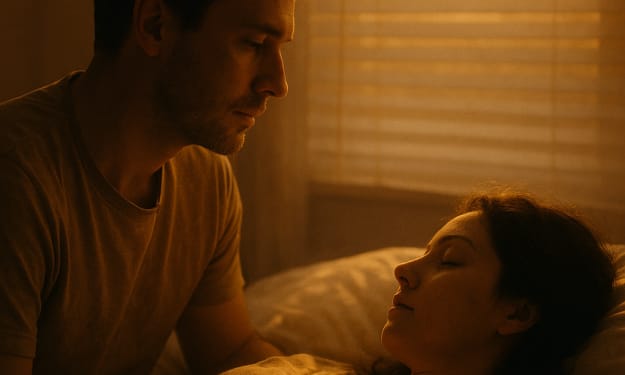
The day began as ordinary as any, yet for him, it hummed with unspoken significance. Sunlight spilled through the blinds, painting her silhouette in gold as she slept, her chest rising in rhythms that synced with his own heartbeat. Each morning since their paths had crossed, his mind wove silent sonnets—verses brimming from his soul’s core that never quite found voice. Today, though, the words clawed at his throat, restless.
By MD Hamim Islam8 months ago in Families
Wise~Guys
— Look Behind what's in Front of You ~ Make Good Choices — Hey, So how you Doin'..! Made~Men — Mobster Movies romanticise a distinctive, elegant appearance, impeccable attire style, along with the 'Families' expressive lingo. Making their 'Bones' gave them Panache — with vintage fedoras, tailored pin-striped suits, mirror-polished wing-tip shoes adorned with tassels; with their 'Gun Moll' gorgeous dates on their arms.
By Jay Kantor19 days ago in Families



Comments
There are no comments for this story
Be the first to respond and start the conversation.