
The Exorbitant Cost of Relocating to a Foreign Country
Foreign Country


My decision-making abilities have always misled me. Ever since I was a youngster. But I knew one thing for sure—that gut sense would tell me that one day I’d leave my nation, Hungary.
In my bedroom, a giant global map extended over the wall. Poster-like, adorning the room. And I would stand in front of it, scrutinizing every corner and crevice—overwhelmed by the countless possibilities.
“Which country should I live in?” I asked my twelve-year-old self. The million-dollar question. It seemed like a dilemma between ravioli or an omelette for supper.
Mum used to purchase a German fashion magazine called “Burda” every month, full of designs that she used to create outfits for us. When we’d go to bed at night, she’d remain up late cutting out the cloth, preparing to sew it the following day.
Looking over the pages helped me to fantasize. Bright graphics, distant landscapes in the backdrop—a world I’d never seen. Advertisements. Interiors with bright bathrooms and corner bathtubs. Plants on windowsills, towels neatly folded on wooden racks.
I wanted all of it.
I wanted a taste of the West. A nice life. A life where you didn’t spend a month’s income on a pair of boots, where money extended farther than simply the payment for electricity bills.
Six years later, Dad put our ragged old suitcase into the boot of my friend’s Seat, preparing to transport me to Italy—1,200 km away from my home. My family. My pets. And everything and everyone I had ever known. Marianne and I were close friends—conspirators, one could’ve called us. Both keen to discover what was beyond our land.
“We’ll call as soon as we get there,” she promised my parents—attempting to comfort them but obviously ready to depart.
We were so young, eager to take on the world—naïve chicks with shards of eggshell still clinging to us. More inebriated by the prospect of freedom than by the alcohol from the night before.
I’ll never forget the sensation of joy when we arrived. The city was filled with youngsters, laughing and drinking their way into nightclubs, speaking a language we couldn’t comprehend.
Yet, when we drove past them, lighted by the night lights, it seemed like home. Like I belonged. The craziest thing to encounter after just hours in a different nation.
I adapted swiftly and easily. Like it was child’s play. Learned Italian, sipped coffee, and ate porchetta. I socialized with natives, eventually assimilating their culture. Whoever said that being an expat was hard? That revelation came later—as the excitement of living abroad faded off. Once, I could no longer disregard the nagging sensation of homesickness constantly mumbling in the background. Like backache that comes and goes, but never fully departs.
Despite that, I still had no desire to return home. I liked exploring a foreign world too much, finding a part of myself I hadn’t known before. But listening to the ringtone while I waited for my folks to pick up? That was painful. Hoping that on Saturday afternoons no one would be using the phone booth on our block—since we didn’t have a landline in the nineties and the phone booth was our only opportunity to hear each other’s voices. That was hard.
Like it was hard to get calls—years later—when my grandparents passed away. One by one. Hospital visits. Deaths. None of which I witnessed. I didn’t grasp their hands or physically assist my parents. They replied, “Don’t come home, sweetheart. It won’t bring them back.” They insulated me from the anguish, and I listened—because I was too terrified to quit work. Too terrified to lose my shot at a Western life.
When I got home, I sat with Nan’s ashes, wondering whether leaving had been the proper thing to do. Or was it selfish to quit my homeland in favor of seeking a brighter future? Who was to blame?
In March 2004, the jet lurched forward and soared into the air as I sat trapped between an Italian lady and a guy from New York who had spilled boiling coffee on his lap. Apparently, I wasn’t done with expat life.
Eight years in Italy hadn’t educated me about the loss of time. The irrecoverable cash I could have spent with my family. Here I was, headed out for England. “Just for a year,” I assured myself, enough time to pick up the language and return home.
It’s astonishing how we feel we can outwit our fate, how we create plans and dream of a life that isn’t written in our tale. It’s the fundamental thing that makes us human—the urge to thrive.
I couldn’t have predicted the Frenchman who came along—the one I fell for head over heels. The charmer, who one day would walk out on me and his kid, altering my life forever. “We’ll speak later,” he informed me as he gave over the home keys, then marched toward the door, forgetting about the newborn boy—the small life napping in the pram on the patio. "You can always come home, sweetheart,” my dad remarked. They were my rock. But you’re uncertain of returning to a nation with a kid, where you couldn’t earn a life on your own.
So, we remained and made it work. There was Skype and WhatsApp, and we no longer required a phone booth. Yearly travels to Hungary made up for part of the missed time.
Although that, the pandemic struck, and although our trip was postponed and rescheduled, we were able to make it back home with a marginal amount of success. The inconvenience of testing and quarantine was not something that anybody worried about. All of the planet was going insane. The only thing I wanted was to visit my parents, even if it required applying a giant red sticker on our front gate as if we were infected with the plague. This was because passport control had informed me that this was the general norm.
For a week, we were confined to the home, which, at the time, seemed like a far longer period of time than seven days. Until the results of the second test came back negative. Cups of coffee were drunk in the yard, near to the cherry tree my parents had planted when my kid was born. During our conversation, we reflected on the happy days and our childhood. Zoe, our rescue puppy, was obediently panting at our feet while Dad continued to tell his goofy stories, as he usually did.
For the last summer, it was Dad's.
I didn’t know. I couldn’t have realized that these would be our last wonderful moments together and that a few months later, my world would go black. Complete darkness. Please halt.
Life came to a standstill.
Mum seldom calls on a Sunday morning, so the red flag went up when she called. She sobbed and spoke at the same time. Panic grew in me as I struggled to grasp her words.
“Your father has passed away,” she managed, choking on the words. I couldn’t hear the rest. Shock. Pain. Anger. This can’t be it! Wait—we just drank coffee beside the cherry tree not long ago.
I was in denial, reluctant to accept the undesirable. Dad—my humorous, loving father who made every second we spent together count—was gone.
We had chatted only two days ago. Mum had. Dad was coughing too much to speak.
“He’s running a little fever. We’ll see,” she said.
We couldn’t travel, go home, or assist to make accommodations. The globe was under lockdown. Mum was on her own. She gave me a photo with a message: “I think your dad would like this.” I agreed.
The pinewood urn looked as good as a wooden box could, supposed to store a loved one’s ashes before they were spread. Minimalist and streamlined, while plainly suggesting death.
Mum collected the urn. Alone. No ceremony. No eulogy. Holding onto it seemed as if we still had him with us.
Not being able to be present for your elderly parents is the greatest anguish for a kid. It’s a dreadful sensation—one you must live with. But how can you?
I vividly recall the moment when Dad hurled the shredded baggage into the boot of the Seat—the same one that transported me to Italy. It was an adventure. A chance to travel the globe, acquire experience, and change myself into who I am now. An opportunity for a brighter future.
Yet, I can’t help asking myself:
Was it worth losing what counts the most—the time I could’ve spent with my loved ones?
It’s a question I may never dare to answer.
About the Creator
Keep reading
More stories from writers in Families and other communities.
Wise~Guys
— Look Behind what's in Front of You ~ Make Good Choices — Hey, So how you Doin'..! Made~Men — Mobster Movies romanticise a distinctive, elegant appearance, impeccable attire style, along with the 'Families' expressive lingo. Making their 'Bones' gave them Panache — with vintage fedoras, tailored pin-striped suits, mirror-polished wing-tip shoes adorned with tassels; with their 'Gun Moll' gorgeous dates on their arms.
By Jay Kantor20 days ago in Families
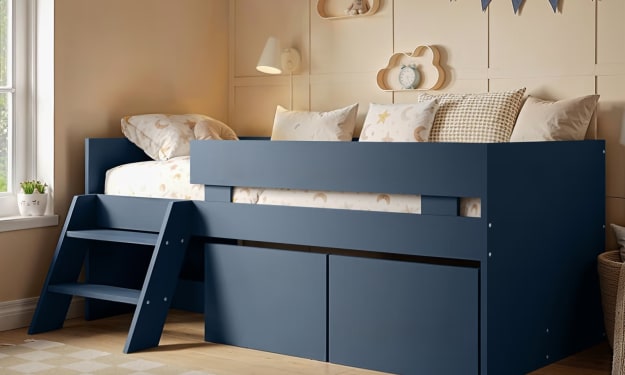
Kids Beds Suitable for Smaller Bedrooms: Smart Comfort Without Crowding
Not every child has a large bedroom. In many homes, space is shared or limited, which means every piece of furniture needs to be chosen carefully. A bed that is too big or bulky can make a small room feel cramped and uncomfortable.
By Shazad Khan4 days ago in Families



Comments (1)
A useful content. Well written.