
At the door stood the fussy man in his waist coat and cravat, looking so out of place that Travis almost couldn’t believe that he was there. There was a burlap sack on the ground beside his polished leather shoes and exquisitely creased black pants. What must it have taken to keep a crease like that on such a long journey?
“You’ve come a long ways, Jeeves, unless I’m very mistaken. My father isn’t moving this direction is he? It is passing hard to imagine that man living out here in the territories.”
The fussy man cleared this throat. “I fear not, sir. I am very sorry to have to inform you, but your father has lived out his days in his final address. He is not moving this direction, nor in any direction any more.”
The bluntness of the declaration surprised Travis. He wouldn’t have thought the fussy man was capable of it. The dismissive statement about death seemed near to a joke, but he’d have sworn that this stuffed suit and tails standing before him was no more capable of a joke than he was of breathing water.
The old man was dead? Who’d have thought he was capable of such a thing as dying? It seemed to Travis as if his father dying was like the mountain that cast its shadow over the back forty of his homestead floating away. Surely not. Except, Jeeves was indeed here, wasn’t he?
“What do you want?” Travis asked, suddenly feeling weary of the encounter and unsure where he stood. He knew that the man before him had more of a relationship with his father than he did, and was no doubt grieving. He knew that his own loss was not much by comparison.
“I’m to make a delivery to you, sir. It is my last duty given to me by your father. I have precise instructions, I am to give you this notebook, and this duffel bag that I have brought from your father.”
In his white gloved hand (so very out of place), was a black notebook. He extended it to Travis between two pinched fingers. As if it were something unpleasant. Something poisonous.
Travis took it, and heard the thing creak as he opened it, like the door to the estate that he had left so many years ago. The house which he’d abandoned in exchange for this wilderness. The house that had abandoned him to accusation and hatred some time before he left it.
His father’s handwriting was scrawled on the pages, much larger than Travis remembered. Each letter took up two lines on the pages. Clearly, the man who wrote this was sick, probably dying as he jotted it out. The writing was sloppy, showing none of the iron strength that Travis so remembered - the iron that had hardened against him.
But the words showed the same character was still present. The same bitterness, the same passionate hatred was still obviously in the heart of the man who wrote these lines, like some angry prophet from the King James Bible.
Were, he corrected his thought. Were present. There was nothing left of this man now but dust and ash, except for the bitter fire on these pages.
“I must admit thee as my only surviving relative. Thine mother died three years after you left us. She wept for most of them. I charge thee with her death, to which she was brought by grief. I condemn thee to flames and ice, for thy soul is bleak, proper to the pyre as ever any soul were.”
Travis turned a page, unsurprised. He could hear the man’s heavy breathing and the see the spittle on his lips that would have been there if he’d spoken these words rather than writing them. He could see his ruddy cheeks.
“Thine hatefulness has brought me naught but sorrow, and oft have I cursed the day of your birth. Yet, you are my only surviving offspring, for Tanner is dead and buried beside his mother. Or she beside him, more properly, for he …”
The writing lost its place. His scrawling writ was so large that it filled the page with very few words, but this page was left with emptiness at the base, as if it were information from a lost soul.
He turned the page. “Ye know that he’d have never done it were it not for you.”
Travis felt his knees go weak, almost collapsed on the floor, and reached out to grasp the frame of the door to steady himself. How many times had he heard those same words in his own head, but not from this venomous man. They were his own recriminations. He knew he’d blamed himself for Tanner’s death, but it had never occurred to him that his father had blamed him too. But those thirteen words were alone on the page. The last word, “you,” was underlined.
How often had he and Tanner sat beside the fire talking? Talking about the importance of freedom, the evil of slaver, and how all men everywhere should be free? How often had Travis poured his passion into his younger brothers ears, until one day they all woke to find him gone. Off to join “the cursed fool crusade of that union destroying president,” as his father had spit and roared. And how long had it been before his corpse was delivered home again? Three weeks?
“Ye know that he’d never done it were it not for you.”
No, probably he wouldn’t have. Travis had not had the courage to go to war first, but when his brothers body came home, Travis left. He spent two years wading through blood and tears and sweat, seeking the freedom of men he didn’t know, men his father didn’t acknowledge as men. The face of each soldier who fell near him was the face of his brother. His lost brother. His brother who never would have died were it not for him.
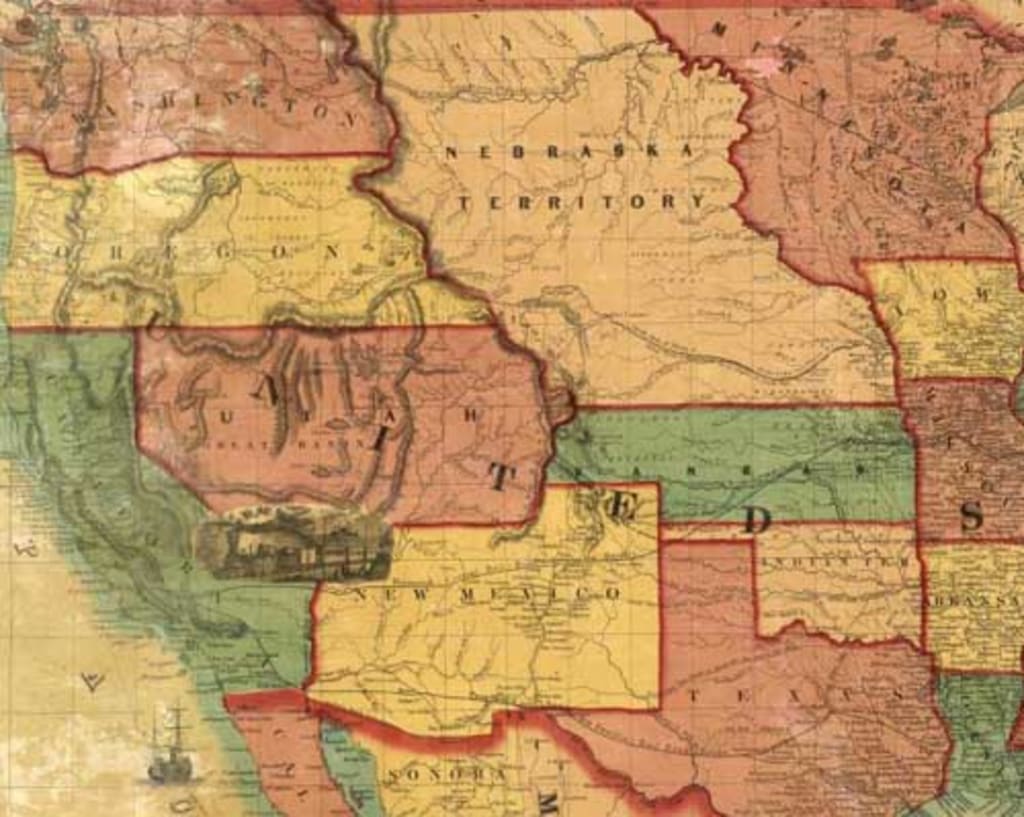
And when the thing was done, he couldn’t go home again. He was sure he couldn’t. He’d tested the idea for a few weeks, but he couldn’t stay. His mothers sorrow, his father’s bitter hate, and the guilty empty room that should have contained his brother - all accused him of his blame. He couldn’t stay. He walked away from the halls of his youth, the riches of his father. He traded marble and oak for split logs of trees which he felled himself. He traded the sophistication of the city for the wild of the Nebraska Territory, hoping to escape the bitter hatred that now he held in his hand.
But, Travis thought to himself, you can never run far enough, can you? Not when you know very well that he’d never have done it were it not for you.
He tuned the page.
“I have left all that I have to Jeeves. He is to be my heir, as he will discover when he returns to Philadephia. He is worthy of becoming a rich man. Yay, he is, and will do well, even if not well born. The man is worth ten of ye. He has the home and everything in it. All that is in the bank. He will care for my grave and your heart-broke mother’s grave, and thine good brother. He will tend us well, and await the resurrection of the just. In which, I dare to suppose, thee shall not share.”
Another page.
“All is his, with this one exception. For I will not die and not do what’s right in the sight of God. I shall leave to thee, but only money, for filthy mammon is right and fit for a dog such as thyself. Take it, for I purchase thine riddance. I buy with it freedom. No longer shall my name be thine. No longer shalt thou use what is not thine. This family ends with me, with Tanner, not with a cur named Travis. I have no son.”
Another page.
“Take it and be gone, murderer. Take money and nothing else. Not name. Not honor. Not land. Not reputation or renown. Take the base of the earth, for thou art base. Thou art shame. Thou art filth and a brother-murdering swine. Be gone from memory and forgotten by the light and let all that is good be denied thee. When thou has died, from heavens vaults I shall spit at thee and curse thee in thine burning. If even hell will take thee.”
It was the end. The end of his father’s words. He looked up from the page, and Jeeves stood, stoic and unmoved. Not even his eyes had shifted from where he’d been looking over Travis’ shoulder.
“Have you read this?” Travis asked.
“No, sir.” Jeeves replied, allowing a touch of scandal to enter his voice. “It was not mine to read. That book was meant for you.”
“Oh, you have that right. I think he intended to hurt me with it, “ Travis said.
“No doubt, sir,” Jeeves replied.
“Well, Jeeves, I’m beyond his blows now. And I don’t need his money.”
Jeeves cleared his throat, and said, “Sir, I have never failed your father in any task. I should be disturbed were I to fail him now on this final errand.”
“Okay.” Travis nodded. “I understand. But I mean, can’t we just give the sack away? We both know there’s a fortune in it. You don’t want to keep it, and neither do I.”
Jeeves nodded in reply, “I understand, sir, but you see, he told me to deliver it to you. After that, my concern in the affair is at an end.”
“Did you know that you’ve inherited the estate?”
The fussy man blinked. Clearly, he didn’t know.
“Everything that was my father’s is yours now.”
The fussy man stood very still. “I see.” He said eventually.
He set the bag on the floor at Travis’ feet.
“I was to shoot you, sir.” Jeeves said, quietly.
“Really?” Travis chuckled. “I guess that doesn’t surprise me much.”
“It probably would have had I done it.”
Again, Travis chuckled. “Not for long, I don’t suppose.”
A small gun, a single shot weapon (not unlike what had been used to kill the president who saved the Union, if Travis had heard correctly) landed atop the burlap of the bag.
“If I am to have the estate from now on, I will not begin it with bloodshed. It was one thing to end this accursed family that way. But if I am become master of that sad house, then I shall end its sadness. And that will not be accomplished by fulfilling your family’s legacy of hate. You are not the evil man he thought you were, master Travis. I never believed it. This one time, I will fail your father.”
He turned and began to walk back toward the coach.
“Jeeves, do you know how much is in here?”
“A pittance as your father saw it” the fussy man stopped, and replied with turning around. “Twenty thousand dollars.”
Travis chuckled again. “With twenty thousand dollars, a person could buy most of this territory. You can’t be serious.”
“Your father was wealthy, Travis. Not a good man, but a rich one. As I find precious little humor about any of this, I am serious.”
“You mean to tell me,” Travis said, “that you carried twenty thousand cash dollars from Philadelphia to the Nebraska Territory in a burlap sack? Do you realize how many people might have robbed you?”
“A job is done when it is done. And great worth can be found in things that don’t appear to contain any, as your cabin demonstrates.”
There was the crack of a whip, and Travis stood in the door of his cabin watching the fussy man’s private coach roll away. A fussy, very wealthy man, Travis thought, and found that he envied him not at all.
About the Creator
Keep reading
More stories from writers in Families and other communities.
Christmas Abroad: Celebrating the Holidays Without Family
I moved to South Korea in 2017. I was twenty-two years old and excited to start my career as an English Second Language Teacher. With a Bachelor's degree and six hundred dollars in my bank account, I set off for Busan.
By Kera Hollowabout a month ago in Families



Comments
There are no comments for this story
Be the first to respond and start the conversation.