
The Dark Side of Smartphones
Have We Become Slaves to Our Gadgets?

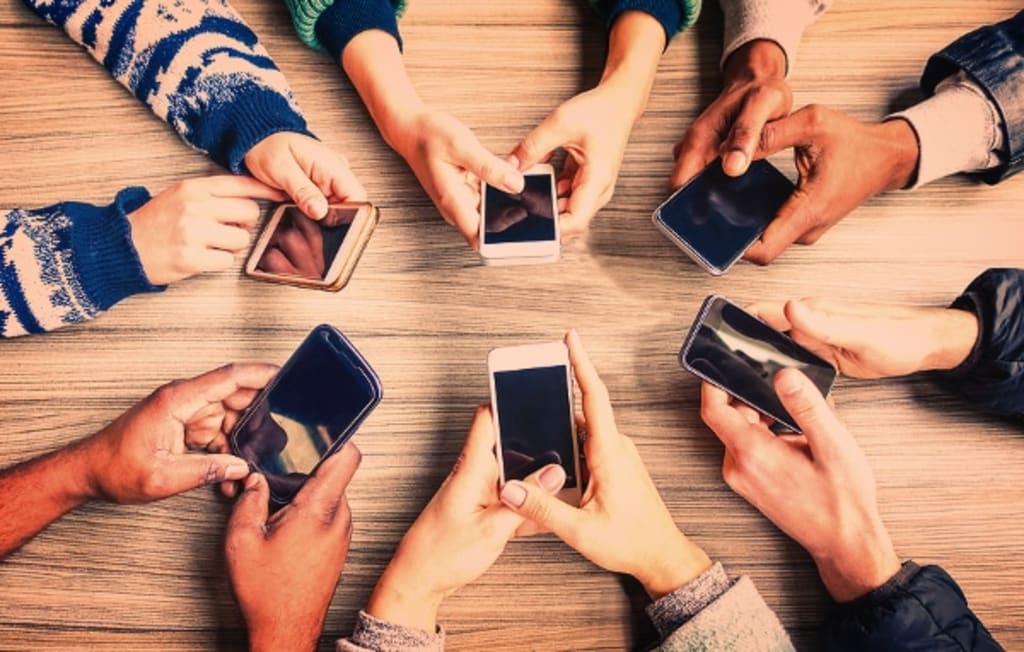
There was a time when mobile phones were just tools. They helped us make a call, send a message, maybe set an alarm or play a song. But something changed. Slowly, silently, they became a part of us — not like an accessory, but like an addiction. And today, the harsh reality is, most of us can't live without them. The question is, are we using smartphones… or are they using us?
We wake up not with the sun, but with the screen light. Before brushing our teeth, our fingers swipe up the notification bar. One message, one reel, one news update — and suddenly, twenty minutes have passed. This cycle continues — while eating, walking, even when talking to someone face to face. It’s like our minds are constantly divided — one part in the real world, and the other part lost in the glow of a 6-inch screen.
I’m not saying smartphones are evil. They’ve revolutionized how we live, work, and communicate. But there’s a line between use and abuse. And most of us have quietly crossed that line.
Go to any public place — a metro station, a restaurant, or even a family gathering — and look around. Eyes are down, faces lit with the artificial glow. Conversations have turned into status updates. Emotions have turned into emojis. We scroll, tap, and double-tap like programmed robots. And the saddest part? We don’t even realize it anymore.
Scientific studies have shown that smartphone addiction activates the same areas of the brain as gambling and substance abuse. Dopamine — the "feel-good" chemical — spikes every time we get a like, a reply, or a new follower. It’s no longer about connection; it’s about validation. And in the hunt for that next hit of digital happiness, we're sacrificing real-life experiences, relationships, and even sleep.
Think about it. When was the last time you went a full day without your phone? When was the last time you had a conversation without checking it even once? We carry it to the washroom, keep it under the pillow, and panic when the battery hits 10%. This isn’t convenience anymore — this is dependency.
Teenagers are the most affected. Their identity, their confidence, their reality — all shaped by filtered photos and virtual approval. Cyberbullying, anxiety, depression — these are rising not in dark alleys but inside brightly lit screens. And parents often don’t even notice, because they’re equally distracted.
Even relationships are changing. Couples sit together, but chat with others. Families eat together, but everyone’s attention is divided. We share stories on WhatsApp but forget to ask our parents how their day was. We click 100 photos of a sunset but forget to just pause and feel it.
This isn’t about rejecting technology. It’s about reclaiming control. Smartphones are powerful — but so are we. The trick is to not let them rule us. Set screen-time limits. Keep phones away during meals. Take walks without earphones. Talk to people, not just through comments but in real voice, real presence. Let boredom happen — it’s where creativity is born.
We have entered an age where silence makes us uncomfortable, where being “offline” feels like being invisible. But maybe it’s time to unplug — not forever, but at least for a while. To live moments instead of recording them. To feel the wind, not just post about it. To be human again.
Because in the end, a smartphone should be just that — smart and a phone. Not a master, not a chain. The real world, with all its chaos and beauty, is still out there — waiting for us to look up.
About the Creator
Neeraj Tiwari
Neeraj Tiwari
Journalist | Blogger | Video Creator
I dedicated to providing insightful and fact-based content. My expertise lies in space, science, history, geopolitics, education, living beings,sports, climate change, and current affairs.
Keep reading
More stories from Neeraj Tiwari and writers in Families and other communities.
Is America sinking others to keep itself a superpower?
Introduction The modern global economy is a complex interconnected system in which the decision of one country can affect hundreds of countries. In this very fabric, the US is once again standing before the world with its trade weapon - tariffs (import duty). The tariff war that started with China has now spread to many countries and has now included allies like Vietnam, India, Mexico, Europe and even South Korea.
By Neeraj Tiwari11 months ago in Humans
Why Gen Z Is Having Fewer Kids — And What the Data Says About the Future of Birth Rates
Across the United States and much of the world, birth rates are falling—and Generation Z is at the center of that shift. For decades, starting a family in your twenties was considered the norm. Today, many young adults are delaying parenthood or choosing not to have children at all. The change is dramatic enough that economists, demographers, and policymakers are beginning to ask a serious question:
By Navigating the Worlda day ago in Families




Comments
There are no comments for this story
Be the first to respond and start the conversation.