
Is America sinking others to keep itself a superpower?
Tariff war conspiracy: US economic power or war cry for global trade?


Introduction
The modern global economy is a complex interconnected system in which the decision of one country can affect hundreds of countries. In this very fabric, the US is once again standing before the world with its trade weapon - tariffs (import duty). The tariff war that started with China has now spread to many countries and has now included allies like Vietnam, India, Mexico, Europe and even South Korea.
But is the US really protecting its industries? Or is this the beginning of a new kind of economic imperialism in which the superpower imposes its conditions on others? In this article, we will get to the bottom of this question.
1. Tariff war: What does it mean?
In simple words, when a country imposes additional tax on goods imported from another country, it is called tariff. And when this tax is imposed for a specific purpose - such as promoting domestic products, preventing foreign competition or creating pressure - it becomes a tariff war.
A tariff war is a kind of peaceful war, in which guns are not fired but hostility is shown through trade policies.
2. A glimpse of history: America and tariff politics
Tariff wars are not a new issue. During the Great Depression of the 1930s, the US implemented the Smoot-Hawley Tariff Act, which imposed heavy duties on more than 20,000 foreign products. This resulted in a huge drop in global trade and a situation similar to World War II.
In 2018, President Donald Trump again adopted this policy against China. He claimed that China was doing "unfair trade practices" - destroying American industries by sending cheap products. In this tariff war, the US imposed heavy duties on $370 billion of Chinese products. China also retaliated and imposed tariffs on soybeans, steel and other products.
3. Biden's economic policy: New face, old trick
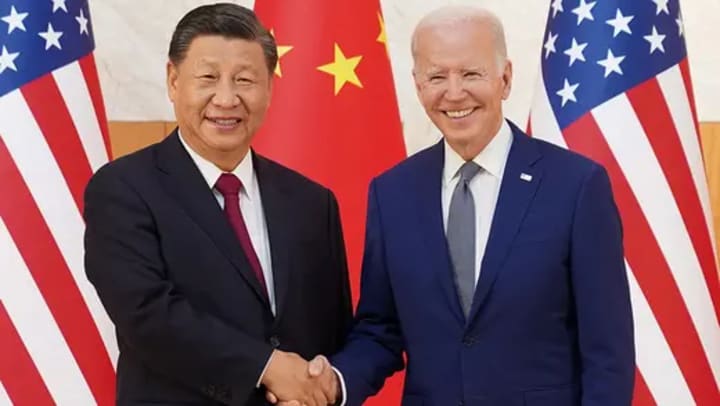
Joe Biden may not have adopted aggressive language like Trump, but his economic policy is moving in the same direction. He has also imposed many new tariffs to promote "Made in America" and to control China's technological power.
The Biden administration has become very strict especially regarding green energy, EV batteries, solar panels, and the microchip sector. There is a plan to impose up to 100% duty on EVs coming from China, so that American companies can survive.
4. Impact on global supply chain
When two big countries impose trade sanctions on each other, its effect is not limited to them only. Modern supply chains are so interconnected that the entire industry can come to a standstill due to the stoppage of delivery of one part.
For example, if cheap solar panels are not able to come from China, then clean energy projects in America will become expensive. Similarly, if the US imposes tariffs on the raw material of microchips, then the prices of everything from smartphones to cars will increase.
5. Impact on India and other developing countries
This situation is like a double-edged sword for emerging economies like India. On the one hand, the US wants India to become an alternative to China - that is, Indian factories should become the factories of the world. But on the other hand, the US also demands tax exemption from India and sometimes increases the duty on Indian products.
In 2023–24, the US had increased tariffs on Indian steel and aluminum products. In response, India also imposed tariffs on American products, but later both the countries reached an agreement. Nevertheless, it became clear that the US is pursuing a policy of balance of power, not just trade.
6. Situation of Europe and other allied nations
The European Union is feeling very uncomfortable with these policies of America. Tariffs on European vehicles and steel products have affected their exports. Countries like Germany and France talk of free trade with the US, but the US gives priority to domestic industry.
Countries like South Korea, Japan and Vietnam are strategic allies of the US, but they are also not untouched by the decisions of the US in the tariff war.
7. Role of WTO and global trade system
The job of the World Trade Organization (WTO) is to protect the rules in trade. But the US often ignores the recommendations of the WTO. China has filed complaints against the US in the WTO many times, but the results could not have any significant impact on the US policy.
In such a situation, the question arises - has power now become more important than rules in global trade?
8. Future prospects: solution or crisis?
If the tariff war continues like this, then the biggest loss will be to global economic growth. The IMF and the World Bank have already warned that such trade wars can lead to a decline of more than 0.5% in the world GDP.
On the other hand, this tariff war is also an opportunity for countries like India to promote Make in India - provided India strengthens its production capabilities, logistics, and export policy.
Conclusion
The US tariff war is not just a trade strategy, but has become a political and geo-economic weapon. It is becoming clear that economic globalization is now succumbing to nationalism.
While on the one hand the US claims to protect its industries, on the other hand it is also challenging the global trade system.
In today's era, tariff war is not a solution - it is just a temporary solution that
About the Creator
Neeraj Tiwari
Neeraj Tiwari
Journalist | Blogger | Video Creator
I dedicated to providing insightful and fact-based content. My expertise lies in space, science, history, geopolitics, education, living beings,sports, climate change, and current affairs.
Keep reading
More stories from Neeraj Tiwari and writers in Humans and other communities.
Women: The Backbone of Society and the Light of the Future
Introduction: Why Women's Day Matters Every year on March 8th, we celebrate International Women's Day. But is one day enough to truly understand and appreciate the role of women in our society? Women are the foundation of families, the strength of economies, and the driving force behind progress.
By Neeraj Tiwariabout a year ago in Humans
Thief In The Night
To the thief in the night that took and replicated what once was mine: Honestly, I feel kind of bad for you. It’s funny, because we hardly know each other. I only know of you through the magazines you’ve written and the broadcasts you have televised in the past — as well as through the public mentions of you from your show business connections there.
By Snarky Lisa6 days ago in Humans



Comments
There are no comments for this story
Be the first to respond and start the conversation.