
The Children Who Dreamed of Pakistan
How young boys and girls inspired Muhammad Ali Jinnah and strengthened the Pakistan Movement

By Khan Published 6 months ago • 4 min read
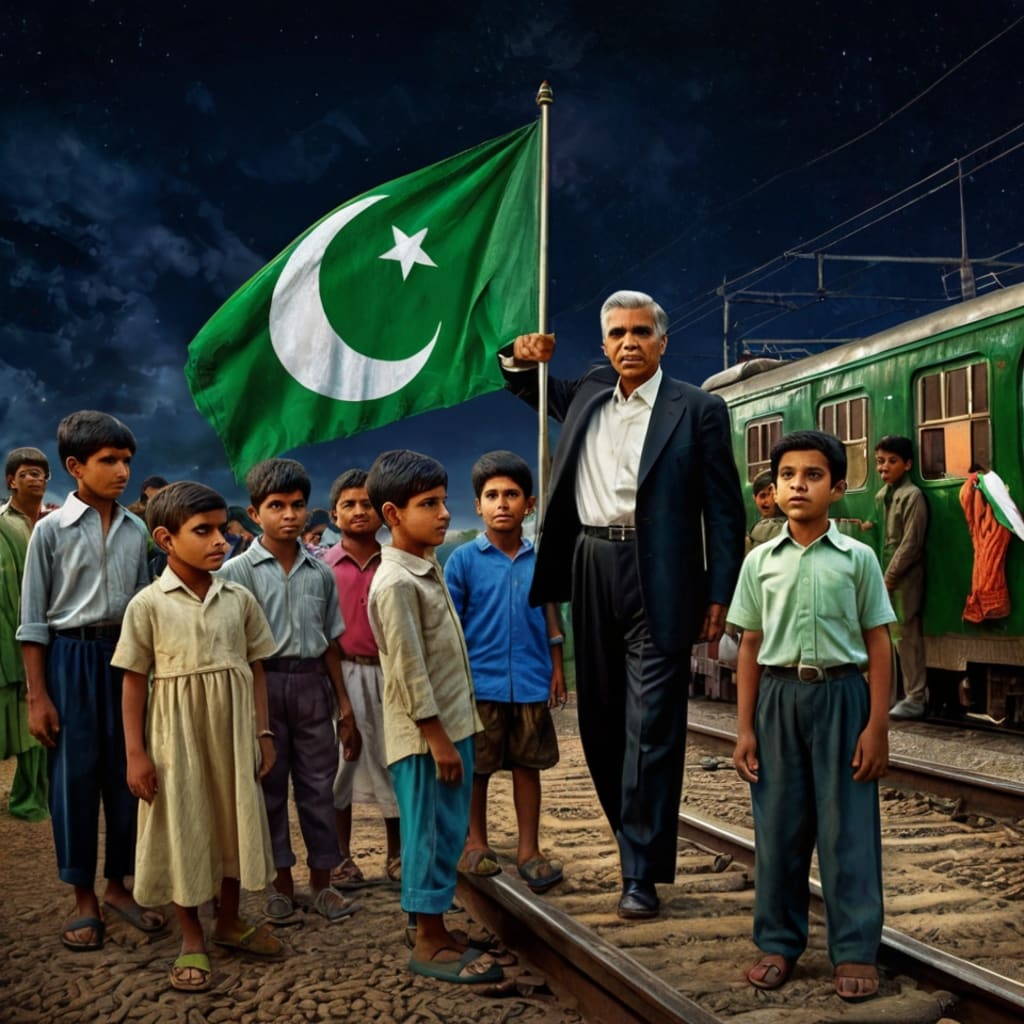
The Children of Pakistan’s Freedom Movement- BY:Khan
When we look back at the struggle for Pakistan, we often think of great leaders, monumental speeches, and decisive negotiations. But one of the most overlooked forces behind this movement was the spirit of children. Their innocence, determination, and unshakable faith in the dream of Pakistan inspired even the most hardened leaders.
A Child’s Reply
Before the creation of Pakistan, a young boy was walking along a roadside when a car suddenly struck him. His head began to bleed, and he burst into tears. At that moment, a non-Muslim passerby stopped and mocked him:
“You call yourself a Muslim, and yet you cry?”
The child, despite his pain, answered with striking courage:
“I cry not because I am hurt, but because the blood I had saved for Pakistan is being wasted here on the road.”
When Muhammad Ali Jinnah, later known as Quaid-e-Azam (the Great Leader), heard this story, he remarked:
“A nation that produces children of such spirit cannot be kept enslaved for long.”
Children as Torchbearers
The movement for Pakistan demanded immense sacrifices. Men and women, old and young, all played their part. But it was the children who brought unique passion and energy to the cause. Inspired by Jinnah’s personality, they rose above play and leisure, forming small groups to participate in political activities.
One such group was famously called the “Children’s Muslim League.” A photograph still exists of its young members gathered with Jinnah—a reminder that children were not just bystanders, but participants in shaping history.
An Eight-Year-Old’s Understanding
In 1941, Jinnah was returning from a Muslim League session. As his car passed through a small town, people lined the streets to welcome him. Among them was an eight-year-old boy wearing nothing but a simple lungi. With all his might, he shouted:
“Pakistan Zindabad! Long live Pakistan!”
Jinnah noticed him, stopped his car, and called the boy closer. Gently, he asked,
“Do you know what Pakistan means?”
The boy was nervous at first, but encouraged by the crowd, he boldly replied:
“Sir, you know its meaning better than us. But we only understand this much: where Muslims rule, that is Pakistan. Where non-Muslims rule, that is Hindustan.”
Jinnah smiled and turned to the journalists traveling with him:
“Go and tell Mr. Gandhi that even an eight-year-old Muslim child understands the meaning of Pakistan. If he claims he does not, it is not because he cannot—it is because he does not wish to admit it.”
A Gift of Devotion
Not only boys, but young girls too expressed their devotion to Pakistan. Once, in Delhi, a poor villager approached Jinnah after a rally. He said his daughter had embroidered a handkerchief with the map of Pakistan and wished to present it personally.
Jinnah agreed to visit their modest home. There, a thirteen-year-old girl, standing behind a curtain, handed him the embroidered piece. Jinnah, deeply moved, promised her that this humble gift would one day play a role in Pakistan’s struggle.
Years later, during the Simla Conference, British officials attempted to persuade Jinnah to abandon the demand for Pakistan. They even offered him the position of Governor-General of a united India. The next day, instead of entertaining their proposal, Jinnah presented that very handkerchief. He said firmly:
“Pakistan is not merely Jinnah’s demand—it belongs to ten crore Muslims. It lives in their hearts and runs in their blood. Even young village girls spend their free hours stitching its map. Do not insult this dream by asking me to trade it.”
Waiting in the Cold
Jinnah’s bond with children was mutual. They adored him, and he cherished their loyalty. On one cold winter night, as his train stopped at a rural station, two small children, wrapped in thin shawls, tapped on his window. His companions urged him not to open it, fearing danger, but Jinnah insisted.
There stood the shivering children. When he asked why they had come at such an hour, they replied simply:
“We read in the newspaper that you would pass through tonight. We came to see you—because you are building Pakistan for us.”
Jinnah was deeply touched. Moments like these convinced him that the dream of Pakistan was not only political—it was a flame burning in the hearts of even the youngest Muslims.
Builders of Tomorrow
Reflecting on such encounters, Jinnah once said:
“The children of Muslims have now developed a national consciousness. They will carry the banner of our struggle forward.”
Indeed, children played their role by praying, chanting slogans, and giving their unwavering love to the cause. Their innocence became a source of strength, reminding elders of what was truly at stake—the future of generations yet to come.
A Message for Today
The dream of Pakistan was achieved through faith, unity, and sacrifice. Today’s children are the inheritors of that dream. For them, Jinnah laid down three guiding principles:
“Be loyal to yourself, be loyal to your state, and devote yourself fully to your studies.”
These words remain just as relevant. The children who once embroidered maps and shouted slogans in the cold gave us a homeland. Now it is the responsibility of today’s young generation to build it stronger—through education, discipline, and integrity.
Pakistan was not gifted easily; it was earned through sweat, tears, and the spirit of children who believed in a land of their own.
About the Creator
Wings of a Lioness: The Geology of Inherited Pride
People often ask me where I get the strength to pack my entire life into two suitcases and head into the unknown. Where do I get that step that never falters, neither in the cold Canadian North nor under the elegant skies of France? The answer doesn't lie in geographic maps, but in an old photo album, my mother's oversized ring, and that blue flight attendant's cap that is worth more to me than any crown. My courage is not my own doing – it is the dowry left to me by my mother, a woman who conquered heights with airplanes, and the earth beneath her feet with her unwavering character.
By Magma Star4 days ago in Families




Comments
There are no comments for this story
Be the first to respond and start the conversation.