
The Breaking Point
"The Breaking Point: A Family's Fall and a Daughter’s Loss"

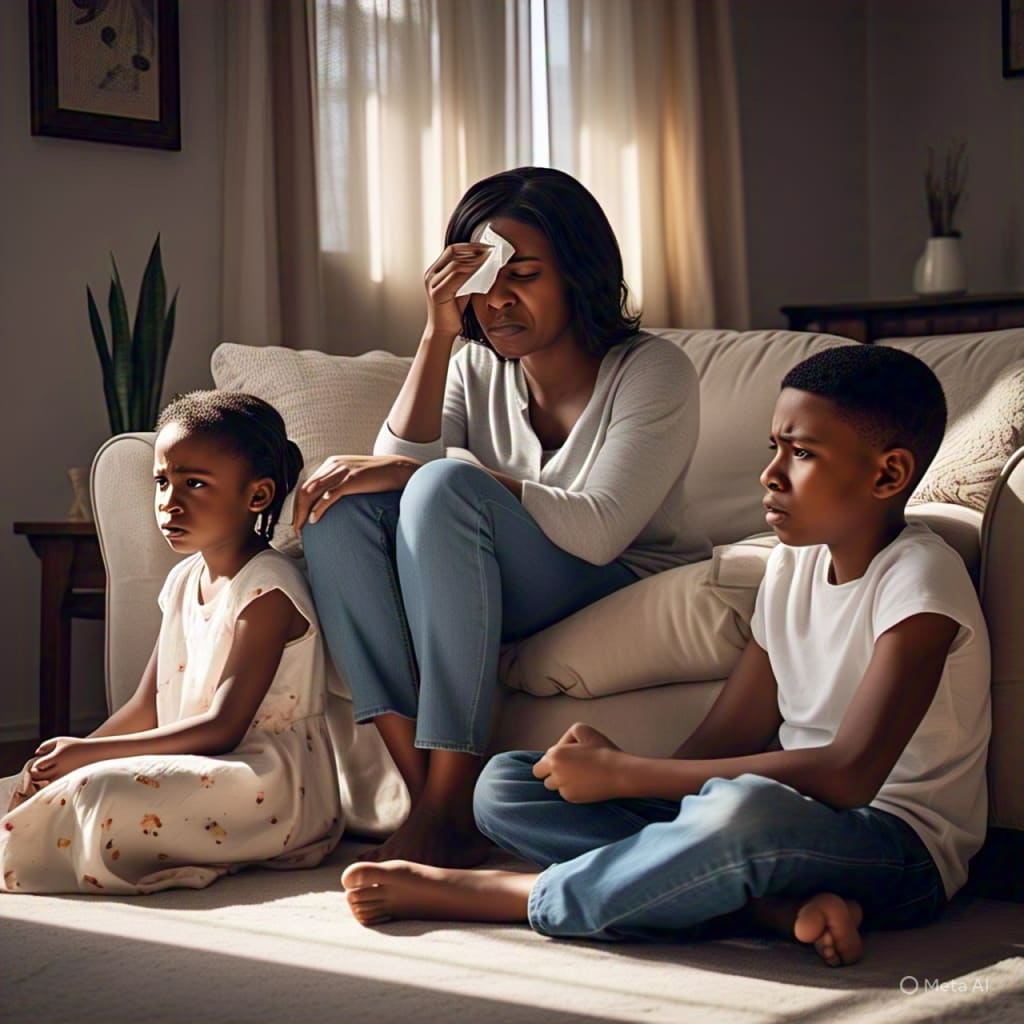
The house on Elm Street was once filled with music. Not the kind that came from speakers or radios, but the kind that rose from the laughter over dinner, the clatter of dishes, and the sound of three people simply being together.
But that music had long faded.
Now, silence sat heavy in the rooms like dust on forgotten picture frames.
Maya, seventeen, sat curled up in the corner of her bedroom, knees tucked to her chest, earphones in—but no music played. It was just a shield. A small defense from the shouting downstairs.
Her parents were fighting again.
It had started subtly two years ago. Her father, Raj, once the warm and dependable center of their family, began working longer hours. Her mother, Neeta, grew quieter, then sharper. Conversations became short. Smiles grew rare.
At first, Maya had told herself they were just tired, just going through a phase.
Then came the late-night arguments. The slammed doors. The icy silences over breakfast. The way her father stopped coming home on some nights, and the way her mother stared out the window for hours, lost in a world Maya couldn’t reach.
Maya had tried everything—making dinner to bring them together, writing notes to cheer them up, even pretending nothing was wrong. But everything was wrong. And no matter how hard she tried, the cracks kept widening.
Tonight was different. Tonight, they weren’t just fighting. They were breaking.
“…You never listen, Raj! You come and go as you please like we don’t matter anymore!” her mother’s voice rose from the kitchen.
“And you act like I’m some kind of stranger in my own house! Every word turns into a battle with you!” her father shouted back.
Maya closed her eyes tightly.
“Do you think I wanted this, Raj? This… emptiness? I feel like I’m screaming into a void!”
“Well, maybe you should stop screaming then!”
Something crashed. A glass, maybe. Then silence.
Maya slowly removed her earphones. Her heart pounded in her ears. She tiptoed down the hallway, unsure of what she'd find. She paused at the edge of the kitchen.
Her mother stood facing the sink, back trembling. Her father stood at the doorway, keys in his hand, jaw clenched.
“I’m leaving tonight,” he said, voice low. “It’s best—for all of us.”
Neeta didn’t respond.
Maya stepped forward. “Papa…”
He turned, startled. His face softened. “Maya, sweetheart. I didn’t—”
She ran to him, throwing her arms around his waist. “Don’t go. Please. We can fix this. We’re still a family.”
He kissed her forehead. “I love you, Maya. More than anything. But this… this house is tearing us apart.”
And then, just like that, he left. The front door closed softly behind him, but to Maya, it sounded like a thunderclap.
The days that followed blurred together. Her father didn’t return. Her mother moved through the house like a ghost—doing chores without expression, speaking only when necessary.
Maya tried to keep things together. She went to school. She did the laundry. She cooked. But inside, she was crumbling. Her grades slipped. Her smiles became mechanical. The girl who once painted, laughed with friends, and dreamed of college now moved through life like she was underwater.
The silence between her and her mother grew wider.
Then, one afternoon, Maya came home early to find her mother sitting in the living room with a suitcase beside her.
“Where are you going?” Maya asked, panic rising.
Neeta looked up, her eyes tired. “To your grandmother’s. Just for a while. I need space to think.”
“You’re leaving too?” Maya’s voice cracked.
“I’m not abandoning you,” Neeta said, reaching out. “I just… I can’t breathe here anymore.”
Maya stepped back. “Do you even see me? I’m still here. I’m still trying to hold everything together!”
Neeta’s face fell. “I’m sorry, Maya. I didn’t mean to hurt you. I just don’t know who I am anymore.”
“Neither do I,” Maya whispered.
Neeta left that evening, promising to call, to stay in touch. But Maya didn’t believe in promises anymore.
Now, alone in the echoing house, Maya wandered from room to room. Her parents’ wedding photo still hung above the mantle, smiling down like a cruel joke. She stood in front of it for a long time before finally pulling it off the wall and placing it face-down on the table.
That night, she cried harder than she ever had. Not just because of the loneliness, but because of the memories—the way her father used to carry her on his shoulders, the way her mother used to brush her hair and hum lullabies. The warm Sunday mornings, the birthday cakes, the bedtime stories.
All gone.
In the weeks that followed, Maya stopped waiting. She stopped hoping for a magical fix. She realized that love, while powerful, sometimes wasn’t enough to keep people together.
But she also learned something else: strength isn’t loud. Sometimes, it’s the quiet act of waking up each morning and choosing to face the day.
She reached out to a school counselor. She began journaling. Slowly, she started to talk to her friends again. She picked up her paintbrush one night and painted a quiet ocean with a small boat in the distance.
Her parents didn’t return, not right away. Her mother called once a week. Her father visited on weekends. They never came together.
The family as it was had fallen. That truth would never change. But Maya, standing in the ruins, began to build something new—not perfect, not what once was, but something real.
One day, as she looked at herself in the mirror, she whispered, “It wasn’t my fault.”
It was the first step toward healing.
About the Creator
Keep reading
More stories from samon khan and writers in Families and other communities.
What Families Should Carry for a Safe and Comfortable Desert Safari in Abu Dhabi
The UAE can be a really fun destination to visit, especially for a family. Its capital, Abu Dhabi, has a lot to offer families, and a desert safari is one such thing. Beautiful skies, sandy dunes, and the wide-open space create a setting that feels different from everyday life. To enjoy it fully, preparation is key. Packing the right essentials helps families stay comfortable, confident, and safe while spending time in the desert.
By Claudia Fennel6 days ago in Families
Why Abu Dhabi Is One of the Best Luxury Travel Destinations in the World
Abu Dhabi is among the world's best-known luxury travel destinations. However, it’s not a city that impresses through extravagance alone. The capital of the United Arab Emirates has a more composed, cultured, and immersive opulence. Luxury here is not about skyscrapers and shopping malls but serenity, heritage, and meaningful experiences. From palatial hotels and world-class art to pristine beaches and desert sanctuaries, Abu Dhabi delivers luxury that feels thoughtful and timeless.
By John Ashley6 days ago in Families




Comments
There are no comments for this story
Be the first to respond and start the conversation.