
The Last Dance
From Lullabies to Wedding Bells, A Father’s Silent Goodbye

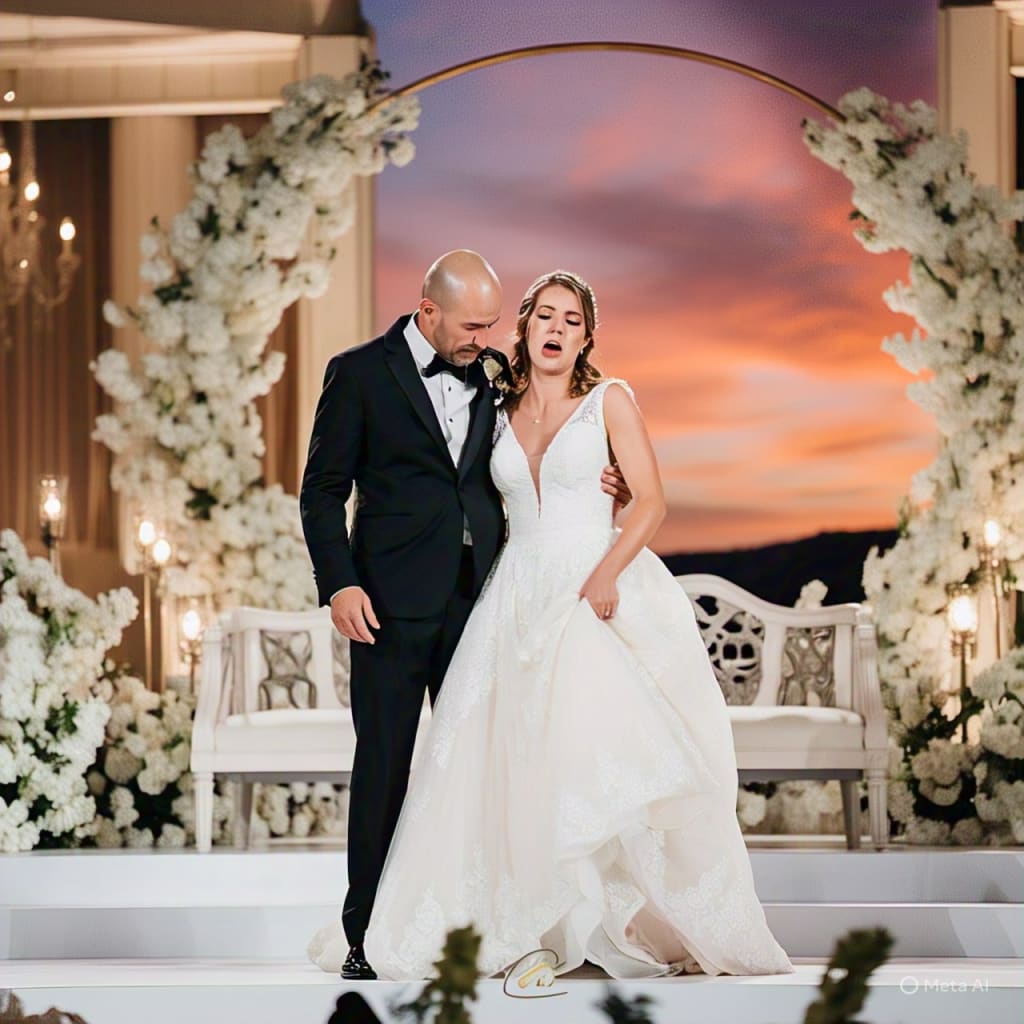
The morning sun filtered gently through the white curtains, casting a golden glow across the room. The air was filled with the scent of fresh roses and jasmine garlands. It was a day of joy, laughter, celebration.
But for Arvind, it was also the day he had silently dreaded for years—his daughter Meera’s wedding day.
He stood by the window of his room, watching guests arrive in clusters. Laughter echoed through the courtyard below. He could see the canopy being decorated, white chairs neatly aligned, the sound of the shehnai drifting through the air like a memory.
He smiled faintly, but there was a weight in his chest that words could not release.
Meera was his only daughter, his little girl, his brightest star in an otherwise quiet life. His wife, Anjali, had passed away when Meera was just six. Since then, Arvind had worn many hats—father, mother, protector, teacher, friend.
He remembered the first night Meera had cried for her mother. He had sat by her bed, humming a lullaby Anjali used to sing. His voice had cracked, and his heart had broken, but Meera had fallen asleep holding his finger.
That night marked the beginning of his silent promise: to never let Meera feel the absence of love.
As the years passed, she grew into a curious, kind, and spirited girl. She had her mother’s eyes and his stubborn will. Every milestone felt like a private triumph: her first step, her first words, her first day of school. He had cheered the loudest at her debates, attended every parent-teacher meeting, and stood by the gate every day at 3:00 PM without fail.
And when she brought home her first heartbreak at sixteen, crying quietly on the porch, he had made her tea, sat beside her in silence, and simply placed his hand on hers. No advice. No scolding. Just presence. That was always his way.
Now, Meera was twenty-seven, radiant in her ivory and gold saree, surrounded by cousins and friends. She had chosen wisely—a kind, respectful man named Rohan, who looked at her the way Arvind had once looked at Anjali. And though it hurt to let go, Arvind knew it was time.
But grief has a way of threading itself even through moments of joy.
He didn’t speak much that morning. He helped the caterers, greeted the guests, but kept glancing at his watch, as if time itself might slow down if he stared hard enough.
Meera came into the room just before the ceremony. Her anklets jingled softly. She paused, seeing him by the window, and walked over, holding up the heavy folds of her saree.
“Papa?” she said softly.
Arvind turned, his eyes taking in the sight of her. So grown, so beautiful. But in his heart, she was still the little girl who once made him wear pink plastic crowns and attend tea parties with her teddy bears.
“You look just like your mother,” he whispered.
She smiled. “You’ve said that every birthday.”
“And every birthday, it’s true,” he replied.
There was a pause. Then Meera stepped closer. “You okay?”
Arvind nodded, but his eyes betrayed him. A tear slipped down, and Meera wiped it gently.
“I’m not going anywhere, Papa,” she said.
“I know,” he whispered. “But it’s different now.”
She held his hand. “You raised me to be strong. You taught me love, respect, honesty... everything. And Rohan—he’s not taking me from you. He’s joining us.”
He chuckled softly. “Is that a sales pitch?”
“Maybe,” she teased. “Or maybe I’m reminding you that this isn’t a goodbye.”
Arvind didn’t reply. Instead, he walked over to his desk drawer and took out a small box.
He handed it to her. “This was your mother’s. She wore it on our wedding day.”
Meera opened the box slowly. Inside was a delicate gold pendant shaped like a sun. Her eyes welled up as she looked at it.
“She would’ve been so proud of you,” he said, his voice cracking. “She still is. Somewhere, she’s here. Watching. Smiling.”
Meera hugged him, and for a moment, time did stop. In that embrace lived every story, every memory, every silent prayer he had made for her.
A knock on the door broke the moment. “Meera, it’s time,” called her cousin.
She nodded and turned back to Arvind. “Come walk me down, Papa?”
He smiled. “Always.”
As they walked toward the altar, guests stood in quiet admiration. Not just for the bride, but for the man beside her—the father who had lived quietly, loved endlessly, and now let go, with grace.
At the mandap, just before he stepped back, Arvind looked at Meera. Their eyes met. No words. None needed.
She smiled through her veil.
And he, standing under the canopy of flowers, whispered his silent goodbye—not of sorrow, but of love.
That evening, as the sky turned shades of orange and lavender, and the last of the guests had left, Arvind sat alone in the courtyard. A cup of tea in hand, the same way he had every night.
The house was quieter now.
But his heart was full.
Some journeys don’t need applause or fanfare. They are lived quietly, deeply, and with unmatched devotion. From lullabies sung in dim rooms to wedding bells ringing across open skies—a father's love never fades.
It simply evolves.
About the Creator
Keep reading
More stories from samon khan and writers in Families and other communities.
The Bridge Between Us
In the small town of Elmswood, nestled between green hills and quiet rivers, two boys grew up like brothers. Their names were Samir and Daniel. From the moment they met in second grade, chasing the same soccer ball during recess, something clicked. They shared secrets, swapped comic books, and built forts out of cardboard and imagination. They became the kind of friends who could sit in silence and still feel understood.
By samon khan10 months ago in Families
How Much Does Memory Care Cost in the U.S.? Average Monthly Prices Explained
With the onset of memory loss in a loved one as a result of some conditions such as dementia or Alzheimer disease, families tend to start to seek specialized care services. The first question that one would want to have answered when undergoing this process is very basic, yet significant, and that is how much is the cost of memory care?
By Patrica Overton2 days ago in Families
Should Children ALWAYS listen to Adults?
Many people believe children should always listen to adults because adults have more experience and knowledge about life. Adults have faced many situations and learned from their mistakes over time. Because of this, they often try to guide children and help them avoid problems. However, others argue that adults are not always right and that children should also learn to think for themselves. Children are individuals with their own thoughts and ideas, and sometimes they may see things differently from adults. This text will explore both sides of the argument to understand whether children should always listen to adults.
By *+*+*~Teja~*+*+*about 17 hours ago in Families




Comments
There are no comments for this story
Be the first to respond and start the conversation.