

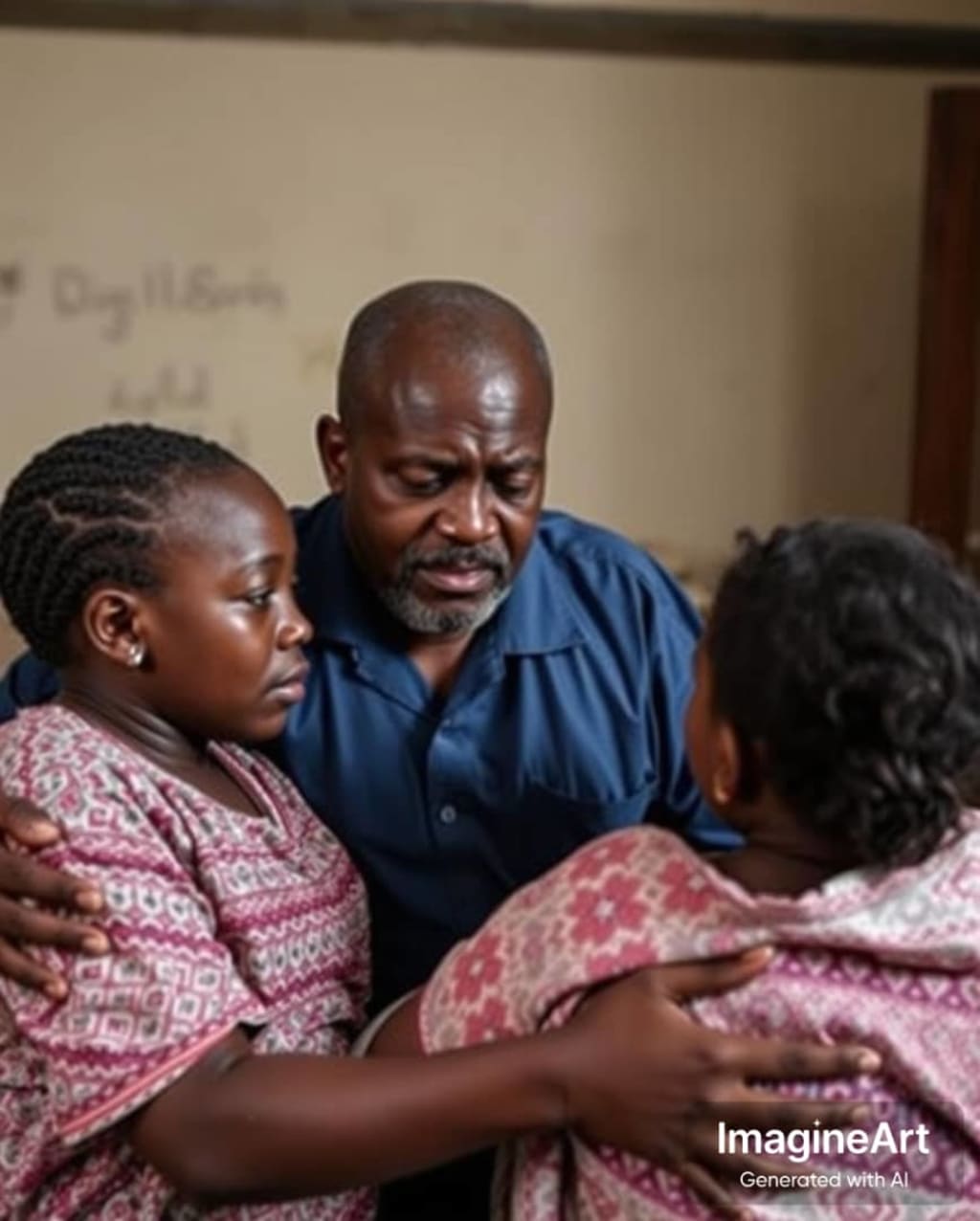
Years had passed since Thompson's father had last set foot in his hometown. The city of Lagos had become both his prison and his battleground, a place where he had fought relentlessly against the tide of misfortune that had swept through his life. But despite his best efforts, the years had not been kind to him. The ulcer that gnawed at his stomach had become a constant source of pain, and the stiff, unbending finger on his hand was a daily reminder of how far he had fallen. But even in the face of all this adversity, Thompson's father had clung to one final hope—that his older brother might offer him a way out.
The news of the construction job had come as a lifeline. It was a chance, a glimmer of hope in the darkness that had enveloped him for so long. His brother, who had built a successful private construction company, had extended the offer without much fanfare. It wasn’t a grand gesture or a declaration of familial duty just a brief mention during one of their rare phone calls.
For Thompson’s father, the offer felt like the answer to a prayer. His older brother had always been the successful one, the man who had managed to rise above their shared beginnings. They hadn’t been particularly close growing up—there had always been a sense of rivalry, an unspoken competition between them—but blood was blood, and Thompson’s father believed that in his brother’s company, he would finally find the stability he so desperately needed.
He arrived at the company’s office with a mixture of apprehension and relief. It was a modest operation, far smaller than the bustling construction sites he had once worked on, but it was a job. He was greeted by a terse receptionist and told to wait. When his brother finally appeared, there was no warm reunion, no embrace or words of encouragement—just a curt nod and a brief introduction to the foreman.
As the days turned into weeks, it became clear that the job was not the salvation Thompson’s father had hoped it would be. His brother, who had always prided himself on being fair and disciplined, seemed to go out of his way to treat him with an icy detachment. There were no favors, no special treatment—not even the acknowledgment of their shared blood. Instead, Thompson’s father was just another worker, expected to toil under the same harsh conditions as everyone else.
The work was grueling, and his body, already weakened by years of hardship, struggled to keep up. The foreman, who knew nothing of their familial connection, was relentless, pushing him harder than the younger, more able-bodied workers. Thompson’s father would collapse into bed each night, his muscles aching, his ulcer burning with the stress of the day. He consoled himself with the thought that it was temporary, that eventually, his brother would come around, would see his suffering and offer some form of help.
But that help never came. Instead, his brother began to withhold his wages, promising that the money would come soon, that it was just a matter of waiting for the company’s finances to stabilize. Weeks turned into months, and the small amount of money Thompson’s father had saved was quickly depleted. He found himself once again in the grip of poverty, struggling to find food, to pay for his cramped, damp room in a rundown part of the city.
The emotional toll was even greater. His brother’s coldness, the way he ignored his pleas for understanding, cut deeper than any physical pain. Thompson’s father couldn’t comprehend it. They had grown up together, faced the same struggles, and yet here he was, being treated as if he were nothing more than a burden. The sense of betrayal was profound, a wound that festered with each passing day.
Back home, Thompson and his family were facing their own struggles. The rent was due, the bills were piling up, and despite all of Thompson’s efforts, the money he brought in as a houseboy was barely enough to keep them from being thrown out onto the streets. His mother’s health was deteriorating, the stress of their situation weighing heavily on her frail body. His younger siblings were too young to fully understand what was happening, but they could sense the tension, the fear that hung over the household like a dark cloud.
Thompson’s mother had tried to shield her children from the worst of it, but there were times when the weight of their reality was too much for her to bear. She would sit at the small kitchen table late at night, her head in her hands, silently weeping for the life they had lost, for the husband who was so far away and the children she couldn’t protect. Thompson would often find her there, and without a word, he would sit beside her, offering what little comfort he could.
As the situation grew more desperate, Thompson’s thoughts increasingly turned to his father. There had been little contact over the years, just the occasional letter or phone call, and even those had become rare. But now, as the walls seemed to be closing in on them, Thompson knew they needed their father more than ever. He was the missing piece, the person who could somehow make things right again.
One evening, after a particularly grueling day, Thompson’s mother made a decision. They could no longer wait for his father to find his way back to them. It was time to bring him home, to reunite the family, no matter what it took. She sat the children down and explained her decision, her voice trembling with both determination and fear. “Your father needs to come home,” she said, her eyes glistening with unshed tears. “We need to be together, no matter what.”
Thompson’s younger siblings didn’t fully understand the implications, but they nodded solemnly, trusting in their mother’s judgment. Thompson, however, felt a mixture of relief and apprehension. He had always looked up to his father, but he knew the man who would return to them was not the same person who had left all those years ago. The world had changed him, and Thompson wasn’t sure what that would mean for their family.
The letter they sent was simple, a plea for him to come home, to leave the hardships of Lagos behind and reunite with his family. It took weeks for a response to arrive, weeks filled with anxious waiting and silent prayers. When the reply finally came, it was brief, almost hesitant. His father would return, but there was no joy in his words, no relief—just a sense of resignation, as if he had finally given up on the life he had tried so hard to build in Lagos.
The day Thompson’s father arrived back in their small town was a somber one. There were no joyous reunions, no celebrations—just a quiet acceptance that this was the new reality. He stepped off the bus, his frame thinner, his face lined with the hardships of the years he had spent away. The stiffness in his hand was now matched by a stiffness in his gait, a man who had been beaten down by life but who had not yet broken.
Thompson stood with his mother and siblings at the edge of the dusty road, watching as his father slowly made his way toward them. His heart pounded in his chest, a mix of emotions swirling within him—relief that his father was finally home, fear of what this reunion would bring, and a deep, abiding sadness for the man who had once been so strong and proud.
When his father finally reached them, there were no words, just an embrace that spoke of all the years lost, of the pain and suffering they had all endured. His mother clung to her husband, her tears soaking into the fabric of his worn jacket, while Thompson and his siblings stood by, uncertain of what to do or say.
The journey home was quiet, the silence between them heavy with unspoken emotions. The small apartment that had once seemed cramped now felt like a refuge, a place where they could finally begin to heal, to rebuild what had been lost. But the scars of the past would not fade easily, and the road ahead was still fraught with challenges.
As the days turned into weeks, Thompson’s father struggled to find his place in this new reality. The work was scarce, and his injury made it difficult for him to contribute in the way he wanted. The guilt weighed heavily on him—guilt for the years he had been away, for the burden he had placed on his family, for the sense of failure that clung to him like a shadow.
But despite the hardships, there was a quiet determination that began to grow within the family. They had been through hell, each of them in their own way, but they were together now. And in that togetherness, they found a strength they had almost forgotten. Thompson, now on the cusp of manhood, took on more responsibilities, determined to ease the burden on his father and mother. His younger siblings, though still innocent in many ways, began to understand the importance of sticking together, of supporting one another in the face of adversity.
Thompson’s father, too, began to find his footing. He took on whatever work he could find, no matter how menial, and gradually, the wounds of the past began to heal, though the scars would always remain. The relationship between him and his brother had been irrevocably damaged, but he no longer dwelled on the betrayal. Instead, he focused on the future, on the small, precious moments with his family that he had so longed for during his years in Lagos.
And as the family slowly began to rebuild their lives, there was a sense of hope that had been missing for so long. It wasn’t the kind of hope that came from grand gestures or miraculous turnarounds, but the quiet, steady hope that comes from knowing that, no matter what, they had each other. But even as they began to move forward, the memory of the hardships they had endured
About the Creator
Victor Obanor Osagie
As a Nigerian UK-based author,my pen transports readers into vibrant worlds rich with culture,tradition, & human depth.With an eye for detail & a heart attuned to Nigeria's pulse,I craft stories that echo life’s essence & its complex beauty
Keep reading
More stories from Victor Obanor Osagie and writers in Families and other communities.
The Forgotten Man
Thompson’s life had been shaped by the relentless grind of poverty, by the weight of responsibilities far too heavy for a boy his age. But behind the struggles of his everyday life lay another story, one that was often pushed to the back of his mind; his father’s story.
By Victor Obanor Osagie about a year ago in Families
Wise~Guys
— Look Behind what's in Front of You ~ Make Good Choices — Hey, So how you Doin'..! Made~Men — Mobster Movies romanticise a distinctive, elegant appearance, impeccable attire style, along with the 'Families' expressive lingo. Making their 'Bones' gave them Panache — with vintage fedoras, tailored pin-striped suits, mirror-polished wing-tip shoes adorned with tassels; with their 'Gun Moll' gorgeous dates on their arms.
By Jay Kantor18 days ago in Families
The Farmer and His Three Sons
In a quiet village surrounded by wide fields and dusty paths, there lived a hardworking farmer. His hands were rough from years of working the land, and his face carried the marks of long days spent under the sun. Farming was not just his work; it was his life. Before the sun rose each morning, he would already be walking toward his fields, and after sunset, he would return home tired but grateful.
By Sudais Zakwan7 days ago in Families




Comments
There are no comments for this story
Be the first to respond and start the conversation.