
The Bias and Prejudice of Infertility Grants
If You Want Financial Help Conceiving a Child You'd Better Be a Good Writer and Also Look Good in Photographs

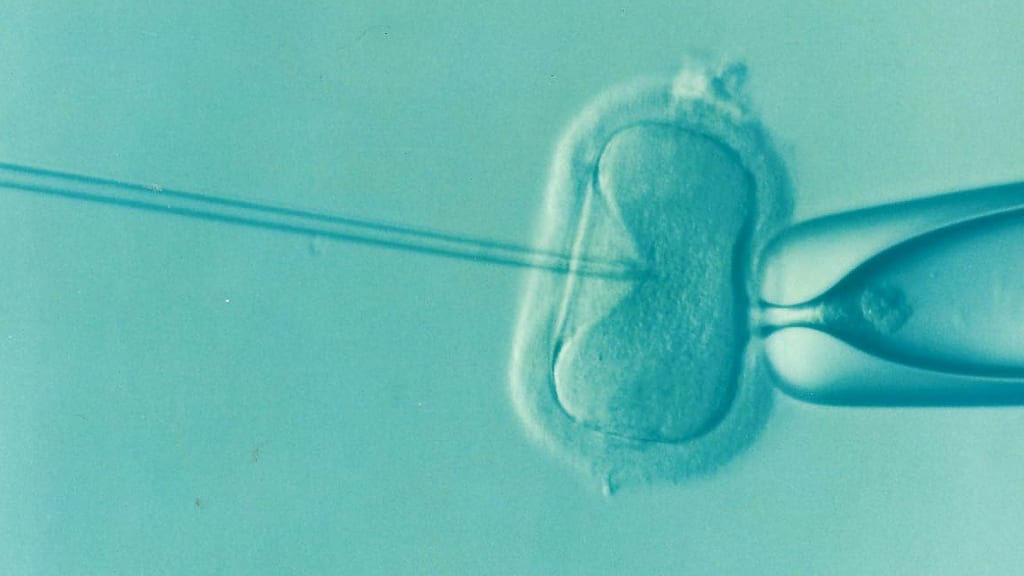
My wife and I have been trying to have a baby for some time now and it appears that we may need to go the IVF route in order to make it happen. For those who are not aware IVF is a very expensive process that the vast majority of health insurance plans (including our own) do not cover. We have been exploring various financing options and discovered that there exist a large number of grants from an array of organizations that will pay for some or all of a given couple’s IVF treatments. Some of these are based on financial need and we do not qualify for any of them with our combined income exceeding the maximum cap. Others are targeted at specific minority or other under represented groups. This story is not about those grants, and I cannot comment on their content as once I saw we exceeded the income cap or were not members of the targeted group I examined them no further. There are however a very large number of fertility grants that are not meant to help the less well off or targeted to specific groups. These grants can be “won” by anyone, and in tone and appearance they feel a lot like a lottery or other contest. Most require that you agree to participate in some events or activities if you are selected as a winner to promote the entity providing the grant, and to share the story of your IVF in real time as you spend the grant money and hopefully end up with a child or children in the end. I have no problem with this and totally understand why a company providing free money to help couples conceive would want to boast of that kind act and using the winners as free advertisement seems as good a way as any.
The issue I have comes from the criteria being used by these organizations in awarding these grants. They are all very similar with each requiring a good chunk of demographic identity and a personal essay detailing ones “fertility journey” or whatever other term they use for something similar. I don’t have a big problem with any of this either, though it is a bit disturbing to think that one’s entire future may hinge on their ability to write a compelling essay. However, they do not stop there, all of the grants I looked at also required (not optional) a high resolution photograph of the couple seeking treatment. What? Huh? This is where I have a major problem and big time concern. The more I thought about it the angrier I got. In fact I got so angry that I wrote the below “personal essay” for one of the grant applications which explains my position in detail. My wife stopped me from sending it only by pointing out to me correctly that I do not know exactly how the pictures are being used, and, if they are not looked at in any way prior to making the decision on winners then my entire argument is moot. I have a hard time believing this is the case, but I must allow it is possible and therefore I held back in sending, but I wanted to publish it somewhere in any case, and so it is below in italics.
From what I can see the entirety of the grant application hinges on what I write in this box. The pressure of that is more than a bit overwhelming and frankly makes me somewhat angry. Even though I am sure it is not your intention you are in effect determining the future fate of desperate people based on their ability to write a compelling essay. The fact that you require (it is not optional) a high-resolution photo of the people in question in addition to the essay is also disturbing and makes me question the sincerity of your motives and the fairness of the judging process. What if I write the greatest essay you have ever read (according to whomever it is that reads these things), but the picture I submit does not meet your expectations of what a deserving couple should look like? Maybe we are too ugly or too old or too dark skinned or too light skinned or whatever for your judging panel. Or, what if my essay is terrible, but the picture I submit exactly matches your ideal? Could our looks override my poor essay writing skills? Let me ask you a question. Would your children think this is fair?
I do not want my child growing up in a world where looks or the ability to write a compelling essay are the sole determinants of their futures. Yes, I want to have a child very badly, and one of the things that child will learn is the importance of fairness and honesty, and evaluating people based on the entirety of their being, not one or two randomly chosen metrics. The is most especially the case if those metrics are things as shallow as physical appearance. Ironically, I would know if I have succeeded in raising a good child if they could see this application process and recognize the unfairness baked into it. Of course life is not fair you might reply, and you are correct. You might also point to any number of other fertility grant applications and say they are using similar screening and selection criteria and approaches. You would also be correct in this observation, and I applaud the diversity of approaches and selection criteria for awarding infertility grants that do exist. However, no matter the approach, those criteria should be based on things which are real and consequential, and not subject to outright bias or prejudice. Using physical appearance as a selection criterion, as this grant and many fertility grants surely do as evidenced by the requirement for photographs of the applicants, is unethical and offensive in the extreme. Just because a thing is a certain way, does not mean that is the right way, or that we should accept it, or contribute to it. We should do whatever is in our power to fix it, to make it better, to make it more fair. Any child I do have will see that and will learn it and hopefully they will act on it. I know you are trying to do a very good thing with this grant, but the way you are going about it sends a terrible message. It is not a message I want my child to learn.
There has to be a better way. Talk to your own children about it. Ask them. Maybe they will have some ideas. Even if they do not I am sure they will appreciate you asking and perhaps it will inspire them to think a little more deeply about life, and a very important concept called fairness. Who knows, they may even become better people for having thought about it at all.
About the Creator
Everyday Junglist
About me. You know how everyone says to be a successful writer you should focus in one or two areas. I continue to prove them correct.
Keep reading
More stories from Everyday Junglist and writers in Families and other communities.
Dear Son or Daughter
Father's preface: Much of the material below includes adult language and themes. Depending on your age they may not be suitable for your reading just yet. If you have any doubt, ask your mom if it's OK, then do whatever she says. Also, please tell her that I love her and know that I love you, whoever, whenever, and wherever you are. Or should that have been whomever? Hmm. If we check with the grammar police for the appropriate usage we see that the word “whoever” is used to replace words like I, he, she, and they in a sentence. “Whomever” is a subject pronoun, meaning that it refers to the subject of a sentence. The subject of a sentence is the person that doing or performing an action. So, in this case it would be replacing 'you' and you are not an I, he, she, or they. I guess you are the subject of the sentence even though you are not technically doing anything or performing any action. You are just sitting there being asked to tell your mom that I love her and receiving love from me. So, I suppose if you actually do as instructed then you would be doing something, but that would be in the future, not at the time of your actually reading the sentence which ironically is in the future, at least from my perspective. Now that we cleared that up, read the stupid thing below, and I do love you.
By Everyday Junglist2 years ago in Families
How to Fix Loose or Crooked Glasses Frames?
Eyeglasses are designed to improve your vision and make daily activities more comfortable. However, over time, glasses frames can become loose, bent, or misaligned. If your glasses constantly slide down your nose or feel uneven on your face, it may be a sign that your frames need adjustment or minor repair.
By Parham Optical6 days ago in Families



Comments
There are no comments for this story
Be the first to respond and start the conversation.