
The Banyan Tree of Memories
A Journey Back to a Village Transformed by Time

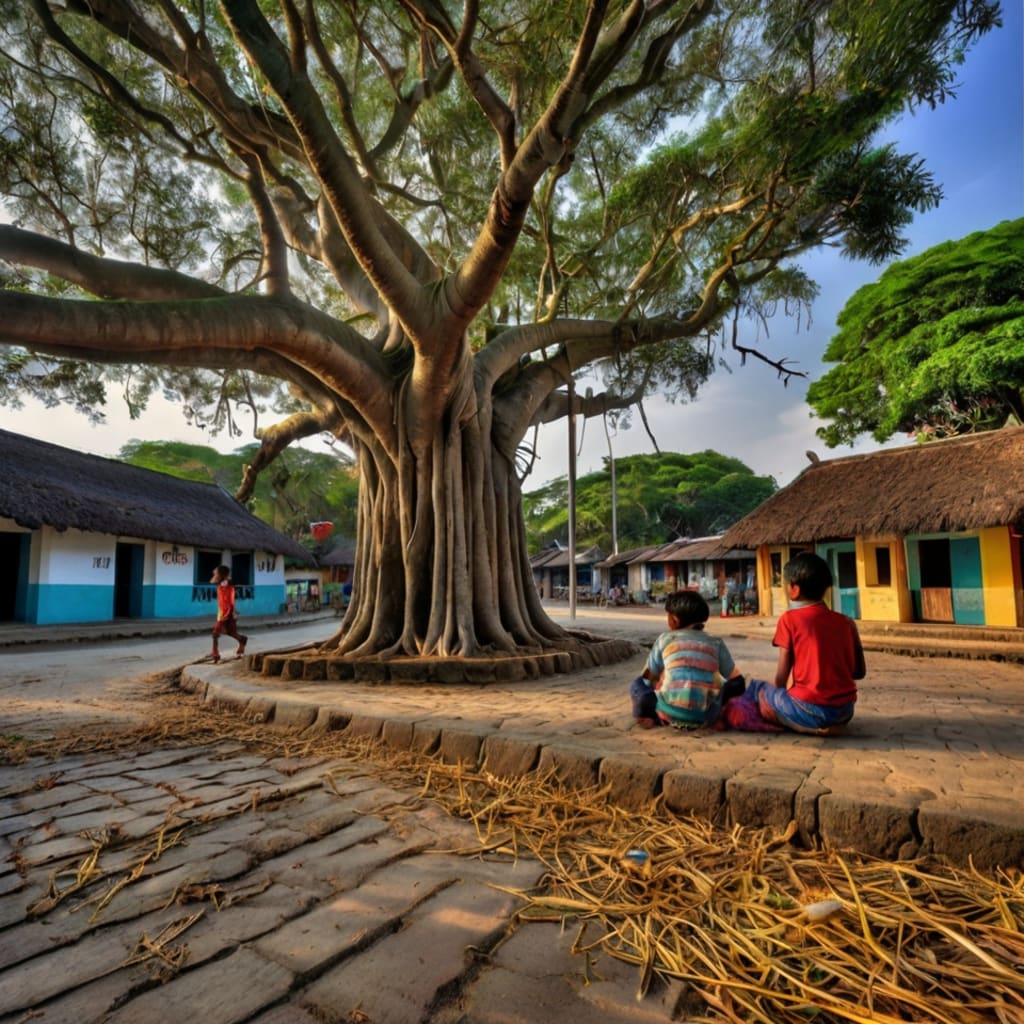
The Banyan Tree of Memories
BY:Khan
After spending thirty long years abroad, Dr. Tariq Mahmood, also known as Nadeem, finally returned to his native village. As he stepped into the familiar yet unfamiliar surroundings, he was struck by a profound sense of amazement. The mud houses he remembered had been replaced by sturdy brick homes, the village roads were now paved, and every household had connections for gas and electricity. Bicycles were now replaced with motorcycles and cars, and traditional oxen used for farming had been substituted with modern machinery. It was clear that, over time, his village had progressed and developed significantly.
Where once there were no signs of schools or religious institutions, the village now boasted mosques and madrasas for every sect, and separate middle schools for boys and girls ensured that children received proper education without having to travel to the city. Prosperity seemed to have spread like a wave across every street. Nadeem also heard that villagers were now demanding high schools, which indicated that awareness and consciousness had grown in every aspect of life.
Having returned from Japan with a settled life, Nadeem found himself with plenty of free time. Every morning, after finishing breakfast, he would take a newspaper under his arm and set out to explore the village. Walking through the streets, he would also inspect his fields, exchanging greetings with farmers before returning home by noon. One day, he decided to visit an old friend, and slowly made his way toward the northern part of the village, where this friend resided.
However, this friend was no ordinary person—it was an old banyan tree under which Nadeem had spent his entire childhood. The cool shade of this generous tree had cradled him through his early years. Back then, the village had only a modest primary school. Its building was barely functional, so boys and girls would sit under the tree on straw mats, learning and reciting lessons. Nadeem’s late grandfather used to tell him, “Son, this banyan tree has been here long before any of us were born.”
Under the tree, life had once thrived in its own simple rhythm. The barber, Phatu, would set up under its shade, cutting children’s hair and shaving the elders. Majida, the fritter vendor, would start frying early in the morning, while her wife baked bread on the stove. In those days, there were no naan shops; this was the village’s standard fare. Then there was Imran Lato’s small shop, which, though tiny, had everything a child could wish for—gum, candies, chips, soda, roasted chickpeas, lollipops, and even betel nut powder. Whenever there were school festivities, long lines of excited children would form outside Lato’s shop.
The village had its own tranquil charm. Elderly men, free from labor, would spend hours playing games on straw mats. Others would gather for card games. In the afternoons, the aunty would keep her stove warm for cooking vegetables, while children would come to roast corn, chickpeas, and rice. The tree’s shade was a center of joy and festivity, where laughter and learning intertwined.
Nadeem completed his matriculation here. When it was time for further studies, he had to move to the city. However, a distant relative advised him to apply for a passport and visa and join him in Japan. “You can study there and also work. Two birds with one stone,” he said. Following this advice, Nadeem moved to Japan. He had enough land at home and no worries about financial support. Sometimes he requested funds from home; other times, he earned by working in Japan. After completing his education, he found a job with a good salary and started sending money home.
In Japan, he married a Pakistani woman, and Allah blessed them with children. Thirty years later, Nadeem decided it was time to return to his roots. Bringing his family along, he returned one evening to the village of his birth, eager to see the transformation firsthand. He was thrilled by the village’s development, its prosperity, and the opportunities now available to its residents.
However, when he approached his old friend, the banyan tree, he was met with shock and sorrow. The tree, once a living monument of his childhood memories, was gone. Rapid development had led to the tree being cut down to widen the road. Where children had once played and learned, only a bus stop now stood. The road carried city-bound commuters: boys, girls, and women from the village traveling to factories and offices, returning home on the same buses in the evening.
The changes had turned the village into a machine-like environment, where everyone followed a strict schedule of work and commuting. Nadeem stood silently on the empty spot where the banyan tree had stood, his heart heavy with memories of laughter, learning, and life that had once flourished there. The memories, like a torrent, overwhelmed him. Trying to hide his emotions from the busy villagers, he slowly walked back home.
That night, he lay awake, immersed in a storm of nostalgia and grief, struggling to reconcile the joyful past with the present reality. Exhausted and emotionally drained, he eventually drifted into a deep sleep, carrying the weight of his reflections and the irreplaceable void left by the banyan tree.
The village had moved forward, but the memories of the tree, the laughter of children, and the innocence of simpler times remained etched in Nadeem’s heart, a bittersweet reminder of the delicate balance between progress and preservation.
About the Creator
Wise~Guys
— Look Behind what's in Front of You ~ Make Good Choices — Hey, So how you Doin'..! Made~Men — Mobster Movies romanticise a distinctive, elegant appearance, impeccable attire style, along with the 'Families' expressive lingo. Making their 'Bones' gave them Panache — with vintage fedoras, tailored pin-striped suits, mirror-polished wing-tip shoes adorned with tassels; with their 'Gun Moll' gorgeous dates on their arms.
By Jay Kantor17 days ago in Families



Comments
There are no comments for this story
Be the first to respond and start the conversation.