
"The Art of Loving and Leaving: Lessons in Emotional Growth and Priorities"
"The Love We Lose: A Psychological Journey Through Attachment and Release"

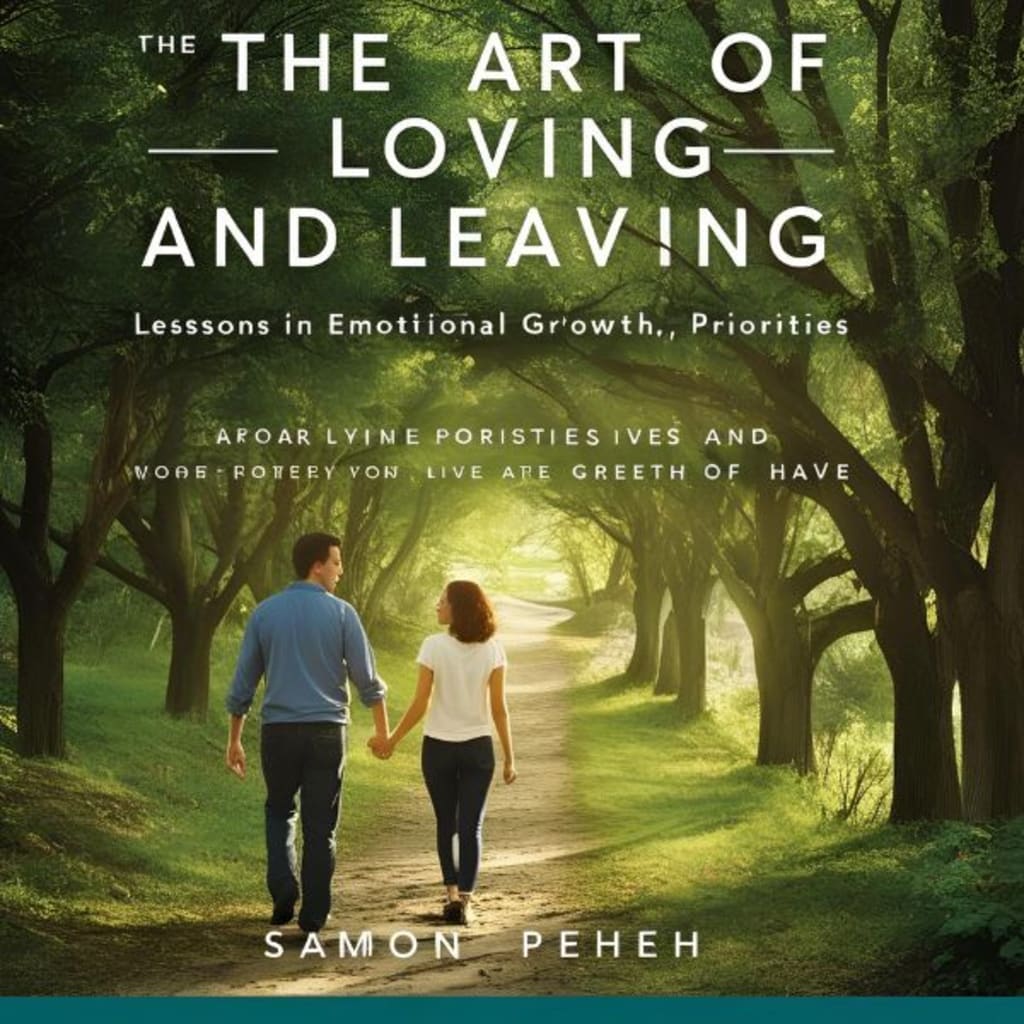
The Art of Loving and Leaving: Lessons in Emotional Growth and Priorities
Maya had always been a romantic. The kind who believed in signs from the universe, late-night phone calls, and eyes that said everything words couldn’t. She had grown up watching her parents dance in the kitchen and imagined love would feel like that—easy, rhythmic, eternal.
So when she met Daniel, it felt like gravity. He was calm, steady, and kind, with a way of listening that made her feel like the most important person in the room. They met in their final year of university, and by graduation, they were inseparable. Everyone said they were perfect for each other. And for a while, they were.
But time has a way of testing perfection.
After three years together, the small apartment they shared in the city felt less like home and more like a reminder of all the conversations left unfinished. Daniel was still kind, still steady—but Maya had started to change. She was chasing a new career in writing, her dreams expanding beyond the walls of their routine. He, on the other hand, wanted stillness, predictability, a life mapped out and simple.
It wasn’t that they didn’t love each other. They did. Deeply. But somewhere along the way, love had started to mean different things to each of them.
For Maya, love meant growth, exploration, becoming more of herself.
For Daniel, it meant safety, sameness, holding on to what they had built.
The tension grew slowly, like fog creeping in unnoticed. A missed call. A sigh too long. An “I’m fine” that didn’t mean fine at all. They weren’t fighting, not really. But the silence between them started to echo louder than any argument.
One night, after another quiet dinner filled with unspoken things, Maya sat by the window, watching city lights blink like signals she couldn’t interpret. Daniel was in the kitchen, washing dishes, humming a tune she didn’t recognize.
And that’s when it hit her—not like a crash, but like a gentle unraveling.
She loved him. But she was no longer in love with the life they were building.
Letting go felt unthinkable. How do you walk away from someone who hasn’t done anything wrong? How do you explain that love isn’t always enough to stay?
The days that followed were full of questions she asked herself in loops.
“Am I being selfish?”
“What if I regret this?”
“Does growing mean outgrowing?”
One evening, she visited her friend Leila, a therapist who often listened more than she spoke.
Maya spilled everything—her fears, her guilt, her confusion. When she was done, Leila poured her tea and said, “Sometimes, Maya, love teaches us how to hold on. But the hardest lessons are the ones that teach us when to let go.”
Maya let those words sit with her. Heavy, but true.
A week later, she sat across from Daniel on their threadbare couch. He must have known. His eyes were soft, sad, and accepting.
“I think we want different things,” she said, voice shaking.
He nodded. “I know.”
There were no raised voices. No accusations. Just a quiet kind of grief.
They talked for hours. About memories. About how grateful they were. About how painful it was to feel love shift into something unrecognizable. Maya cried. Daniel held her hand. And then, for the first time in months, they laughed—really laughed—at something silly on the TV. It was like saying goodbye to a friend you once thought you’d grow old with.
Maya moved out two weeks later.
Her new apartment was small, sunlit, and smelled like paint. The first few mornings, she woke up reaching for someone who wasn’t there. She missed his warmth. His hums. His quiet certainty.
But with every passing day, she started to feel something she hadn’t in a long time—clarity.
She wrote more. Walked for hours. Had messy conversations with herself in her journal. Grief came in waves, of course. Some days were harder than others. But she let herself feel it all.
Love, she realized, wasn’t always about permanence. Sometimes, the most loving thing you can do for someone—and for yourself—is to say, “This chapter is over.”
She didn’t regret her time with Daniel. He had been her anchor when she needed stability. Her mirror when she was still figuring out who she was. He loved her in ways that mattered. And she had loved him the same. But people change. Dreams evolve. And sometimes, love simply isn’t aligned with the life you’re meant to live.
Months passed.
One rainy afternoon, Maya sat in a café, working on an essay titled “The Art of Loving and Leaving.” She didn’t intend to write it. It just poured out of her.
She wrote about emotional courage—the bravery it takes to choose growth over comfort, truth over guilt. She wrote about the quiet ache of letting go and the beauty in honoring a relationship by ending it with respect. She wrote about how heartbreak isn’t always a sign of failure, but sometimes a testament to how deeply we dared to care.
When she finished, she exhaled. It wasn’t just an essay. It was a release.
Later that week, she received a message from Daniel.
“I read your essay. You wrote us beautifully. I’m proud of you.”
Tears welled in her eyes. Not from pain, but from peace.
Love, she thought, doesn’t always need to last forever to be meaningful. Sometimes, its purpose is to guide you to yourself.
EPILOGUE
Years later, Maya would look back at that chapter of her life not with regret, but with quiet reverence. It taught her that love isn't about possession, but presence. That staying isn’t always the brave choice—sometimes, leaving is.
And perhaps most importantly, it taught her that love, at its best, is not about completing someone else, but about supporting their becoming.
And in learning to let go, Maya finally found herself.
About the Creator
Kazi Mirajul Islam
I am expert in digital Marketing .I am also E- book writer & story writer. I am committed to delivering high-quality content.Also create social media account like Facebook,twitter account ,Instagram ,you tube account create and mained.
Keep reading
More stories from Kazi Mirajul Islam and writers in Families and other communities.
A Spark of Mercy: The Child Who Showed the World a Better Way
A Spark of Mercy: The Child Who Showed the World a Better Way tells the inspiring story of Liana, a compassionate nine-year-old girl living in a village divided by the scars of war. Despite the hatred and fear between two opposing sides, Liana discovers a wounded boy named Arin from the “enemy” tribe and chooses to help him instead of turning him away. She brings him food, bandages his wounds, and offers friendship without asking questions or judging his background.
By Kazi Mirajul Islam9 months ago in Families
Wise~Guys
— Look Behind what's in Front of You ~ Make Good Choices — Hey, So how you Doin'..! Made~Men — Mobster Movies romanticise a distinctive, elegant appearance, impeccable attire style, along with the 'Families' expressive lingo. Making their 'Bones' gave them Panache — with vintage fedoras, tailored pin-striped suits, mirror-polished wing-tip shoes adorned with tassels; with their 'Gun Moll' gorgeous dates on their arms.
By Jay Kantor19 days ago in Families




Comments
There are no comments for this story
Be the first to respond and start the conversation.