
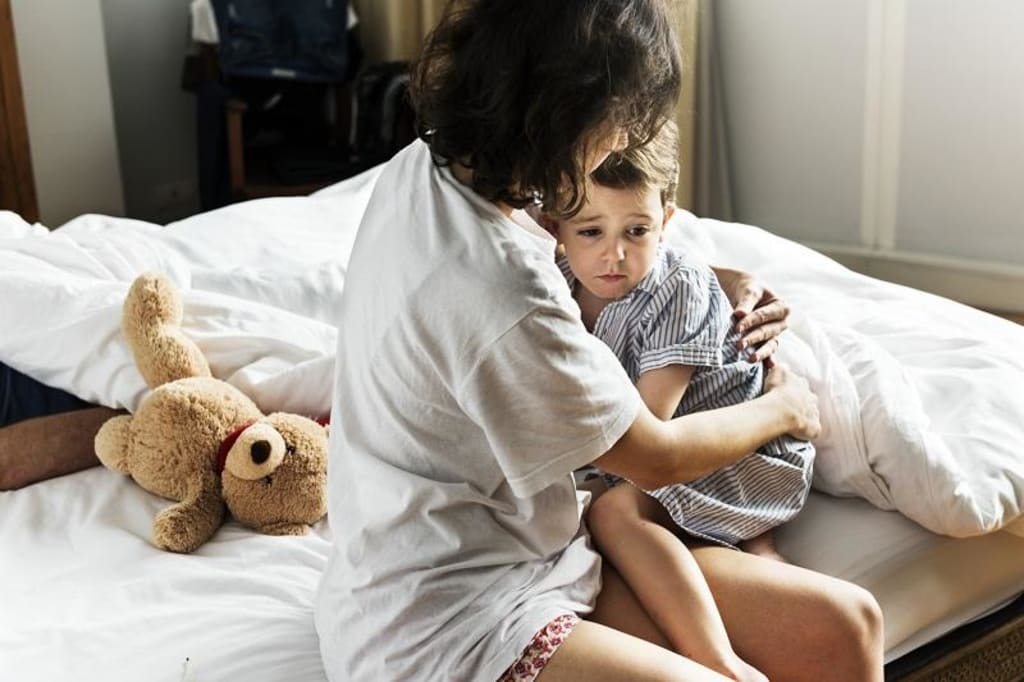
Teraphobia, or the fear of monsters and imaginary creatures, is a common fear among children. From ghosts and vampires to aliens and zombies, children often imagine a wide range of monsters that they believe could be hiding in their bedrooms, closets, or under their beds. While this fear is often dismissed as a childish fear, it can be quite real and have a significant impact on a child's mental health.
Teraphobia can manifest in a variety of ways, with different children experiencing different symptoms. Some children may have nightmares, making them fearful of going to bed or sleeping alone. Others may experience anxiety, panic attacks, or even physical symptoms like sweating, trembling, or nausea when they think about monsters or see something that triggers their fear. For some children, this fear can be so intense that it interferes with their daily activities and their ability to function normally. They may become excessively clingy and reluctant to be alone, particularly at night. In extreme cases, teraphobia can lead to other psychological disorders such as depression and anxiety disorders.
The origins of teraphobia can vary, but it is often linked to a child's imagination, fears, and anxieties. Children's imaginations are often vivid and creative, and they can quickly create stories and scenarios that they believe are real. Children's fears and anxieties can also play a role in the development of teraphobia. For example, a child who has experienced a traumatic event, such as a scary movie or a frightening experience, may develop a fear of monsters as a way of coping with their fear and anxiety.
Parents and caregivers can take several steps to help children overcome teraphobia. First, it's important to listen to their fears and acknowledge them, rather than dismissing them as silly or childish. Parents should take the time to understand what their child is afraid of, and why they are afraid of it. This can help parents to identify triggers that can set off their child's fear and to develop strategies to manage their child's anxiety.
Second, parents can encourage their children to face their fears gradually by gradually exposing them to the objects or situations that they fear. This technique, known as exposure therapy, can help children to learn that the monsters they imagine are not real and that they are not in danger. For example, parents could start by placing a toy monster in their child's room and gradually increase the size and number of monsters as their child becomes more comfortable with the idea. Similarly, parents can encourage their child to draw or write stories about monsters, or to play games that involve monsters, as a way of desensitizing them to their fear.
Finally, parents can help their children develop coping strategies, such as deep breathing exercises or visualization techniques, to manage their anxiety and fear. These techniques can be used when the child is feeling anxious or scared, and can help them to feel more in control of their emotions. Parents can also encourage their child to talk about their feelings and to express their emotions in healthy ways, such as through art or play.
In addition to these steps, there are several other things that parents can do to help their child overcome teraphobia. For example, parents can create a safe and reassuring sleeping environment for their child, such as by providing a night light or a favorite stuffed animal. Parents can also help their child to develop a bedtime routine that is relaxing and calming, such as reading a book or listening to soothing music.
In conclusion, teraphobia is a common fear among children that can have a significant impact on their mental health. Parents and caregivers can help children to overcome their fear of monsters by listening to their fears, encouraging them to face their fears gradually, and helping them to develop coping strategies. With patience, understanding, and support, most children can overcome their fear of monsters and live happy
About the Creator
Keep reading
More stories from Javeria Nadim and writers in Families and other communities.
Multiverse
The concept of the Multiverse has fascinated scientists, philosophers, and science-fiction enthusiasts for decades. It refers to the idea that there may be multiple parallel universes existing alongside our own. While the idea of the Multiverse may seem like a far-fetched concept, it is grounded in solid scientific theory and has been the subject of serious academic research.
By Javeria Nadim3 years ago in Futurism
Wise~Guys
— Look Behind what's in Front of You ~ Make Good Choices — Hey, So how you Doin'..! Made~Men — Mobster Movies romanticise a distinctive, elegant appearance, impeccable attire style, along with the 'Families' expressive lingo. Making their 'Bones' gave them Panache — with vintage fedoras, tailored pin-striped suits, mirror-polished wing-tip shoes adorned with tassels; with their 'Gun Moll' gorgeous dates on their arms.
By Jay Kantor23 days ago in Families
Affection and Healing for Yourself
During the night of the last quarter moon, I gathered my ritual supplies. I carefully handled the chunk of black tourmaline that would protect me from your overall negative and narcissistic energy. I carefully walked the house with my stick of selenite in hand, asking the universe to cleanse our working space.
By Alisha Wilkins ✒️🦋🖋️4 days ago in Fiction




Comments
There are no comments for this story
Be the first to respond and start the conversation.