
I heard my mother’s voice.
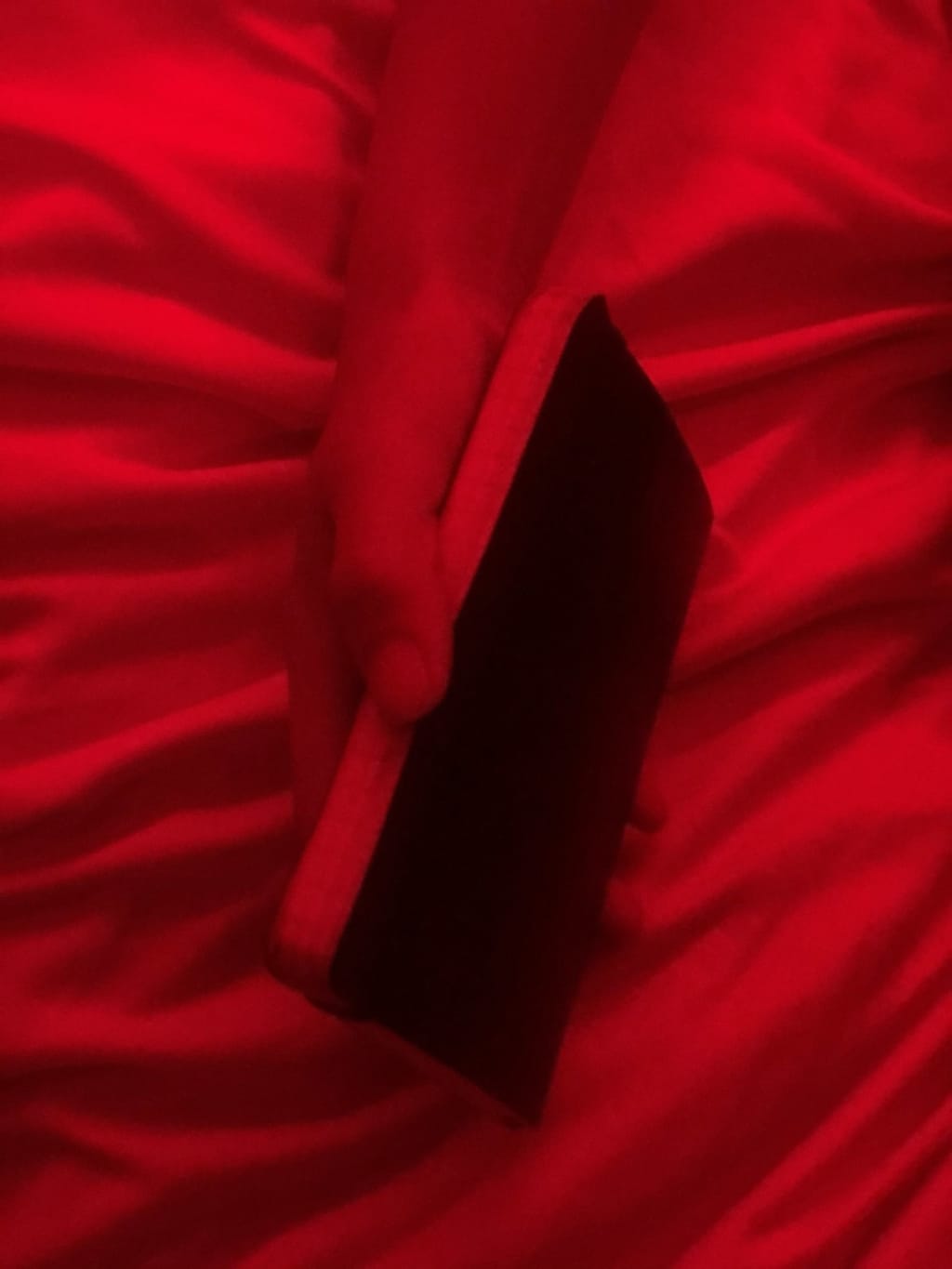
Her eyes shone from her soot-covered face, blocking out the chaos around me. Without breaking her gaze, she pressed her little black notebook into my hands. She spoke--likely the last words I would ever hear.
Start over, Kamila.
As if on cue, a second explosion ripped from the wall behind my mother. Her body slammed into mine, and I felt her shield me from the fire's fingers. But there was nothing she could do about the roar that accompanied the blast, a roar that swallowed my scream and tore me from my mother’s embrace.
When my eyes reopened, I could just make out my mother’s shadowy figure lying still upon the factory floor. The flames flickered. Debris continued to fall from above. Yet, in spite of the carnage, everything was quiet. Reaching my hands to my ears, I found my fingertips met with blood. A silent sob escaped me into the thick black smoke looming just above my head. Still clutching my mother’s notebook, I dragged myself to where she lay motionless. My free hand found my mother’s, which I pulled close to my chest as I sat alone in the dark silence.
*
The sudden weight of a hand on my shoulder jolted me awake. I opened my eyes slowly, adjusting to the harsh glare of a hospital room behind the frizzy, gray hair of the nurse standing over me. She was mouthing something to me, her eyebrows knit together with concern. I jolted forward, remembering everything. The fire, the blood… my mother. Tears sprung to my eyes.
Where is my mother? I felt the words leaving my mouth, but no sound came out. The nurse’s eyes flickered to the ground. She grabbed a clipboard from the foot of my bed and began to scribble on the back of the medical documents.
I’m sorry, she wrote. She passed away in the fire.
The room faded away. I felt a sound of despair slip from my lips, but only quiet reached my ears. My diaphragm tightened with the wail’s crescendo until my throat ached from the exertion. I suddenly felt the arms of my mother wrap around me. No, not my mother—the nurse. Yet as she held me, I began to hear singing. As my sobs gradually faded, the music carried me into a deep sleep.
*
I dreamed of my mother. Her voice rang clear in my head, a beautiful alto melody drifting through our small apartment. As she neared the end of the song, I heard my own voice, blending with hers as it had a thousand times before. My mother paused, stroking my hair.
“Mija,” my mother said. My daughter. “You have a gift.”
I smiled. “Only because you gave it to me!”
“And a good thing, too—your father couldn’t carry a tune if he was the world’s strongest mule!” We laughed together. Wiping the tears of laughter from her eyes, my mother turned back to me and took my face in her hands. “Someday, I know you’ll go farther than me or your father. It’s our job to give you a fighting chance in this world—no matter how many times we have to start over.” With that, she held me tight and began to sing again, a melody I had never heard before.
*
The final note of my mother's song lingered as I awoke. As it faded, the gravity of a world without my mother's music pressed silently on my heart.
I turned my head slightly and found that the nurse had been joined by a portly old man. Their backs were turned to me, and their attention seemed fixed to something on the counter. I shifted slightly to see what they were looking at, but the nurse turned at the sound and walked briskly to my bedside.
She handed me the clipboard. How are you feeling today?
I opened my mouth to respond. Between my smoky lungs and newfound inability to hear my own voice, I was relieved when the nurse held out the pencil and clipboard. I was suddenly grateful for my mother’s insistence on studying written English in addition to its spoken form.
Not awesome, I wrote.
She smiled sympathetically. What’s your name?
Kamila. I paused, realizing the nurse would need my full name for her records. Kamila Maria Reyes Santiago. What’s yours?
Sophie. She gave me a little wave. I smiled and waved back. Through our new form of communication, Sophie asked me a series of more personal questions about myself and my family. I told her how my family had planned to move to the US from our home in Puerto Rico before Hurricane Maria struck… how my father had stayed behind as a result. I felt a stab in my chest as I thought about the news of my mother’s death reaching my father.
After asking about any other known relatives—to which I shook my head—Sophie returned to the portly man. My aching wrist was grateful for the break.
When she came back, she wrote for a while, which took me some time to read. According to Sophie’s analysis of my hearing, she believed the repeated explosions in the factory had caused semi-permanent damage to my ears. She kept using the word “sensorineural”, which she eventually explained was damage to my inner ear, leaving us few options.
Because hearing aids just amplify sound, they likely would have little to no effect. The alternative is my official recommendation: cochlear implants. I do want to mention that this would involve surgery and is also significantly more expensive.
I was suddenly struck by the very real possibility that this meant I could be losing my own voice, not just my mother’s. Even if I practiced speaking without being able to hear my own voice, the thought of ever singing again felt far away. I reached for the pencil again.
I don’t have a lot of money, I wrote. My mother and I have been working at the factory to save up for my father to join us here soon. I remembered my mother’s dying words and added, We were trying to start over.
I watched Sophie’s eyes as they skimmed the page, then flitted over to the old man, who kept his distance. As if she had made up her mind about something, Sophie marched over to him, hand outstretched. Grabbing the two items from the counter, the man reluctantly deposited them in her open palm. As Sophie returned to my side, I recognized one: my mother’s little black notebook. Relief flowed through me at the sight of the familiar object, though it quickly became bittersweet. I had never seen my mother without it, but this was the first time I had seen the book without her. Sophie began to write again.
When you were rescued, we found this in your hands. Though I took the book from Sophie's hands, I couldn't bring myself to open it. I had never been allowed to see what was inside when my mother was alive, and I knew that small action would reinforce the reality of her death. Once I crossed that border, I couldn't go back. I lay there, examining the gently bound cover. The last piece of my mother. Though the edges were blotted with ash, the notebook seemed unharmed. How that little collection of paper and leather had survived the fire was a miracle to me. Sophie wrote on.
This fell out of the notebook when we took it from you. She offered the second object to me, a letter of some kind with my mother’s name on it. I frowned as I tried to understand the words and tables on the letter, but my eyes widened when I saw the number. I turned to Sophie, confused.
It’s your mother’s life insurance policy. Sophie had tears in her eyes. She’s still looking after you. I stared at the five-digit number on the page, and suddenly I understood. In that letter before me were all the extra hours my mother had put in at the factory, all the late nights when she had come home exhausted and collapsed onto our bed. My mother had been sacrificing to give me a better life, even before her final sacrifice. Her final words rang clear in my head. This was my chance to start over.
*
I adjusted the processor behind my ear as I waited, the months of experience with my cochlear implants evident as I absentmindedly adjusted the volume of the crowd around me. Reacclimating myself to ambient noise had been quite a process, but I had certainly developed a new appreciation for the sounds of the city. Suitcases rolled noisily past me. An airplane roared overhead. People greeted their loved ones, crying and laughing. I smiled to myself and slipped my mother's notebook from my pocket, its pages still bound.
When all was said and done, I had been able to pay off my medical bills with a sizable $20,000 to spare, more than I knew what to do with as my mother's sole beneficiary. And though I put most of the money into savings, there was still one expense I couldn't pass up. Tears filled my eyes as my father came into view.
"Kamila."
He dropped his bags, and I ran to him. He scooped me up into his arms and we cried together, tears of sadness and tears of joy. As we broke from our embrace, his eyes dropped to the little black book still in my hands.
"Your mother's," he said. "What's inside?"
I shook my head. "I couldn't..." He nodded, understanding.
"She would be so proud of you, mija." My father checked his watch and yelped. "If you're going to make it on time, we need to get going--Taxi!"
*
As soon as we pulled up to the front doors, my father and I rushed out of the taxi. I pushed my fingers through my dark hair, checking my makeup briefly in the reflection of the glass doors before us. As we entered, the pony-tailed man behind the front desk caught my attention, pointing me towards my destination. I thanked him and entered the room.
A dark-skinned man with a kind face stood from his seat behind the soundboard. "Welcome to the control room. You must be Kamila--I heard your story. It's a pleasure to meet you." He extended his hand to me. I nodded and shook his hand, then introduced my father.
"Your generosity is greatly appreciated, Mr. Narvaez," my father said. "I know this would mean so much to Isabella."
"Of course. I understand she was an incredible woman." Mr. Narvaez turned to me, opening the studio door. "I do only have time for one song, however, so let's get you going. I'll get the track set up."
I meandered towards the microphone in the center of the live room, putting on the headphones that hung nearby. From behind the glass, Mr. Narvaez gave me a thumbs-up. Raucous, upbeat music began to play through my headphones, startling me. I tried to catch up to the instrumental.
The music cut out suddenly. Mr. Narvaez' voice came in through the speakers. "Go ahead and take a minute, Kamila. We can start over."
My mother's face appeared in my mind's eye. Start over. As I turned from the glass to hide my tears, I looked down and found her little black book in my hands. For the first time, I pulled back the binding and began to read. When I finished, I turned back to Mr. Narvaez.
"If it's alright, I'd like to sing something else."
*
My mother's melody poured from my dream through the speakers. As we listened to the recording--to the lyrics from her little black book--my father took my hand. I felt peace settle within me as he whispered softly,
"I hear your mother's voice."
About the Creator
Keep reading
More stories from writers in Families and other communities.
Wise~Guys
— Look Behind what's in Front of You ~ Make Good Choices — Hey, So how you Doin'..! Made~Men — Mobster Movies romanticise a distinctive, elegant appearance, impeccable attire style, along with the 'Families' expressive lingo. Making their 'Bones' gave them Panache — with vintage fedoras, tailored pin-striped suits, mirror-polished wing-tip shoes adorned with tassels; with their 'Gun Moll' gorgeous dates on their arms.
By Jay Kantor25 days ago in Families
The Tiny Titan: Why Sunflower Seeds Deserve Superfood Status
The Tiny Titan: Why Sunflower Seeds Deserve Superfood Status Forget what you’ve seen at baseball games. The humble sunflower seed isn’t just a snack—it’s a nutritional masterpiece hiding in plain sight. Harvested from the sun-seeking Helianthus annuus, these little kernels are bursting with science-backed benefits that support your heart, brain, and long-term vitality.
By Bright Mind Hub4 days ago in Families



Comments
There are no comments for this story
Be the first to respond and start the conversation.