
Safety and Controversies of Gua Sha: Considerations from Adults to Infants
Explore the safety and controversies of Gua Sha for adults, pregnant women, children, and infants. Learn about potential risks, scientific debates, cultural acceptance, and ethical considerations to use this traditional therapy responsibly.
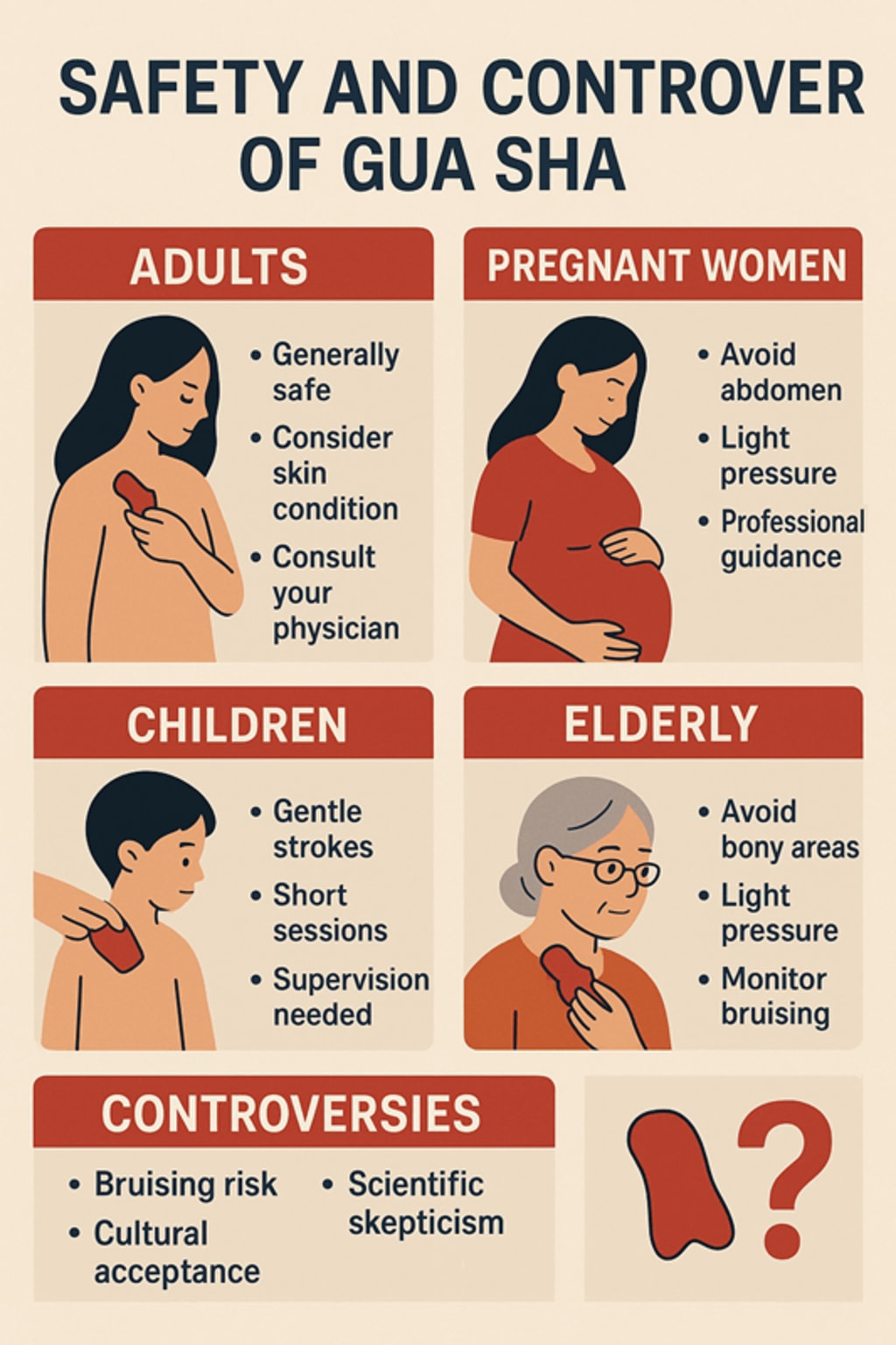
Gua Sha, a traditional Chinese medical therapy, has gained popularity not only in China but also in Western health and beauty communities. Its core principle is “scraping the skin to promote blood circulation and expel internal dampness and heat,” making it a simple method for self-care. However, concerns about safety and social controversies have also emerged—especially regarding its use among pregnant women, children, and the elderly. This article aims to review the applicability of Gua Sha for different populations, potential side effects, and the controversies surrounding science, culture, ethics, and law.
1. Safety Analysis of Gua Sha
1.1 Applicability for Different Populations
- Pregnant Women
Pregnant women experience significant changes in blood flow and hormone levels. While Gua Sha can theoretically relieve shoulder and neck discomfort, improper application may stimulate the uterus or affect blood pressure. It is generally recommended to avoid strong scraping on the abdomen and lower back, and to use gentle techniques on the shoulders and upper back under professional guidance.
- Children
Children have delicate skin and fragile blood vessels. Excessive scraping may cause bruising or skin damage. For infants, even minor errors can be risky. Scraping intensity, frequency, and duration must be strictly controlled, and it is best conducted under medical supervision.
- Elderly
Older adults have fragile blood vessels and reduced skin elasticity, making them prone to subcutaneous bleeding or bruising. Gentle scraping is advised, avoiding areas with osteoporosis or high bleeding risk.
- Healthy Adults
Generally safe for healthy adults, but attention should be paid to skin conditions such as wounds, infections, or inflammation. People with chronic illnesses should consult a physician before using Gua Sha.
1.2 Side Effects and Common Misconceptions
- Bruising and Skin Damage
Redness or bruising after Gua Sha is common and usually harmless. However, extensive bruising accompanied by pain may indicate excessive scraping.
- Pain and Infection Risk
Overly forceful scraping can cause subcutaneous bleeding, pain, or infection. A common misconception is that more severe bruising indicates better therapeutic effect, which is incorrect.
- Clarifying Misconceptions
Gua Sha is not a cure-all and cannot replace conventional medical treatment. Serious medical conditions should be treated by professionals rather than relying solely on Gua Sha.
2. Gua Sha and Controversies in Western Medicine
2.1 Scientific Skepticism
Western medicine lacks large-scale, high-quality randomized controlled trials on Gua Sha. The mechanisms proposed—such as improved circulation or changes in inflammatory markers—cannot fully explain traditional concepts like “Qi and blood flow.” Consequently, Gua Sha is often considered an evidence-limited complementary therapy in the scientific community.
2.2 Cultural Acceptance
In Traditional Chinese Medicine (TCM), Gua Sha is believed to unblock meridians and promote blood circulation. Its long-standing use in families and communities has given it cultural legitimacy. Many Western health enthusiasts have also adopted it as a wellness practice, creating a new intersection of Eastern tradition and Western health trends.
2.3 Analysis of the Contradiction
The tension lies between insufficient scientific evidence and strong cultural acceptance. Western medicine emphasizes reproducibility and evidence, while TCM values individualized and long-term practice. Understanding Gua Sha often depends on cultural context, highlighting the challenge of balancing science and tradition.
3. Special Controversies: Gua Sha for Infants
3.1 Safety Concerns
Infants’ skin and blood vessels are extremely delicate. Even mild scraping can lead to skin injuries, infections, or serious internal damage. Pediatric experts generally advise against strong or frequent scraping for infants.
3.2 Ethical Issues
Infants cannot express consent. Parents bear full responsibility for any harm caused. Excessive scraping may infringe on a child’s bodily integrity, raising ethical concerns.
3.3 Legal Boundaries
Regulations on infant Gua Sha vary across countries. In some regions, causing injury could involve civil or criminal liability. Parents must be aware of local laws to avoid legal risks.
3.4 Case Analysis
Recent media reports in China and abroad have highlighted infant Gua Sha incidents causing skin injuries or more severe harm, sparking public debate. Opinions are polarized: some defend traditional practice, while others prioritize safety and legal accountability. These cases underscore the controversy surrounding infant Gua Sha.
4. Conclusion and Recommendations
4.1. Balancing Science and Tradition
Gua Sha can be a helpful wellness practice when used safely, but its effects should not be overstated. Combining evidence-based practice with traditional experience is key.
4.2. Safety Guidelines for Different Populations
- Pregnant women: avoid strong scraping on the abdomen and lower back, use gentle areas
- Children and infants: strictly control intensity and frequency, seek professional guidance if needed
- Elderly: use gentle techniques, avoid fragile or high-risk areas
- Healthy adults: pay attention to skin conditions and chronic illnesses
4.3. Family and Societal Advice
- Unerstand Gua Sha realistically
- Respect legal and ethical boundaries
- Stay informed through expert guidance and media reports to avoid risks from traditional habits
Gua Sha remains a valuable traditional therapy in modern society, but safety concerns and controversies remind us to use it responsibly—especially for pregnant women, children, and the elderly. Recognizing both its benefits and risks ensures this ancient practice can be applied safely and reasonably in contemporary life.
About the Creator
Wise~Guys
— Look Behind what's in Front of You ~ Make Good Choices — Hey, So how you Doin'..! Made~Men — Mobster Movies romanticise a distinctive, elegant appearance, impeccable attire style, along with the 'Families' expressive lingo. Making their 'Bones' gave them Panache — with vintage fedoras, tailored pin-striped suits, mirror-polished wing-tip shoes adorned with tassels; with their 'Gun Moll' gorgeous dates on their arms.
By Jay Kantor19 days ago in Families
Bettijo Hirschi
Introduction Bettijo Hirschi is a multi‑talented creative professional from the United States. She works as a designer, art director, photographer, writer, and event planner. Bettijo has built a long career in creative work and media. People know her for her artistic skills, her work in magazines and television, and her lifestyle blog. She is also known in recent news because of changes in her personal life.
By Farhan Sayed4 days ago in Families




Comments
There are no comments for this story
Be the first to respond and start the conversation.