

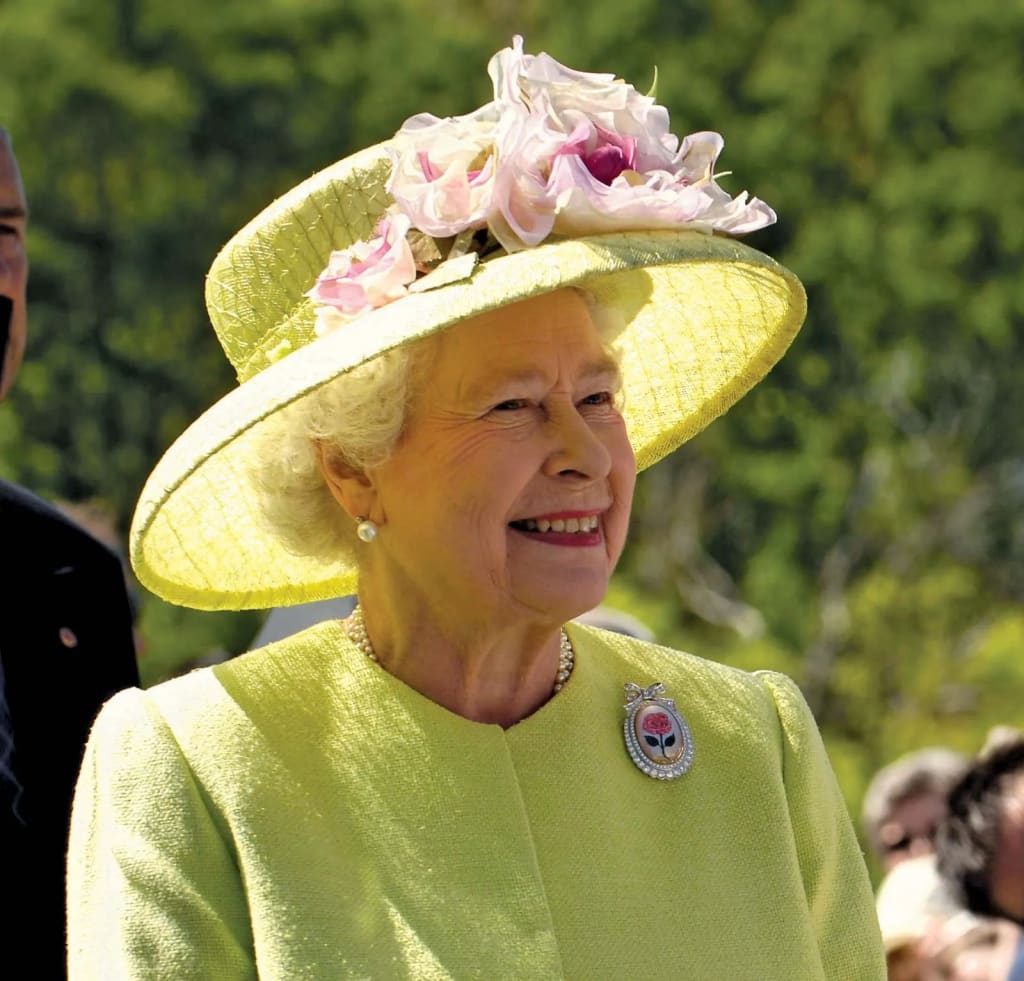
Born in 1926, Elizabeth Alexandra Mary was not expected to inherit the throne, but the 1936 abdication of her uncle, Edward VIII, irrevocably changed her life, placing her father (George VI) and subsequently her on the path to monarchy. Her early commitment to service was profoundly demonstrated during World War II, where she trained as a mechanic and truck driver in the Auxiliary Territorial Service, becoming the only female member of the Royal Family to serve in the armed forces.
Ascension and the Post-War Era (1952–2000s)
Elizabeth ascended to the throne in 1952 at the age of 25, marking the start of a historic 70-year reign. She inherited a nation navigating the transition from a global empire to the modern Commonwealth. Her decades in power were defined by her commitment to political consistency and continuity. She worked tirelessly to foster relationships across the Commonwealth nations, traveling extensively and treating the organization as a personal priority.
Crucially, Queen Elizabeth II maintained strict political neutrality. She served as a stable, constitutional figurehead, working through twelve different British Prime Ministers—from Winston Churchill to Liz Truss—and numerous global leaders. Her quiet influence often lay in her weekly, private audiences with the Prime Minister, where she offered counsel based on her vast experience.
Modernization and Legacy (21st Century)
As the media landscape changed rapidly, a significant challenge for the Queen was modernizing the monarchy without sacrificing its tradition or mystique. She embraced changes like televising royal events, utilizing digital media, and adapting public appearances to feel more accessible. Her ability to remain relevant and respected through social upheaval, media scrutiny, and major family challenges is considered a hallmark of her leadership.
The Queen's final years were celebrated with her Platinum Jubilee in 2022, a milestone that recognized her unprecedented longevity and dedication. Upon her passing later that year, her indelible legacy was defined by her quiet strength, her unwavering commitment to duty, and her success in transforming the monarchy into a symbolic, unifying force for a modern, diverse Britain.
Champion of the Commonwealth
The Commonwealth of Nations was perhaps the single most important project of the Queen's reign, succeeding the former British Empire. Her dedication to this organization, which grew from a mere seven nations at her accession to 56 member states, was both profound and deeply personal.
A Promise of Service: On her 21st birthday in 1947, Princess Elizabeth famously broadcast a pledge to the then-Empire: "I declare before you all that my whole life, whether it be long or short, shall be devoted to your service and the service of our great imperial family to which we all belong." She viewed her role as its unifying symbol until her death.
The World's Most Travelled Monarch: She was, by far, the most travelled head of state in history, undertaking more than 200 visits to Commonwealth countries. She believed she had to be "seen to be believed," ensuring she was a personal presence in these distant nations to maintain cohesion and demonstrate commitment.
Navigating Decolonization: As numerous realms achieved independence and became republics (meaning they kept the Commonwealth link but removed the Queen as Head of State), she handled the transition with a non-judgmental acceptance. This diplomatic skill was crucial in transforming the organization from a political entity into a voluntary, modern partnership of equals, spanning many geographical regions, religions, and cultures.
The Role in Historical Upheavals
While constitutionally bound to remain politically neutral, the Queen's presence and actions often coincided with monumental historical moments, cementing her role as the nation's constant figurehead.
The Suez Crisis (1956): A major foreign policy embarrassment for Britain. Though her exact role remains private, reports suggest she was displeased with Prime Minister Anthony Eden's handling of the intervention. She later helped to mend strained relations with the United States by meeting President Eisenhower.
The Troubles in Northern Ireland: Her visit to the Republic of Ireland in 2011 was a watershed moment, representing the first visit by a reigning British monarch since Irish independence. Her public gestures, including speaking a few words of Irish, were seen as a powerful act of reconciliation and healing.
The "Annus Horribilis" (1992): The Queen famously labeled this year her "horrible year" following the separation of three of her children and a devastating fire at Windsor Castle. It was a crisis that led to public scrutiny and pressure for the monarchy to become more financially transparent and accountable. She responded by voluntarily agreeing to pay income tax.
Diana's Death (1997): Following Princess Diana's death, the Queen faced uncharacteristic public criticism for remaining at Balmoral rather than immediately returning to London. Her subsequent return, combined with an unprecedented televised address to the nation, was a strategic move that helped the monarchy reconnect with a grieving public and demonstrated the need for institutional flexibility.
Private Interests and Personality
Despite her iconic public image, the Queen was known for her simple, outdoor-focused private life, which provided a crucial respite from her duties.
Lifelong Equestrian: She had a deep, lifelong passion for horses. She was a highly knowledgeable owner and breeder of thoroughbreds, attending the Derby at Epsom and Royal Ascot regularly. This interest allowed her to engage in a competitive environment purely on merit, not rank.
The Corgis: Perhaps her most famous personal characteristic was her love of Corgis. She owned more than 30 Corgis and "Dorgis" (a Corgi-Dachshund mix) during her lifetime, all descended from a dog named Susan, given to her for her 18th birthday.
A "Grounded" Life: When in Scotland at Balmoral, the Queen enjoyed a private life that was strikingly normal for a monarch: long walks in the countryside, picnics, and hosting annual dances (the Ghillies' Balls) for estate staff and neighbours. This private existence in the remote Scottish Highlands was essential for her to recharge and maintain her famous self-discipline.
About the Creator
Navanithe
I am an enthusiastic, self-motivated, reliable, responsible, and hard-working person. I am a mature team worker and am adaptable to all challenging situations. I am able to work well both in a team environment and on my own initiative.
My Favorite Slime Recipe
A few years ago, making your own slime was all the rage. People swapped recipes and even swapped slimes. Now, you can buy all the pre-made slime you want, in a variety of colors, textures, and themes. But there is something special about creating your own slime. This activity is great for keeping children busy on a rainy day, or helping them learn to follow step by step directions.
By Angel Mann7 days ago in Families
Punch the Macaque: The Baby Monkey Who Found Comfort in a Plush Friend
Today we look back at one of the most unexpected viral stories of 2025—a tale that began quietly in a zoo in Japan and grew into a global symbol of resilience and tenderness. It is the story of Punch, a Japanese macaque born in July 2025 at Ichikawa City Zoo in Chiba Prefecture. His life began with hardship, but what followed has touched millions across the world.
By Haroon Pasha4 days ago in Families




Comments
There are no comments for this story
Be the first to respond and start the conversation.