
Parenting on the Spectrum
Autism tricks to help parents

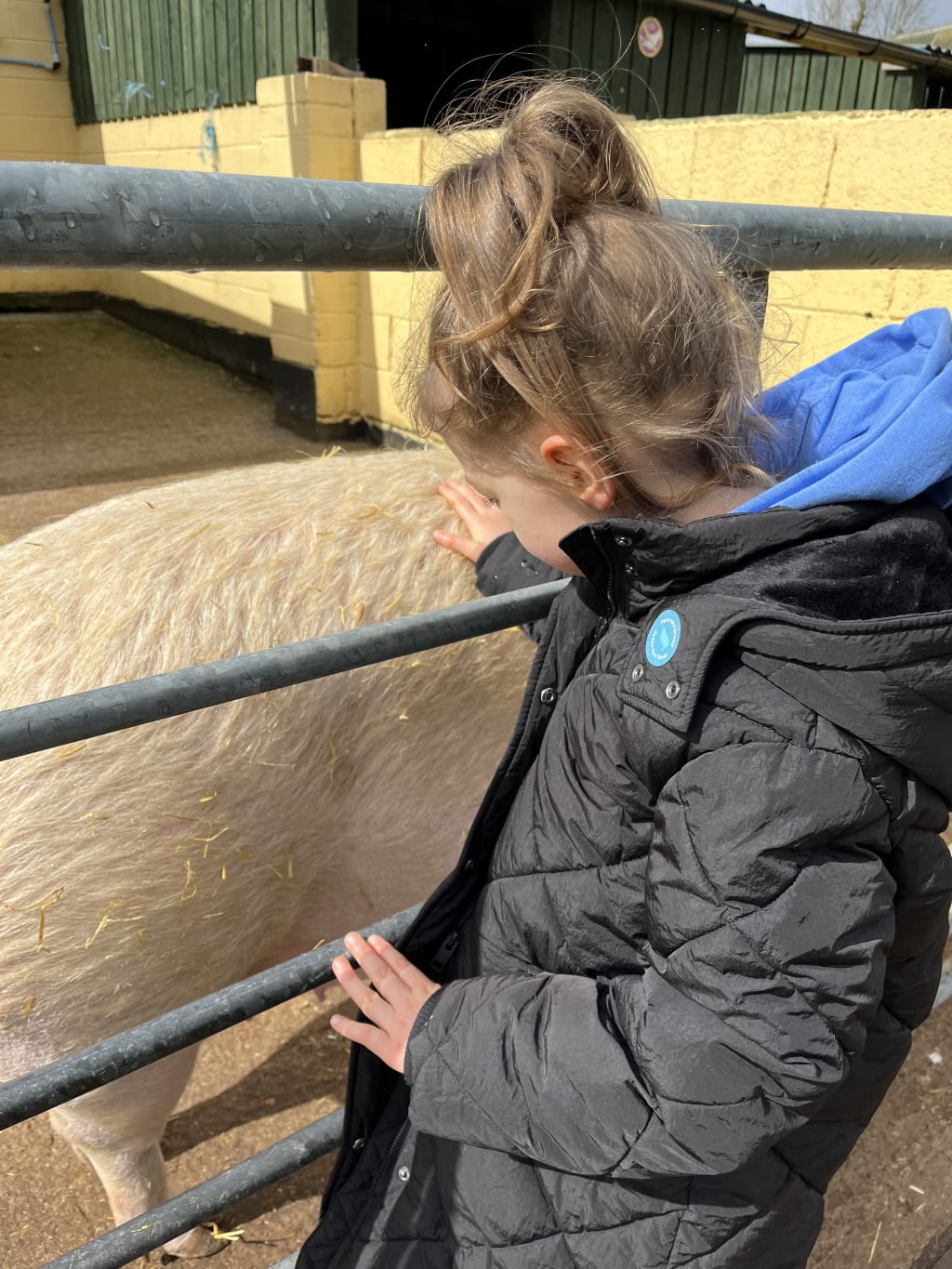
If you’ve met one person with Autism, you’ve met one person with Autism — Dr Stephen Shore
Autism is a spectrum, and every person is different. All sit on a different part of the curve, and for this reason, not everything that works for one parent will work for another.
Isn’t that what parenting is all about? What works for one may not work for all.
As a spectrum, it is vast. My little girl loves to be held and touched; others hate it. Parenting any child is a huge learning curve, and I realised early on that the books that told you how to be the perfect parent were useless. She needs the rule book and tick boxes thrown away.
Socially she had hardly passed any of her milestones at age two. Academically, she was operating far above her age. At just four, she taught herself to read. I am ashamed to say we didn’t even realise it, but she could read some complex words and understood what they meant.
We took her into a local pharmacy department store. She looked up and read in a proud voice ‘Boots,’ the name of the shop. Then she looked down at her boots and pointed. Try explaining to someone with ASD why Boots, the pharmacy, does not sell one pair of shoes. It is an interesting conversation.
It has not always been easy, but this journey is one that I enjoy even in the hardest of moments.
There have been times of great worry and times when I have been genuinely scared for her future. Of course, like all parents, I am worried about what life will throw at her. However, I hope she has people around her who realise her quirky nature and that she has a sick sense of humour. I once caught her curled up laughing on the sofa at a video of a man falling off a skateboard.
Rather than bringing her into our world, we have joined her in hers on many occasions. It is these small gestures that have made some enormous advancements for her.
Here are some of the factors that we have worked on. They will not work for all of you, but they might work for some. I would also advise that if they don’t work now, they might work later on, as we have found this several times.
Eye Contact
Eye contact is an area that many people find challenging. With my little girl, it was the first indication of ASD. She would not look at us no matter what we tried. We have increased this through patience and love, and now people who do not know her see no difference in her eye contact than any eight-year-old.
The first thing to think about is an activity or food that your young person loves. For us, it was blowing bubbles or eating chocolate biscuits. Whatever can hook your child’s attention, the method is the same.
With the biscuits, if my little one wanted a biscuit, we would hold it up just beside our eye. Naturally, she would look for where her biscuit was so she could take it. With this, she got used to looking at our faces. She didn’t need to look directly into our eyes, but she looked enough in that direction to start to feel more comfortable.
The bubble technique was similar to the biscuits, although slightly more painful when the liquid got into my eye. We adopted a routine of ready, steady and then blowing the bubbles. We would say ‘ready, steady,’ and she would activate the go by looking at us. We would blow the bubbles, and she would be happy. It didn’t take her long to start to look at us on the ready, steady to get the bubbles sooner.
Now she holds good eye contact, but we still make allowances for her and watch the language we use. For example, as most parents would say, when I am washing her face, I used to say ‘look at me.’ Then I realised how this must cause her anxiety. Now I say ‘look over my shoulder.’ The thing is, I need her face to see if it is clean. I don’t need her to look at me, so why freak her out by asking her to do it?
The Routine Helps
The routine my little girl and I have adopted is the same day in, day out. It helps settle her anxiety and sets us up for a positive day. This is true of all children though, whether they have additional needs or not. Children like boundaries and predictability.
We are often the first two up in the morning. My little girl has her breakfast and watches television whilst I get ready for the day. She has learnt to interpret the difference in the days about whether she is going to school. Knowing what the day brings reduces her anxiety.
Visual timetables can also help with this. Have pictures that show your child what is happening tomorrow and what they can expect from their day. Can you imagine how much anxiety you would have if you didn’t know what was happening every day? A visual timetable will remove this for many children. Depending on the ability of your young person, this could be a day in advance or a week.
When she was starting school, I went to the school with her and took lots of photos. I made these into a simple PowerPoint and recorded my voice over the top telling her about her school. She played the video regularly and started to understand what was going to happen.
In school holidays now we have a calendar that we cross off every day so she knows when she is returning to school.
These prompts and social stories can be used with any activity which is a change of routine.
Increasing Interactive Attention Span
Interactive attention span is the time that your child is connected to you. Anyone who has experience with ASD will know there are times when they are in their world. Some young people are with us more than others. Even if your child interacts with you for a minute, there is a way to increase it.
It is essential to extend this time, as this is when the young person will learn and develop. As parents, you might think this is impossible.
Samahria Lyte Kaufman was told when her son was born to put him in an institution and concentrate on her other children. His autism was considered so severe that he would never be able to live independently. Her son now travels the world lecturing and teaching these techniques.
The system is based on observing your child’s red and green lights.
What are red and green lights?
These are the natural signals that our child gives us. You might need to observe your child for a couple of days to recognise these. What I discovered when I watched my daughter was that she had more green lights than I realised. She also switched between red and green lights quickly. Your child will be different, which is why observation is so important.
A red light is when your child is in their world. This is demonstrated through their stimming. Stimming is the repetitive behaviour your child exhibits. This could be hand flapping, spinning the wheels on a toy car or something similar. Some children jump, some run. All will have a different stim. As parents, you will be the experts.
A green light is when your child is interacting with you. When they are in your world. For my daughter, this is easy to see as she gives us eye contact. For your child, it could be holding your hand. Again you will know the signs.
When the child is in the red light
Once you have established the red and green lights, it is time to work with them. Again, there are different techniques for each light.
With a red light, you need to copy your child’s stim. I know you might think I have lost my mind, but it works. For example, let us say that your child’s stim is to wave a ribbon. When you see this behaviour, you wave a ribbon.
First, you must use your ribbon. Using their ribbon would distress them. You get your piece of ribbon and copy them. You don’t just copy them, you wave that ribbon like it is the best activity you have ever done. You wave your ribbon in their eye line but far enough not to be in their space.
Give it time, and your child will see this and come to you. Remember, wave like it is the best thing you have ever done.
When the child is in the green light
When your child is in the green light, your job is to extend their time there. To do this, you use everything you have. For example, you can make funny noises, funny faces or act like a fool. Anything that you can do to keep your child focused on you.
This might be minutes; it might be longer. If you use this technique, the time will get longer as time goes on. When your child goes back to a red light, you go back to the ribbon waving.
It is impossible to do this all the time, I know that. Start with 30 minutes a day and increase this as it becomes easier. Don’t do it all the time, children with autism need to stim to regulate their emotions. They have to have this time.
By increasing your child’s interactive attention span, you will create more learning opportunities. This could be for everyday activities such as eating and personal hygiene skills. For us, it gave us time to work on her language.
Even a slight difference could make a massive change in your child’s life.
Assessing Their Skills
Traditional methods of assessment relate to asking the child questions. For example, picking up colours and asking what colour is this? For obvious reasons, this doesn’t work if you have a non-verbal child. This is also ineffective with those who are anxious and shy. Many children become mute in stressful situations.
The assessment system we use can be inclusive of all. With regards to colours, we laid all the paints out in front of my little one. We asked her to give us the red paint, and she did. Her favourite hobby is books, again we use a similar technique. ‘Where is Thomas?’ She points to Thomas. She could do this with over 30 characters, probably more.
Strangers
Many times when we are out, people come up to her and speak to her. Why wouldn’t they? She is a cutie. Although she talks, it is not always her preferred method of communication and certainly nothing she would do with someone she does not know.
When a stranger talks to her, there are two ways to deal with this. I can say nothing, then the person will think my little girl is rude. Second, I can tell them she is autistic, and they normally tell me ‘they are sorry.’ I’m not sorry, you don’t need to be. That is my individual, amazing little girl, I wouldn’t change anything.
Generally, though, people are supportive, if uneducated. Give them time to get to know the child behind the label.
Love the ASD
When my little girl was first diagnosed, I joined many support groups on Facebook. I thought it would be helpful to see how other parents navigate the challenges, get some support and new ideas. I couldn’t have been more wrong. What I found in these groups shocked me. I don’t belong to any of them now.
One example which made my blood run cold. A woman posted on the group that her Christmas had been ruined due to her child’s behaviour. She finished her rant by saying she couldn’t wait for next year because her son would be medicated. I know some young people require medication, but not to the extent that they are different people.
There were others, but basically, the groups were set up for parents to moan, a place to tell everyone how awful their life was with a child with ASD. Our life is not like that. Sure, it is tough sometimes, but it is not terrible or more complex than any parent’s life.
My outlook will never change because I love the ASD. After all, it is part of one of my favourite people. She has a wicked sense of humour. I hear her laughing at videos regularly. She loves nothing more than giggling when someone falls over on television. She is smart, loving and good company, just in different ways.
We have our secret language of looks, signs and actions. When she hugs me, she holds on so tight. She doesn’t have to tell me she loves me. I feel it every day.
Tough Days
When times are tough, we deal with them as parents, with love at the forefront of everything we do. There is never once that I want to wave a wand and take the ASD away. If we took this away, I would take the very foundation of what makes my daughter amazing.
Would I change the world for her? In a heartbeat.
For years I have worked with special educational needs. Unfortunately, it doesn’t help the parent in me at all. It is easy to advise parents on strategies; it is impossible to implement them all as a parent. Love gets in the way almost every time.
My job as her mother isn’t to moan about how tough my life is. My job is to help my little girl cope in a strange and scary world. It is to support her when life gets complicated, not to hope for a miracle cure.
Hopefully, through some of the strategies I have put above, others can start to unlock the full potential of these fantastic children. My biggest tip though is love like there is no tomorrow, kick the critics to the curb and throw the rule books and developmental tick boxes in the bin.
As Frank Sinatra said, do it your way.
About the Creator
Sam H Arnold
Fiction and parenting writer exploring the dynamics of family life, supporting children with additional needs. I also delve into the darker narratives that shape our world, specialising in history and crime.
Keep reading
More stories from Sam H Arnold and writers in Families and other communities.
Fighting for My Daughter
It started as a typical Bank Holiday Monday and finished with a nightmare. My eldest has never made life easy; when she was born, she got her head stuck in the birth canal, and an emergency Caesarian ensued to save both her life and that of her mother.
By Sam H Arnoldabout a year ago in Families
Christmas Abroad: Celebrating the Holidays Without Family
I moved to South Korea in 2017. I was twenty-two years old and excited to start my career as an English Second Language Teacher. With a Bachelor's degree and six hundred dollars in my bank account, I set off for Busan.
By Kera Hollow28 days ago in Families


Comments
There are no comments for this story
Be the first to respond and start the conversation.