
Pain and Sorrow of family of an addict
Don’t let drugs hold you back
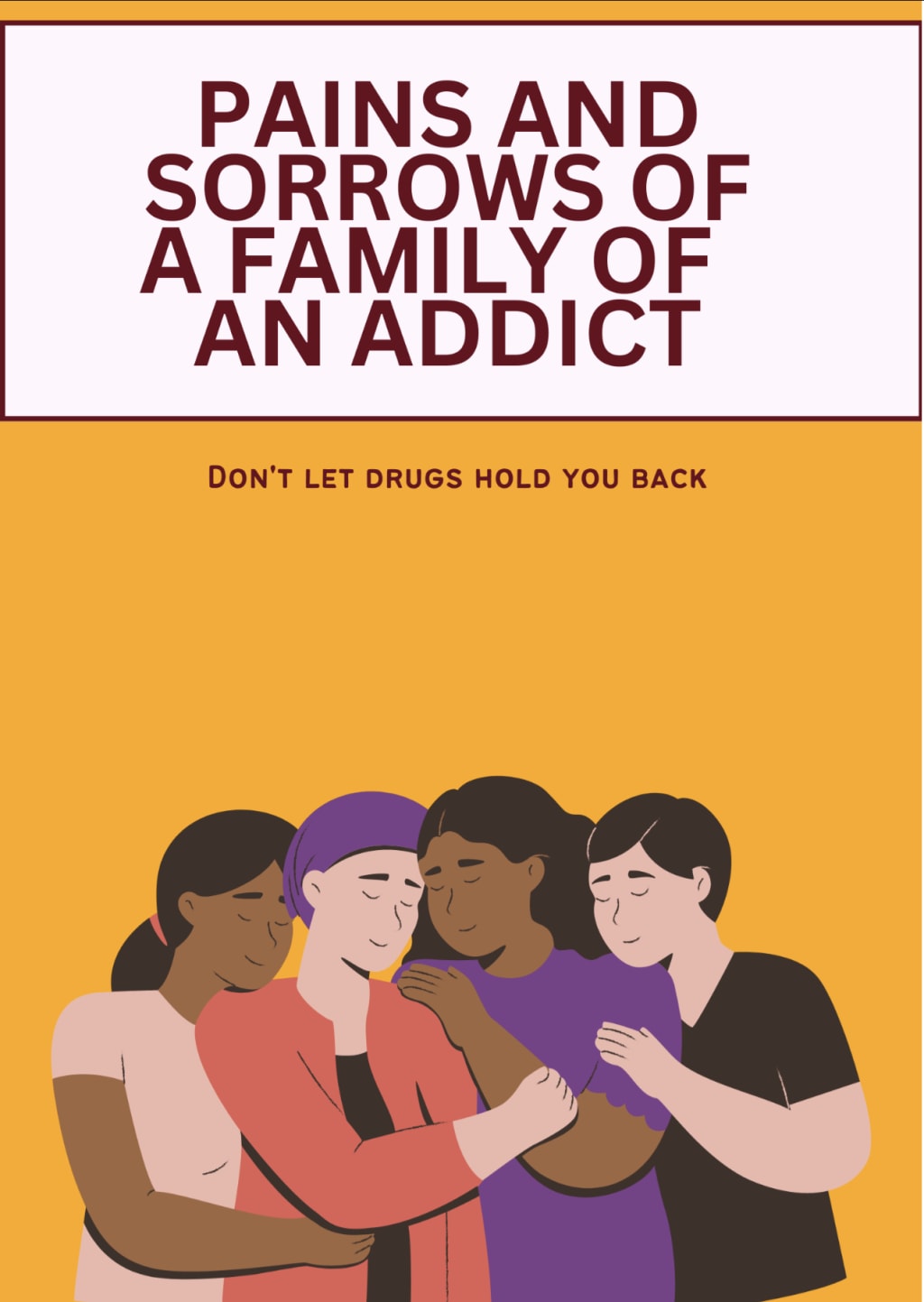
The pains and sorrows experienced by a family with a loved one who is an addict can be overwhelming and deeply distressing. Addiction can have a significant impact on every member of the family, causing emotional, psychological, financial, and even physical challenges. Here are some common difficulties that families of addicts often face:
Emotional turmoil: Families go through a range of emotions, including fear, anger, sadness, guilt, shame, and helplessness. They may feel responsible for their loved one's addiction or blame themselves for not being able to prevent it.
Breakdown of trust: Addiction often leads to broken promises, lies, and deceit as the individual struggles to maintain their addictive behavior. This can erode trust within the family, making it difficult to maintain healthy relationships and causing further emotional strain.
Financial strain: Addiction can be financially draining, as individuals may spend large sums of money on their substance of choice. This can lead to financial instability, loss of savings, mounting debts, and even legal issues, placing a significant burden on the entire family.
Neglected needs: The focus on the addict's needs often overshadows the needs of other family members. Siblings, parents, and spouses may experience neglect, as their emotional and practical needs take a backseat to the addict's demands and crises.
Codependency: Family members may develop codependent tendencies, enabling the addict's behavior or sacrificing their own well-being to maintain a dysfunctional equilibrium. This codependency can hinder the recovery process and perpetuate the cycle of addiction.
Health problems: The stress and emotional strain of dealing with addiction can lead to various health issues for family members, such as anxiety, depression, insomnia, and even physical ailments. The constant worry and turmoil can take a toll on their overall well-being.
Social isolation: Families of addicts may experience social stigma and judgment from others, leading to feelings of shame and isolation. They may withdraw from social activities, lose support networks, and struggle to seek help due to fear of judgment.
Constant crisis mode: Addiction often creates a chaotic environment where families are constantly dealing with emergencies, such as overdoses, legal troubles, or volatile behavior. Living in a state of constant crisis can be exhausting and emotionally draining.
Impact on children: Children growing up in families with addiction face unique challenges. They may experience emotional trauma, neglect, instability, and disrupted routines that can affect their development and well-being.
Grief and loss: Families may mourn the loss of the person their loved one once was before addiction took hold. They may also experience multiple losses, such as the loss of trust, dreams, stability, and a sense of normalcy within the family unit.
It is important for families to seek support, Pray together, education, and counseling to navigate these challenges. Support groups, therapy, and resources specific to addiction and family dynamics can help them cope, heal, and support their loved one's recovery journey.
Blurred boundaries between roles: Addiction can blur the lines between family roles and responsibilities. Parents may become more like caretakers, siblings may take on parental roles, and the normal dynamics within the family can become distorted. This can lead to confusion and a loss of healthy family functioning.
Impact on mental health: Family members may experience a decline in their mental health due to the ongoing stress and challenges of dealing with addiction. Anxiety, depression, post-traumatic stress disorder (PTSD), and other mental health issues can arise as a result of the strain placed on family dynamics.
Communication difficulties: Addiction often disrupts healthy communication patterns within the family. Open and honest dialogue may become strained as family members may tiptoe around sensitive topics, avoid confrontation, or feel unable to express their true feelings. This breakdown in communication can hinder the healing process.
Grief for lost opportunities: Families may grieve the missed opportunities and unfulfilled potential of their loved one who is struggling with addiction. They may mourn the dreams and aspirations that have been affected or lost due to the addiction, leading to a sense of deep sorrow and regret.
Social and educational setbacks: The impact of addiction can extend beyond the family unit. Children may experience difficulties at school, such as academic setbacks, behavioral issues, or absenteeism. Family events and social activities may also be affected as the addict's behavior can disrupt or limit participation in such events.
Need for self-care: It is crucial for family members to prioritize self-care in order to cope with the challenges of addiction. Engaging in activities that promote physical and emotional well-being, seeking therapy or counseling, and taking breaks to recharge can help family members better support their loved one and maintain their own health.
Developing resilience: Families can develop resilience through the process of dealing with addiction. They learn to adapt, become more compassionate, and find strength in facing adversity. Over time, families may develop new coping strategies, a deeper understanding of addiction, and increased resilience in the face of future challenges.
The journey of recovery: While addiction can cause tremendous pain within a family, the journey of recovery offers hope. With professional help and support, individuals with addiction can find a path to recovery, leading to healing and restoration within the family unit. Family involvement in the recovery process, such as attending support groups or family therapy, can contribute to the long-term success of the individual's recovery.
Healing and forgiveness: Healing from the pain and sorrow of addiction often involves a process of forgiveness. Family members may need to work through their own hurt, anger, and resentment towards the addict. It is a gradual process that can lead to greater understanding, empathy, and the rebuilding of trust within the family.
Ongoing support: Recovery from addiction is a lifelong journey, and ongoing support is essential for both the individual and the family. Engaging in support groups, therapy, and maintaining open lines of communication can help families continue to navigate the challenges and maintain a supportive environment for their loved one.
It's important for families to remember that they are not alone in their struggles. Seeking help, educating themselves about addiction, and connecting with others who have gone through similar experiences can provide valuable support and guidance. By working together and finding strength in one another, families can find ways to cope, heal, and ultimately support their loved one's journey towards recovery.
About the Creator
Keep reading
More stories from writers in Families and other communities.
Wise~Guys
— Look Behind what's in Front of You ~ Make Good Choices — Hey, So how you Doin'..! Made~Men — Mobster Movies romanticise a distinctive, elegant appearance, impeccable attire style, along with the 'Families' expressive lingo. Making their 'Bones' gave them Panache — with vintage fedoras, tailored pin-striped suits, mirror-polished wing-tip shoes adorned with tassels; with their 'Gun Moll' gorgeous dates on their arms.
By Jay Kantor19 days ago in Families
Bettijo Hirschi
Introduction Bettijo Hirschi is a multi‑talented creative professional from the United States. She works as a designer, art director, photographer, writer, and event planner. Bettijo has built a long career in creative work and media. People know her for her artistic skills, her work in magazines and television, and her lifestyle blog. She is also known in recent news because of changes in her personal life.
By Farhan Sayed4 days ago in Families
How to Succeed at the Benson Directory®
Congratulations and welcome to the Benson Directory® employee #22391! As our newest call handler, you will have the privilege of speaking with dozens of unique and interesting people on a daily basis as well as the opportunity to earn bonuses for high performance. Contained within this handbook you will find a set of ease to follow instructions designed to help you settle in to your new role and begin paving the way to success.
By S. A. Crawford3 days ago in Fiction




Comments
There are no comments for this story
Be the first to respond and start the conversation.