
Omega-3s Fatty Acids
Benefits, Sources, and Health Importance
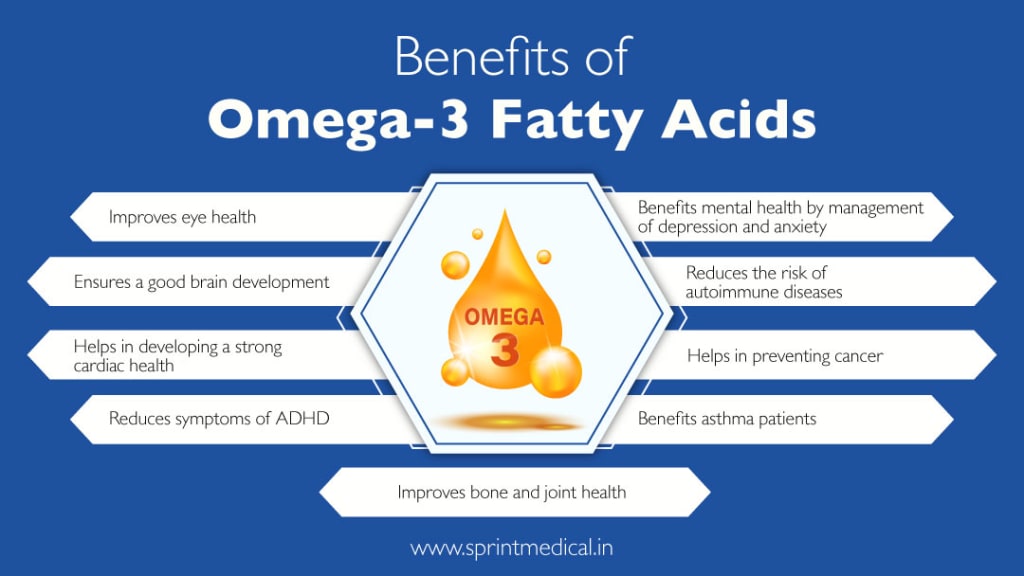
Omega-3 fatty acids are essential polyunsaturated fatty acids (PUFAs) that play a critical role in maintaining overall health. Since the human body cannot produce them on its own, they must be obtained through diet or supplementation. Omega-3s are vital for brain function, cardiovascular health, and reducing inflammation, making them a cornerstone of a healthy lifestyle. In this comprehensive guide, we’ll explore the types of omega-3s, their health benefits, food sources, supplementation tips, and practical recommendations to help you incorporate them into your daily routine.
Types of Omega-3s
There are three primary types of omega-3 fatty acids, each with unique benefits:
EPA (Eicosapentaenoic Acid):
Found primarily in fatty fish, EPA is known for its anti-inflammatory properties.
It helps lower triglyceride levels, reduce the risk of heart disease, and alleviate symptoms of arthritis.
DHA (Docosahexaenoic Acid):
Also found in fatty fish, DHA is crucial for brain development and function.
It supports cognitive health, improves memory, and enhances visual system efficiency.
ALA (Alpha-Linolenic Acid):
Derived from plant sources like flaxseeds, walnuts, and chia seeds.
The body can convert a small amount of ALA into EPA and DHA, but the conversion rate is limited.
Understanding these types is key to optimizing your omega-3 intake for specific health goals.
Health Benefits of Omega-3s
Omega-3 fatty acids offer a wide range of health benefits, making them indispensable for overall well-being. Here are some of the most significant advantages:
1. Cardiovascular Health
Omega-3s reduce inflammation, lower triglyceride levels, and improve blood circulation.
Regular consumption can decrease the risk of heart attacks, strokes, and arrhythmias.
Example: Studies show that populations with high fish consumption, such as in Japan, have lower rates of heart disease.
2. Brain Function
DHA is a major structural component of the brain and retina.
It supports cognitive function, improves memory, and may reduce the risk of neurodegenerative diseases like Alzheimer’s.
Example: Pregnant women who consume adequate DHA have children with better cognitive development.
3. Inflammation Reduction
Omega-3s have potent anti-inflammatory effects, helping to manage conditions like arthritis, asthma, and inflammatory bowel disease.
They reduce the production of inflammatory substances like leukotrienes.
4. Vision Support
DHA is essential for eye health and may reduce the risk of age-related macular degeneration, a leading cause of blindness.
5. Additional Benefits
Omega-3s may help regulate blood sugar levels, improve calcium absorption, and reduce the risk of certain cancers.
They are also linked to improved mental health, reducing symptoms of depression and anxiety.
Discover my wellness Hub to empowering individuals to live healthier, happier lives with resources, guides, and tools to help you achieve balance in your body, mind, and spirit.
Food Sources of Omega-3s
Incorporating omega-3-rich foods into your diet is the best way to reap their benefits. Here are some excellent sources:
1. Fatty Fish
Salmon, mackerel, sardines, tuna, and herring are rich in EPA and DHA.
Tip: Aim to eat fatty fish at least twice a week to meet your omega-3 needs.
2. Plant-Based Sources
Flaxseeds, chia seeds, walnuts, hemp seeds, and green leafy vegetables provide ALA.
Example: Add a tablespoon of ground flaxseeds to your smoothie or oatmeal for a quick omega-3 boost.
3. Oils
Flaxseed oil, canola oil, and algae oil are great options for cooking or drizzling over salads.
Omega-3 Supplements
For those who struggle to get enough omega-3s from food, supplements can be a convenient alternative. Here’s what you need to know:
Fish Oil Supplements:
Derived from fatty fish, these provide EPA and DHA.
Tip: Look for high-quality, purified supplements to avoid contaminants like mercury.
Algae Oil Supplements:
A vegan-friendly source of DHA, ideal for those who avoid fish.
Dosage Recommendations:
General guidelines suggest 250–500 mg of combined EPA and DHA per day for adults.
Pregnant and breastfeeding women should aim for 200–300 mg of DHA daily.
Precautions:
Consult a healthcare professional before starting supplements, especially if you’re on blood-thinning medications.
Be aware of potential side effects like heartburn or fishy aftertaste.
Tips for Maximizing Omega-3 Benefits
Balance Omega-3 and Omega-6 Intake:
The modern diet often contains excessive omega-6 fatty acids (found in vegetable oils), which can counteract the benefits of omega-3s. Aim for a balanced ratio.
Cook Smart:
Avoid deep-frying fish, as high temperatures can destroy omega-3s. Opt for baking, steaming, or grilling instead.
Store Properly:
Omega-3-rich oils like flaxseed oil are prone to oxidation. Store them in a cool, dark place and use them within their shelf life.
Combine with Antioxidants:
Pair omega-3-rich foods with antioxidants (e.g., berries, spinach) to enhance their anti-inflammatory effects.
Conclusion
Omega-3 fatty acids are indispensable for maintaining optimal health, from supporting heart and brain function to reducing inflammation and improving vision. By incorporating fatty fish, plant-based sources, and high-quality supplements into your diet, you can harness the full spectrum of omega-3 benefits. Remember to consult a healthcare professionapersonalisedalized advice, especially if you’re considering supplementation.
prioritisingtizing omega-3s today, and take a proactive step toward a healthier, more vibrant life!
Discover my wellness Hub to empowering individuals to live healthier, happier lives with resources, guides, and tools to help you achieve balance in your body, mind, and spirit.
About the Creator
Keep reading
More stories from writers in Families and other communities.
Wise~Guys
— Look Behind what's in Front of You ~ Make Good Choices — Hey, So how you Doin'..! Made~Men — Mobster Movies romanticise a distinctive, elegant appearance, impeccable attire style, along with the 'Families' expressive lingo. Making their 'Bones' gave them Panache — with vintage fedoras, tailored pin-striped suits, mirror-polished wing-tip shoes adorned with tassels; with their 'Gun Moll' gorgeous dates on their arms.
By Jay Kantor24 days ago in Families
The Foolish Wife
The Foolish Wife A farmer knew that his wife was not very intelligent, so he believed that arguing with her was useless. A poor farmer lived in a village. He worked in his fields all day and earned just enough to manage two meals a day. He himself was simple and honest, but the wife he had married was extremely foolish. Their marriage was still new. One morning, before leaving for the fields, the farmer said to his wife, “I will be plowing all day and will be very tired and hungry. Please cook a good meal for me by the time I return, and also bring a glass of vinegar that I bought last year.”
By Sudais Zakwan3 days ago in Families
🅼🅸🅳🅽🅸🅶🅷🆃 🆂🅽🅰🅲🅺🆂
"It's 10 in Tuscon! We all know what that means... It's Time for Midnight Snacks with your man, Gerald Gee! Ready to spend the night together? Me too! I'm full of snacks and can't wait to regurgitate them all back into your hungry ears. Crack a brew! Pop some corn! Anything to get ready for one hell of a show where the talk maybe cheap but the words cut deep...
By Lamar Wiggins2 days ago in Fiction




Comments
There are no comments for this story
Be the first to respond and start the conversation.