
Not All Wounds Are Visible: The Lingering Impact of Gender-Based Violence
It’s not just physical—violence against women leaves scars on minds, futures, and lives

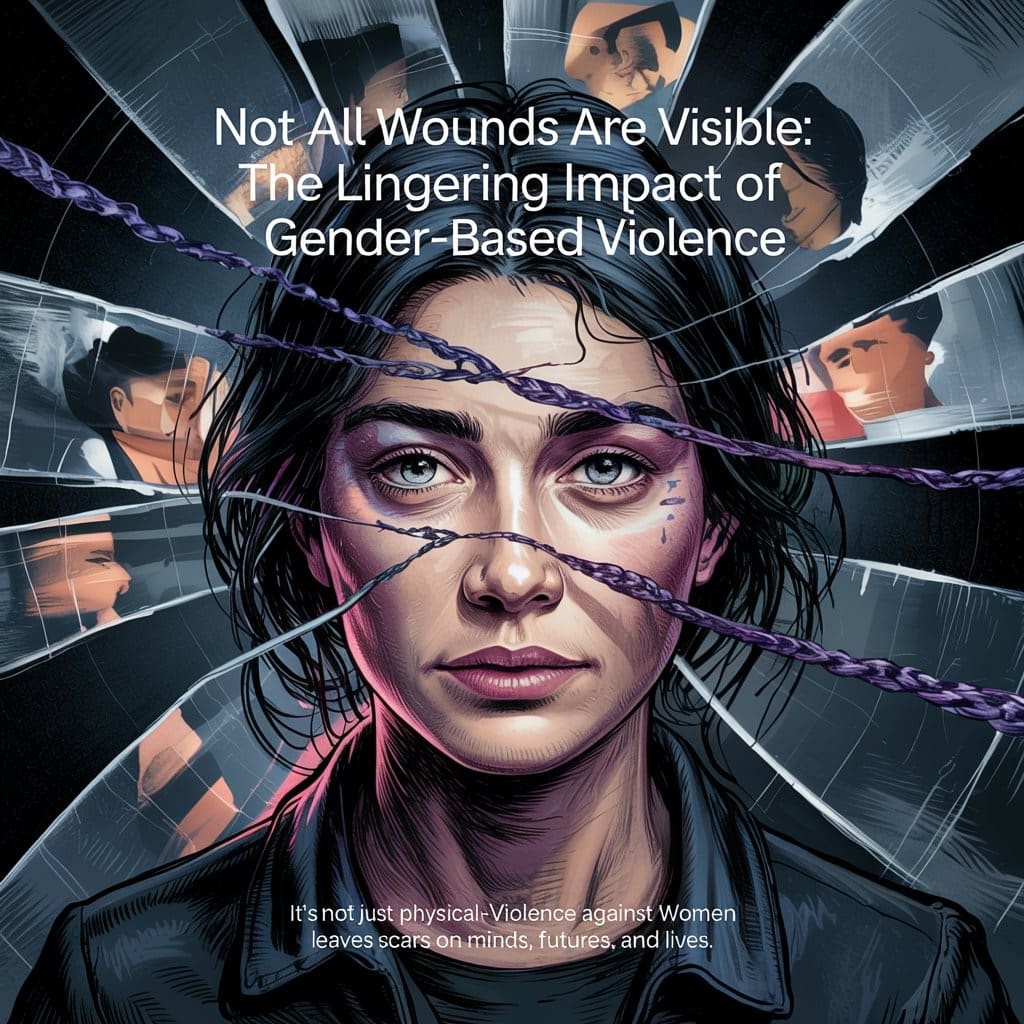
When people hear the term gender-based violence, many instantly picture bruises, black eyes, or hospital visits. While physical injuries are often the most visible outcomes of abuse, they are far from the only consequences. The deeper damage often lies beneath the surface—scars that can’t be photographed, documented, or stitched closed. These are the invisible wounds that linger: the psychological, emotional, and societal impacts that can haunt survivors for a lifetime.
Gender-based violence (GBV) refers to harmful acts directed at individuals based on their gender. Though men and boys can also be victims, GBV disproportionately affects women and girls around the world. It includes domestic abuse, sexual violence, stalking, harassment, coercive control, trafficking, and harmful practices like forced marriage and female genital mutilation. Yet despite its global scale, GBV often remains shrouded in silence and shame.
The Psychological Toll: Trauma That Lingers
Long after the bruises fade, the trauma endures. Survivors of GBV frequently battle mental health challenges such as anxiety, depression, post-traumatic stress disorder (PTSD), and chronic fear. Some experience flashbacks, nightmares, emotional numbness, or feelings of hopelessness. Others struggle with guilt, believing the abuse was somehow their fault.
What’s worse, many survivors internalize their trauma, hiding it from the world. They may not seek help due to shame, stigma, or fear of being blamed or not believed. For some, even the thought of recounting what happened can trigger panic or retraumatization. In this silence, suffering festers.
The Social Silence That Protects Abusers
In many cultures, GBV is still viewed as a private matter or something to be endured rather than addressed. Victims are often met with skepticism, judgment, or even outright hostility. Questions like “What were you wearing?”, “Did you provoke him?”, or “Why didn’t you leave?” reflect a society that routinely blames victims instead of holding perpetrators accountable.
This cultural conditioning doesn’t just shame victims—it protects abusers. When society refuses to believe survivors or minimizes their pain, it sends a clear message: silence is safer than seeking justice. And so, many remain trapped in cycles of violence, with no clear path to escape.
The Cost Beyond the Individual
The impact of gender-based violence extends beyond emotional trauma. Survivors often face long-term social and economic consequences. Many are forced to leave their jobs, drop out of school, or relocate to escape their abusers. This can lead to poverty, housing insecurity, and isolation.
For mothers, the effects can be even more far-reaching. Children who witness violence at home are at greater risk of developing emotional and behavioral problems. Without intervention, the cycle of violence can perpetuate across generations, affecting not just individuals, but families and entire communities.
Healing Requires More Than Time
While time can ease pain, healing from GBV often requires dedicated mental health care, community support, and safety. Survivors benefit most when they are heard, believed, and empowered to make their own choices without judgment. Access to trauma-informed counseling, shelters, legal advocacy, and supportive social networks can be life-changing.
Public awareness is also crucial. The more we talk openly about gender-based violence, the more we break down the barriers of stigma and silence. Education plays a vital role in prevention—especially when young people are taught about healthy relationships, consent, respect, and equality from an early age.
Changing the Narrative, Together
Ending gender-based violence is not the responsibility of women alone. Everyone has a role to play. Men, especially, must become allies—challenging sexist behavior, holding peers accountable, and standing against all forms of abuse. Governments must enact and enforce laws that protect victims and punish perpetrators. Institutions must create safe, inclusive spaces where survivors feel supported and empowered.
Every time we believe a survivor, support a friend, speak out against abuse, or vote for leaders who prioritize women’s safety, we move closer to a world where gender-based violence is no longer tolerated—or hidden.
Conclusion: Seeing the Invisible
The most dangerous wounds are often the ones no one sees. They are carried in silence, hidden behind brave smiles and quiet resilience. Recognizing that not all wounds are visible is the first step in creating a world where survivors are no longer expected to suffer alone. The scars of gender-based violence may be invisible, but their impact is real—and it’s time we all opened our eyes.
About the Creator
Niaz Ahmad
Writer with a passion for learning and sharing.You'll find articles here on everything that sparks my interest.
Keep reading
More stories from Niaz Ahmad and writers in Families and other communities.
Empowering Half the World
Introduction Women make up nearly half of the global population, yet for centuries, their voices have been silenced, their contributions overlooked, and their rights denied. The fight for women’s rights is not just about fairness; it’s about recognizing the inherent dignity and potential of every human being. Empowering women and ensuring their equal participation in all aspects of life is crucial to building a just, peaceful, and progressive world.
By Niaz Ahmad 9 months ago in Families
Wise~Guys
— Look Behind what's in Front of You ~ Make Good Choices — Hey, So how you Doin'..! Made~Men — Mobster Movies romanticise a distinctive, elegant appearance, impeccable attire style, along with the 'Families' expressive lingo. Making their 'Bones' gave them Panache — with vintage fedoras, tailored pin-striped suits, mirror-polished wing-tip shoes adorned with tassels; with their 'Gun Moll' gorgeous dates on their arms.
By Jay Kantor20 days ago in Families
Why Are Teachers Leaving Education?
As someone who is new to teaching, I will not sit here and pretend to fully understand everything veteran teachers have endured over the years. I do not yet have decades of experience to draw from. However, I can speak honestly about what I have observed in my year and a half in the classroom, and what I have learned in that short time is both eye opening and concerning. Teaching today is no longer just about teaching content. It has evolved into a profession that often requires educators to act as the judge, the juror, and the executioner, so to speak, all while being expected to maintain patience, professionalism, and compassion at every turn.
By Kimberly Nightengale3 days ago in Families



Comments
There are no comments for this story
Be the first to respond and start the conversation.