
Nearly Half of All Young Adults Live With Mom and Dad
More young adults in the United States live with their parents than ever before.
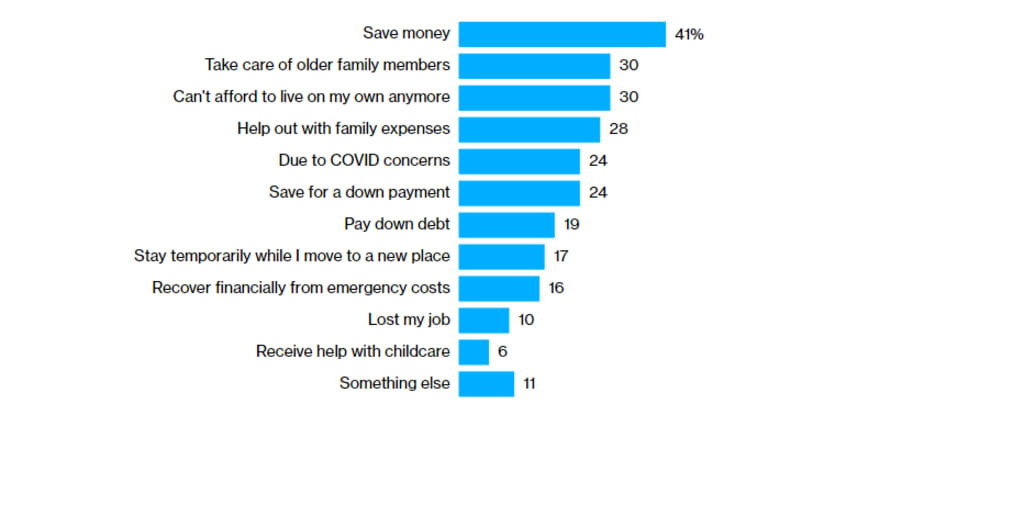
The economic downturn caused by the pandemic has disrupted conventional living standards, even in highly developed nations. The decline in stable income and the struggle to afford housing have led many adults to move back in with their parents. Recent data reveals that more than half of individuals in the United States under the age of 30 are currently living with their parents, signifying a substantial rise in this trend.
In the United States, as per the Pew Research Center, 52% of individuals aged 18-29 are currently residing with their parents. This marks a historical high; even during the Great Depression and World War II, the percentage of young adults living with their parents did not surpass 48%. The lowest rate of cohabitation with parents was recorded in the prosperous 1960s, at 29%. Since then, the trend of young adults delaying independent living has only increased.
Traditionally, this indicator has risen during challenging periods. For instance, in 2000, it stood at 38%, and by 2010, following the financial crisis, it had climbed to 44%. In February 2020, 47% of young adults were residing with their parents. Within six months of the pandemic, an additional 2.5 million people moved back in with their parents. The most significant increases were observed among young white individuals aged 18-24, with 9% of respondents in this category stating that they returned to their parents' homes due to the outbreak of the coronavirus. Among them, 23% had their dormitories closed, and 18% either lost their jobs or encountered other financial hardships.
The concerning situation extends beyond the borders of the United States. Deloitte conducted a survey with 27,500 participants worldwide. In early May, almost one-third of Gen Z individuals (those born after 1997) and a quarter of millennials (born between 1981-1996) stated that they either lost their jobs or were placed on temporary unpaid leave. Only a third of millennials and 38% of Gen Zeds reported that the pandemic had not affected their employment or income.
On the contrary, some young individuals willingly choose to move back in with their parents to alleviate the limited social interactions. However, this overall trend contradicts the American value of early independence. It's enough to recall the notable case in 2018, where parents from New York took legal action to evict their 30-year-old son who couldn't support himself financially. The court sided with the parents, deeming 30 years of age as too old to be dependent.
Experts argue that this trend might have lasting implications, impacting not just the mentality and familial dynamics in America but also its economy. Even prior to the crisis, the increase in new households was trailing behind population growth. This situation poses a threat to the market for household goods, as well as the real estate market for sales and rentals.
During times of crisis, it's common for young people in various countries to return to their parents' homes. This phenomenon is evident in Greece and Spain, and notably prevalent in Italy, where approximately 65 percent of young adults (aged 18 to 34) reside with their parents. Besides financial factors, cultural traditions and strong connections with the older generation also contribute significantly. However, this situation contrasts with the previous norms in many European countries.
In China, millennials exert considerable effort to attain independence, with approximately 70 percent successfully achieving this goal. For young individuals in the Celestial Empire, having their own housing is a significant advantage in the highly competitive marriage landscape. This is particularly crucial due to the demographic disparity, where the number of potential grooms significantly surpasses that of brides. Consequently, owning a home not only signifies financial stability but also serves as a social asset, enhancing their prospects in the challenging marital context shaped by China's unique demographic dynamics.
About the Creator
Wise~Guys
— Look Behind what's in Front of You ~ Make Good Choices — Hey, So how you Doin'..! Made~Men — Mobster Movies romanticise a distinctive, elegant appearance, impeccable attire style, along with the 'Families' expressive lingo. Making their 'Bones' gave them Panache — with vintage fedoras, tailored pin-striped suits, mirror-polished wing-tip shoes adorned with tassels; with their 'Gun Moll' gorgeous dates on their arms.
By Jay Kantor25 days ago in Families
The Kind-Hearted Friend
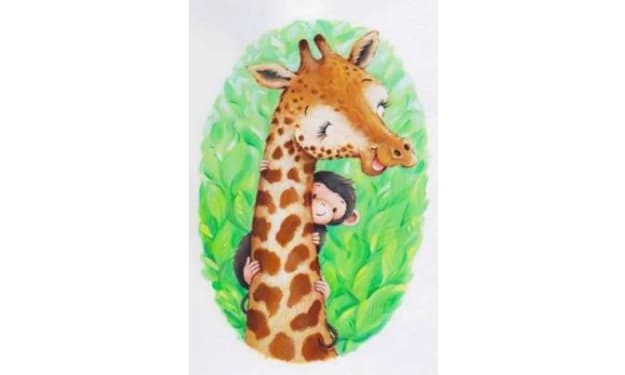
In a lush forest, there lived a troop of monkeys. Among this troop were two young monkeys who were notorious for their mischievous behavior. Their constant pranks and antics had even exhausted their parents, who often scolded them for their wildness. In the same forest, there was a young giraffe, a gentle and innocent creature, known for his simplicity and good nature. One day, while grazing on the green grass, the young giraffe wandered into a part of the forest where the mischievous monkey duo was busy plucking leaves and fruits from the trees to eat.
By Sudais Zakwan4 days ago in Families



Comments
There are no comments for this story
Be the first to respond and start the conversation.