
My Mother's Hands
A silver lining to becoming our parents
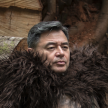

When I think of her, I think of her hands.
From my deepest memories, my mother has always had long, red nails. None of this glue-on fakery, but rather her own, thick talons that she and she alone files and sculpts to perfection even now well into her eighties.
I imagine people see them and think them a product of a trip to the nail salon. Or even more amiss, that they are the hands of someone who does not work or use them other than to eat or smoke. The latter of which she has done since she was 14. Frankly, the danger those nails portent along with the wishing trail from a cigarette create an air of mystery and stature. Which is something for a person who might measure up at four feet and ten inches or so.
She began working when she should have been entering the third grade. She finally stopped formally working less than two years ago. Work was ingrained into her.
Her work life began out of necessity. Her Korean family moved back to Pusan after spending World War II in Japan. Upon their return, they found themselves destitute. Her father, a man of means and distinction - “high born” she would say - never deigned to labor. But the four girls certainly did.
The first job she had was in a light bulb factory. They used child labor to wrap the fine filaments of the light bulbs. This was her work 12 hours a day. At the age of 10.
So it was, a series of jobs that eked out a living. Or as close as they family could muster. They sustained themselves by the work of their hands, by the work of her hands.
Her big break came when she found employment at an U.S. Army camp. This offered steady work and better pay. She began with laundry but was soon elevated to serving in the Officer’s Mess.
“Mess” was a truism, she says, even with military efficiency and order. The Mess itself was an olive drab, canvas tent. The bitter cold of Korean winters were unkind and in addition to preparing and serving food, cleaning was constant. But things were better for her and her family because of the job. There were even perks.
She benefitted from food and the occasional windfall.
“There was this Sergeant, I think, who was in charge,” she said. “He was a huge man. His hands were twice as large as mine. His fingers seemed like they were as thick as my forearms. A good man.”
She becomes quiet in the memory. “He was kind to me. I think he tried to look out for me. I was only 15.”
“Once, he gave me a blanket. You know, those big, thick, woolen Army blankets? One of those.”
She told me what became of that blanket. It explained alot. And humbled me deeply. Her mother took that blanket, dyed it black, took a pair of scissors and handmade a winter coat for my mother.
“My mother made me clothes. We didn’t have money to buy them. My skirt, my mother made, was a cotton rice sack my mother dyed, cut and sewed into a skirt made for me.”
“My blouse was a bleached piece of fabric she cut and sewed. I had simple sneakers. White. We washed them almost every night.”
I have heard her say more than once, “My mother would tell me, ‘People can’t tell if your belly is empty, but there is no reason for you to look dirty or poor.’”
In frigid Busan Winter, a woolen coat must have been a luxury. Albeit for a short time.
“The Winters are so cold. So cold. One of the other Korean people working, a young man, was in charge of lighting the gas stoves in the Mess Hall. He was poor, like all the local people who worked there. His clothes had cooking oil on them. That doesn’t all come out when you wash sometimes.”
Here would be a good time to imagine her taking a drag on her cigarette and exhaling slowly, the smoke trailing into the outdoor air. She doesn’t smoke inside.
“I suppose that young man would put his feet hear the fire from the gas stove, trying to get warm. One day, he caught on fire.”
“I looked up and saw him running, on fire. He was screaming so loudly. He was just running, crazy from the pain. That nice sergeant grabbed a table cloth and wrapped him up and put out the fire. He was so big he just picked him up and rolled him on the ground. He was on the ground still screaming, in the dirt. In the mud. So I took my coat and rolled it up and put it under his head.”
“When the ambulance came, they picked him up and took him away. Along with my coat.”
“You never saw it again?” I asked.
“No. But that’s not important.”
My pandemic haircuts, administered by my 12 year old daughter, brought to mind how my mother cut my hair for years. Even in to college when I returned home.
She perfected the bowl cut and somehow made it look good. She learned to feather my hair and made that look good. She even permed my hair when the baseline style of the 80’s demanded it. It only looked as good as it could. Which wasn’t very good.
I marveled at how she could work them and do so much with those bright red Edward Scissorhands-like appendages of hers. She waitressed for 40 years.
She made matching Christmas outfits for us kids in our early years. She made almost all of my sister’s clothes for years - until my sister’s protestations and demands for other clothes were finally met. My mother made a number of pieces for herself in the 70’s. She was so groovy and stylish.
She still is.
It’s funny to me how if a man can do a number of things, he might be considered a Renaissance Man. But if a woman can work, provide, cook, clean, sew, style, draw, sing and more, she’s just a woman. Or in this case, a great Mom.
Her wide and excellent abilities have fueled my own creativity. I make my living on my creativity now, in a variety of ways. There are no walls to creativity. I realize now much of it was inspired by her.
I used to sneak in and use her sewing machine on the sly. I was not allowed to use it, officially. Inspired by her ability and self-belief, I carefully cut and transmogrified hoodies into Totoro costumes for my two girls. It was a messy affair, more Frankenstein than Von Furstenberg, but it got the job done.
That is how things begin: With an idea, a belief, and effort. After some time, there is mastery.
I look at her hands now and see how they are withered, marked by age. They shake more than I’m comfortable admitting. She has trouble holding onto things with her right hand. That might mean yet more trouble, which gives me pause.
Yet those nails are still perfect. They’re a symbol of her self-sufficiency, some degree of well-earned pride. Some might say dignity.
I haven’t seen her in a year and I know I will be startled to see how she has aged. But I can’t wait to look at her face, thank her for everything she has done and to tell her I love her. And to hold her hands.
About the Creator
Terry B Marks
Terry Marks is a published author, his Mr. Crumbly Dreams a Tiger recognized as a HOW magazine Perfect 10 project. His graphic design practice if focused on story and putting good into this ol' world.
Keep reading
More stories from writers in Families and other communities.
Wise~Guys
— Look Behind what's in Front of You ~ Make Good Choices — Hey, So how you Doin'..! Made~Men — Mobster Movies romanticise a distinctive, elegant appearance, impeccable attire style, along with the 'Families' expressive lingo. Making their 'Bones' gave them Panache — with vintage fedoras, tailored pin-striped suits, mirror-polished wing-tip shoes adorned with tassels; with their 'Gun Moll' gorgeous dates on their arms.
By Jay Kantor22 days ago in Families
Men who eat nuts tend to have better quality sperm
Peak Potency: How a Daily Nut Habit Elevates Male Sperm Quality Male fertility rates have dropped in recent years. Many couples struggle to conceive, and men often overlook their role in this challenge. Your diet can make a big difference here. Nuts stand out as a simple fix. They pack antioxidants and healthy fats that support better sperm quality. Think of them as fuel for your reproductive system. Studies show men who eat nuts regularly see real gains in sperm health. If you're planning a family or just want peak vitality, adding nuts could be your smart move.
By Story silver book 6 days ago in Families
Autonomy Is The Real Privilege
Good morning, freedom-seekers! Today we’re gonna be looking at autonomy. A strange word, I know; one many would probably look at blankly and run away from on sight. We’re gonna figure out what it actually means, consider how it’s achieved, and decipher just how deeply most of us are tangled up in dependence without realising it.
By That ‘Freedom’ Guy2 days ago in Humans



Comments
There are no comments for this story
Be the first to respond and start the conversation.