
My Grandmother Spoke a Language That No Longer Exists
A personal dive into linguistic erasure—your family’s connection to an endangered or extinct language.

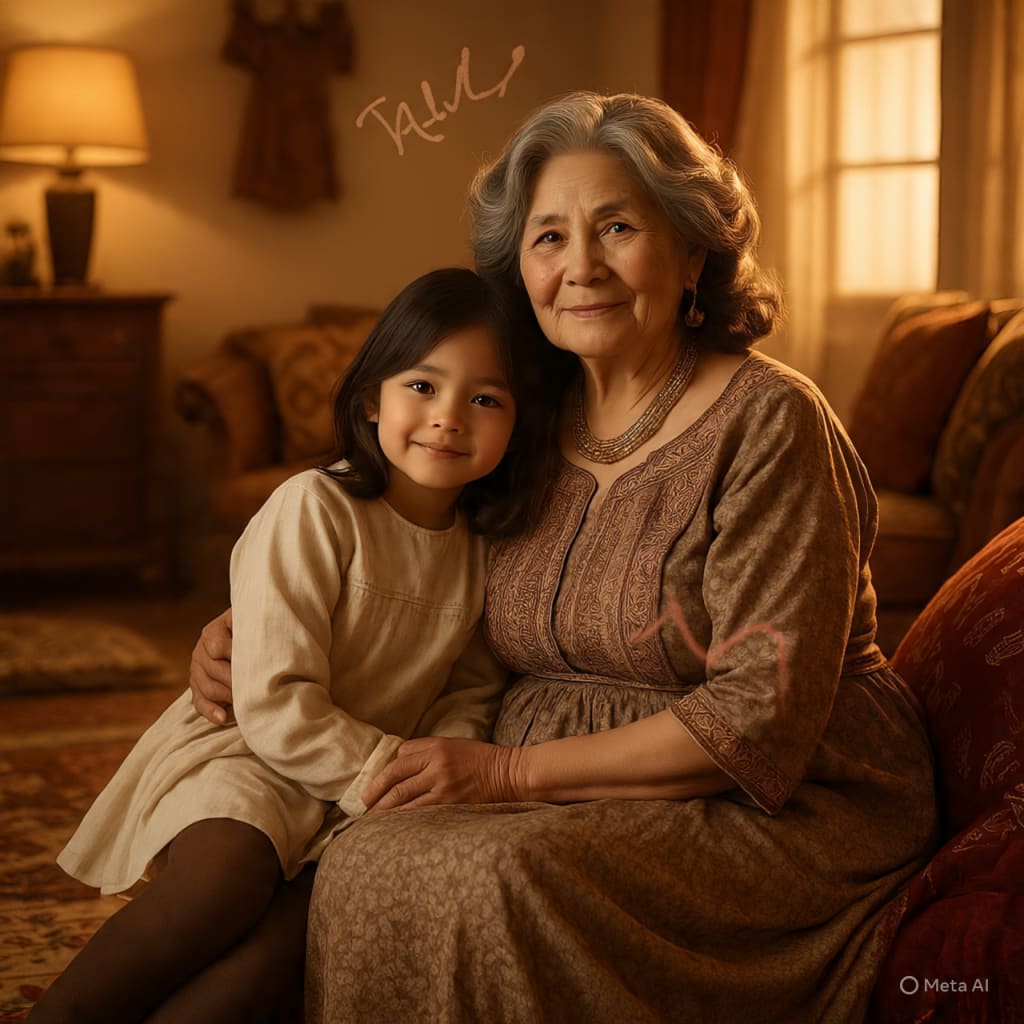
When I was a child, my grandmother used to mutter under her breath in a language that no one else in the family understood. She never taught it to us. Sometimes, when she was tired or when something slipped out in frustration, words would fall from her lips like fragments of a broken spell. We would ask her what she said, and she would shrug it off. “Old words,” she’d say. “No use anymore.”
That language was called Chikashshanompa’—Chickasaw.
I didn’t know what it was called back then. All I knew was that it was different. Softer than English, yet brimming with power. It would rise from her like smoke—at once ancient and ungraspable. It wasn’t until years later, long after she had passed, that I discovered what she had been speaking. And by then, it was nearly gone.
My grandmother was born on a reservation in Oklahoma in the early 1930s. The Chickasaw Nation, forcibly removed from their ancestral lands in Mississippi during the 1830s, had resettled in Indian Territory. Though the move had been generations earlier, the trauma still pulsed through their lives. Like many Native children of her time, she was sent to an Indian boarding school, where speaking anything other than English was punishable. She told me once, quietly, that she had her mouth washed out with soap when she said the Chickasaw word for "water."
She rarely spoke of those years. Shame wrapped tightly around her memories, not just of the punishment, but of the belief that her language was something to be erased. The American government called it “assimilation.” For her, it meant silence. It meant leaving behind the only words she knew for her grandmother, the songs her mother sang, the prayers whispered before sunrise.
So, she didn’t pass the language down.
My mother was raised on fried bread and English. She learned bits and pieces—phrases tucked into recipes, lullabies—but not enough to call it speaking. Enough to remember, but not enough to reclaim.
As for me, I didn’t even know I was Chickasaw until I was twelve.
I was in seventh grade when we were assigned a genealogy project. We had to trace our family tree, and that night I asked my mom where we came from.
She hesitated. “Well,” she said, “Grandma was Chickasaw.”
It felt like a revelation, though in hindsight, it had been there all along—in our faces, our names, the worn beadwork tucked away in drawers. But she said it like it didn’t matter. Like it was just another branch on the tree.
I dove into research. I read everything I could about the Chickasaw Nation. I learned about the Dawes Rolls, about the Trail of Tears, about the erosion of our language through boarding schools and cultural genocide. And eventually, I stumbled across an article that said Chickasaw was one of the most endangered languages in the United States. Fewer than seventy fluent speakers were left.
Seventy.
It was the first time I cried over language.
I returned to that memory of my grandmother muttering to herself. I started to wonder what she had been saying. Were they words of prayer? Laments? Names of ancestors now lost? I tried to remember the sounds, but they had long since faded. Language, once unspoken, decays quickly.
I began taking online lessons offered by the Chickasaw Nation. It felt strange, typing in words that my grandmother had once been punished for speaking. The letters didn’t quite match the sounds. It was a language of breath and rhythm, of tone and space. It resisted my tongue, at first, like it didn’t trust me.
But I kept at it. I practiced with recordings of elders, repeating after them like a child learning to speak again. I wrote down every word I could find. I visited Oklahoma and stood in front of her old school building, now a museum, and said the word for “remember” aloud: chikashsha holisso pisa—literally, “to see the Chickasaw book.”
It was my way of speaking to her, to the part of her that had been silenced.
Today, I can speak perhaps fifty words. A hundred on a good day. It’s not much. Certainly not fluent. But I say them aloud now. I say them to my daughter, who is two and already mimicking sounds with ease. She calls water oka. She says chokma when she’s happy, and yakoke when she’s done something kind. She doesn’t know that these words were nearly erased. But she will.
Because my grandmother spoke a language that no longer exists—not in its fullness, not in the way she once knew it. But fragments remain. They live in the bones of our family. They survive in the air between songs and silence.
And I’ve come to believe that no language truly dies so long as someone remembers it.
So I speak it—brokenly, reverently, defiantly.
About the Creator
Masih Ullah
I’m Masih Ullah—a bold voice in storytelling. I write to inspire, challenge, and spark thought. No filters, no fluff—just real stories with purpose. Follow me for powerful words that provoke emotion and leave a lasting impact.
Keep reading
More stories from Masih Ullah and writers in Families and other communities.
The Day My Father Disappeared Into Silence
I was eight years. old when my father stopped speaking. Not just to me, but to the world. One day he was humming old folk songs in the kitchen, and the next, his voice was gone—not in volume, but in presence. He was still there, his body casting the same tall shadow on the porch, his fingers still gently fixing clocks and radios like before. But something had changed—something invisible, irreversible.
By Masih Ullah7 months ago in Families
Wise~Guys
— Look Behind what's in Front of You ~ Make Good Choices — Hey, So how you Doin'..! Made~Men — Mobster Movies romanticise a distinctive, elegant appearance, impeccable attire style, along with the 'Families' expressive lingo. Making their 'Bones' gave them Panache — with vintage fedoras, tailored pin-striped suits, mirror-polished wing-tip shoes adorned with tassels; with their 'Gun Moll' gorgeous dates on their arms.
By Jay Kantor17 days ago in Families



Comments
There are no comments for this story
Be the first to respond and start the conversation.