
Muslim Marriage Biodata Format: A Comprehensive Guide
Muslim Marriage Biodata Format: A Comprehensive Guide

Muslim Marriage Biodata Format: A Comprehensive Guide
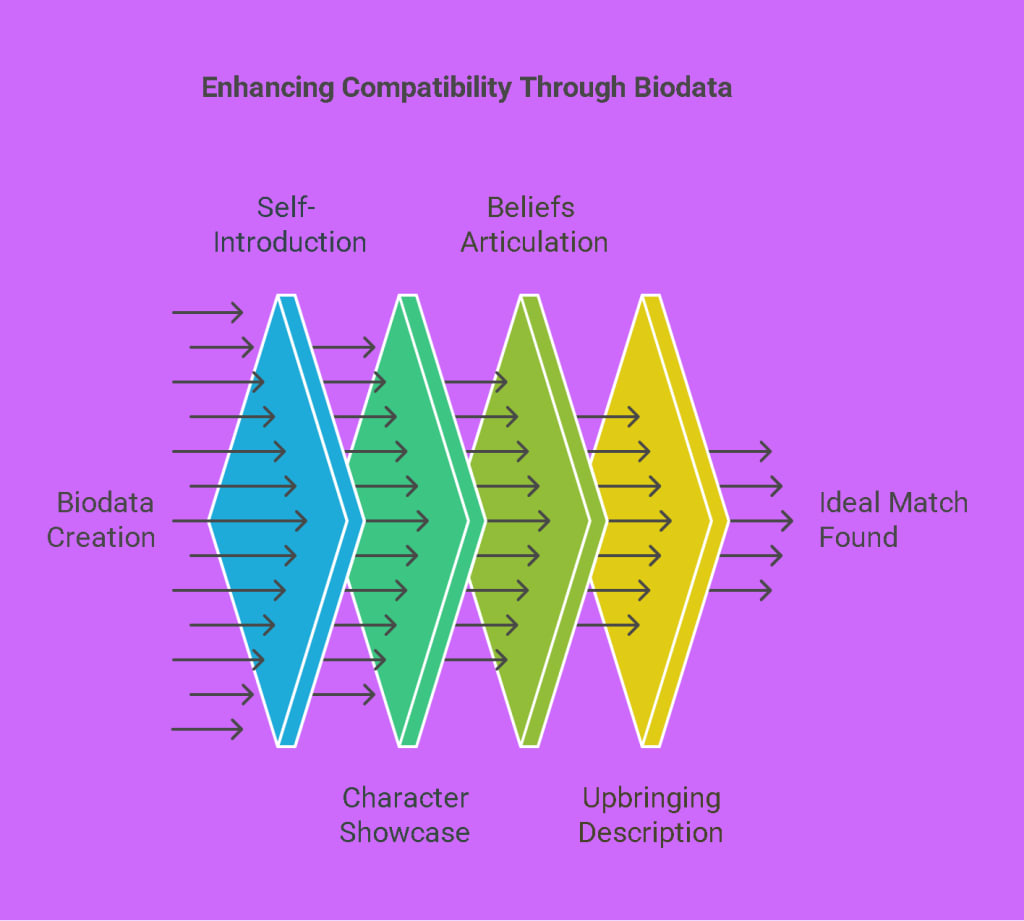
In the journey toward finding a compatible life partner within the Islamic faith, a well-crafted Muslim marriage biodata serves as a crucial first step. This document not only introduces you to potential partners and their families but also provides a comprehensive understanding of your character, beliefs, and upbringing. With the right Muslim marriage biodata format, you can effectively present yourself and increase your chances of finding an ideal match who shares your values and religious practices.
Essential Components of a Muslim Marriage Biodata
Personal Information
The foundation of any Muslim marriage biodata begins with accurate personal details that provide a snapshot of who you are:
• Full name, including religious names if applicable
• Date of birth and age
• Current residence location
• Contact information (phone number and email address)
• Height, weight, and complexion
• Marital status (never married, divorced, widowed)14
A clear, recent photograph is also typically included to give potential matches a visual impression. The image should be modest and appropriate, reflecting Islamic values while clearly showing your face.
Religious Practices and Beliefs
For Muslim matrimonial purposes, religious information holds paramount importance and should be detailed thoroughly:
• Religious affiliation (Sunni, Shia, or other denominations)
• Level of religious observance and practices
• Regularity in performing Salah (prayers)
• Observance of fasting during Ramadan
• Fulfillment of Zakat obligations
• Plans or past performance of Hajj
• Participation in Islamic study circles or community activities12
This section helps potential matches understand your commitment to Islamic principles and assess religious compatibility, which is often a fundamental consideration in Muslim marriages.
Family Background
A comprehensive family section provides insight into your upbringing and cultural context:
• Parents' names and occupations
• Number of siblings and their marital status
• Family's religious practices and cultural traditions
• Ethnic or cultural heritage details
• Family values and principles
• Extended family information if relevant14
This information helps potential matches understand your family dynamics and cultural background, which can be important factors in assessing long-term compatibility.
Educational Qualifications and Career
Your academic and professional achievements demonstrate your capabilities and life direction:
• Highest educational qualification with institution details
• Professional certifications or specialized training
• Current occupation and job title
• Career achievements and accolades
• Future professional aspirations
• Financial stability indicators17
This section showcases your intellectual abilities and career trajectory, which are important considerations for building a stable future together.
Personal Traits and Interests
Adding personality to your biodata helps create a more holistic picture:
• Character traits and values you embody
• Hobbies and recreational activities
• Volunteer work or community involvement
• Personal goals and life ambitions
• Special skills or talents
• Travel experiences or interests17
These details help potential matches identify common interests and assess personality compatibility beyond religious and family considerations.
Expectations from a Partner
Clearly outlining what you seek in a life partner helps filter compatible matches:
• Desired character traits and values
• Religious expectations and practices
• Educational or professional preferences
• Age range and other physical attributes
• Family and cultural background preferences
• Shared life goals and visions12
Being specific yet reasonable in your expectations helps attract partners who align with your vision for marriage and family life.
Creating an Effective Muslim Marriage Biodata
Choose the Right Format
Muslim marriage biodatas can be structured in different ways:
• Single-page format: Concise and focused on essential information
• Multi-page format: More detailed with comprehensive information
• Community-specific format: Tailored to particular Muslim community traditions45
The format you choose should reflect your personal style while remaining clear and professional.
Design Considerations
The visual presentation of your biodata creates an important first impression:
• Select a clean, professional template with appropriate Islamic design elements
• Use a readable font and consistent formatting
• Organize information logically with clear section headings
• Include appropriate spacing and margins for readability
• Consider using subtle colors that complement the overall design37
Many online platforms offer customizable Muslim marriage biodata templates that balance aesthetic appeal with cultural appropriateness.
Writing Style and Tone
How you express yourself in your biodata reflects your personality:
• Write in a warm, approachable tone
• Use clear, concise language without jargon
• Be honest and authentic in your self-description
• Avoid exaggerations or misrepresentations
• Consider including relevant Quranic verses or Hadith that inspire you
• Proofread carefully to eliminate errors18
Your writing should convey sincerity and respect for the matrimonial process while giving insight into your communication style.
Modern Approaches to Muslim Marriage Biodatas
Digital Biodata Creation
Today's technology offers convenient ways to create professional biodatas:
• Online biodata makers specifically designed for Muslim marriages
• Self-editable templates in Word or PDF formats
• Custom premium services where professionals create your biodata
• Mobile apps for biodata creation and sharing378
These digital tools make it easier to create, edit, and share your biodata with potential matches and their families.
Distribution Methods
Once your biodata is complete, consider these sharing options:
• Email to family members and matchmakers
• Share via WhatsApp or other messaging platforms
• Upload to trusted matrimonial websites
• Print physical copies for in-person meetings
• Share with local mosque or community matchmaking services37
Wider distribution increases your chances of finding compatible matches, but always prioritize privacy and security when sharing personal information.
Cultural Considerations in Muslim Marriage Biodatas
Different Muslim communities may emphasize various aspects in marriage biodatas:
• South Asian Muslims often include detailed family lineage information
• Arab Muslims might emphasize tribal affiliations
• Western Muslims may focus more on personal compatibility and shared values
• Convert Muslims might include their journey to Islam56
Understanding your specific community's expectations helps you create a biodata that resonates with your intended audience while honoring Islamic principles.
Conclusion
A well-crafted Muslim marriage biodata serves as your introduction to potential life partners and their families. By thoughtfully presenting your personal information, religious practices, family background, education, career, and expectations, you create opportunities for meaningful connections based on shared values and compatibility. Whether you choose a traditional format or utilize modern digital tools, your biodata should authentically represent who you are and what you seek in a marriage within the framework of Islamic principles.
Remember that while a biodata is an important first step, it is just one part of the Islamic matrimonial process. Prayer, family involvement, and sincere intention remain essential elements in the journey toward finding a compatible spouse who will be a source of peace, love, and spiritual growth in your life.
About the Creator
Shahrukh Mirza
my name is sharukh khan. and i am a content writer to resume and career advice .
i have a website to create resume for free
To create Resume online and abolutely Free:- https://resumeera.xyz
Keep reading
More stories from Shahrukh Mirza and writers in Families and other communities.
A Muslim biodata for marriage
A Muslim biodata for marriage—super important. It's like your intro to possible partners and their families in the Muslim community. It's got your personal, religious, education, job, and family stuff, showing who you are and what you value. Getting it right means balancing cultural, religious, and personal truths.
By Shahrukh Mirza11 months ago in Families
Understanding Wife Psychology
Marriage is not just a legal bond; it is a psychological, emotional, and spiritual connection between two individuals. Understanding the psychology of your wife can greatly improve communication, intimacy, and harmony in your relationship. While every woman is unique, there are certain universal patterns in wife psychology that can help a husband navigate the complexities of married life.
By Jahid Hasan2 days ago in Families
Rewriting unpleasant childhood experiences can help people feel less afraid of failing.
Have you ever been reluctant to start something new because you thought you wouldn't succeed? That fear begins in childhood for a lot of people. A critical remark made by a parent or instructor might linger for years. Those recollections may eventually develop into a profound fear of failing.
By Francis Dami7 days ago in Families
The BAFTA Awards
By now, in a stunning departure from recent years, most of the world is aware of what happened at the BAFTA film awards. Social Media Headlines will tell you the bare bones: that John Davidson, a Tourette's Syndrome advocate, shouted a racial slur at two Actors of Colour, Michael B Jordan and Delroy Lindo.
By Natasja Rose6 days ago in Psyche




Comments
There are no comments for this story
Be the first to respond and start the conversation.