
"More Than Just Friends? Exploring the Truth About Male-Female Friendships"
A Psychological and Cultural Exploration of Platonic Cross-Sex Relationships

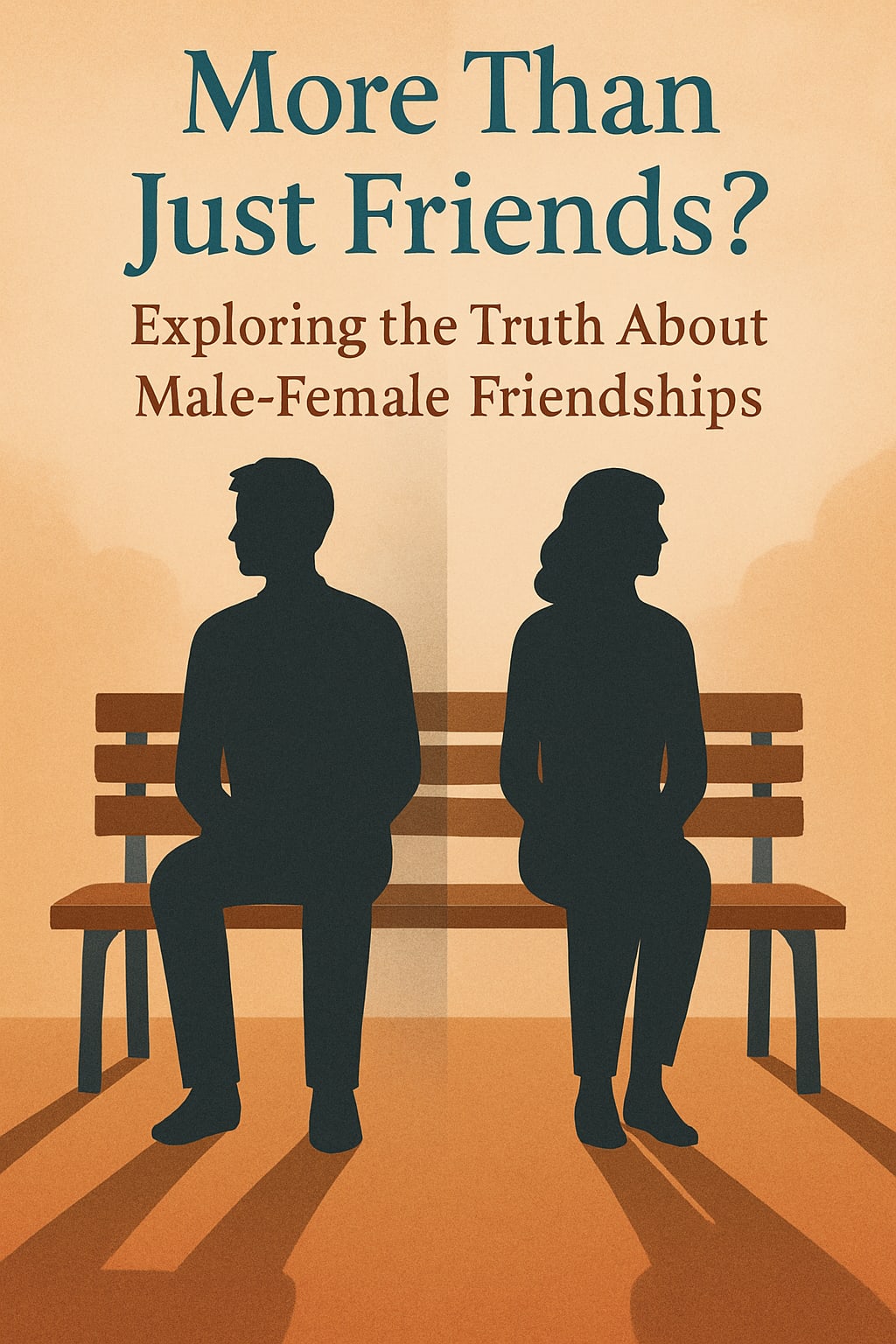
The question of whether men and women can sustain purely platonic friendships is as enduring as it is complex. While countless individuals affirm the possibility, others contend that such relationships are invariably laced with romantic or sexual undertones. To truly assess this dynamic, we must explore the intersection of evolutionary instincts, cultural narratives, and gender norms, while also considering the emotional nuances and practical realities of modern friendships.
Evolutionary Instincts and Mate-Value Dynamics
From an evolutionary standpoint, cross-sex interactions have historically been tied to reproduction and survival. Evolutionary psychologists suggest that when men and women form close bonds, there is often a latent or overt evaluation of mate potential—what researchers call mate-value dynamics. Men, in particular, may be more likely to experience attraction in cross-sex friendships, driven by an evolved sensitivity to reproductive cues such as physical appearance.
Women, on the other hand, may prioritize traits such as emotional security or resource availability, which can make emotionally intimate friendships feel more ambiguous. These evolutionary drives do not necessarily dictate behavior, but they can influence subconscious emotional responses. In this light, platonic friendships may require conscious effort to override instinctual patterns.
Cultural Norms and Media Influence
Societal conditioning also plays a pivotal role in shaping our expectations of male-female friendships. Films, television, and literature frequently depict these relationships as preludes to romance—think When Harry Met Sally, Friends, or countless romantic comedies. These portrayals often suggest that close bonds between men and women are inherently unstable or destined to evolve into love stories.
As a result, individuals may internalize these scripts, approaching cross-sex friendships with the subconscious belief that emotional closeness will—or should—lead to romantic involvement. This cultural backdrop can introduce confusion, particularly when one party misinterprets emotional intimacy as romantic interest.
Gender Norms and Friendship Styles
Another critical factor is the differing ways men and women typically engage in friendship. Research has shown that:
Men often bond through shared activities, such as sports, games, or collaborative projects. Their friendships may involve less verbal emotional sharing.
Women, conversely, tend to form emotionally expressive friendships, characterized by verbal support, vulnerability, and frequent communication.
In a cross-sex context, these differing styles can lead to misunderstandings. A woman may interpret a man's lack of emotional openness as disinterest, while a man may misread emotional intimacy from a woman as a romantic signal. These gendered expectations can make it difficult to establish a shared understanding of what the friendship means.
Emotional Complexity and Unspoken Feelings
Even when both parties genuinely intend to remain platonic, emotional complexity often arises. Over time, close friends may develop admiration, affection, or even physical attraction—whether acknowledged or not. These feelings can remain dormant, be actively suppressed, or gradually grow stronger.
Sometimes, only one person develops deeper feelings, leading to unspoken tension or heartbreak. In other cases, mutual but unspoken attraction lingers beneath the surface. Even if nothing is acted upon, the emotional landscape becomes more layered, requiring emotional maturity to navigate.
Successful Platonic Friendships: What Makes Them Work
Despite the challenges, many men and women do maintain lasting, meaningful friendships without crossing romantic lines. The key factors that contribute to these successes include:
Self-awareness: Recognizing one’s own feelings and motives.
Emotional maturity: Accepting that attraction doesn’t require action.
Clear boundaries: Establishing limits around physical closeness and emotional sharing.
Mutual respect: Valuing the friendship itself as a worthy end, not a means to something else.
Examples of such friendships abound in real life, particularly among colleagues, classmates, and long-time family friends who develop deep, platonic bonds built on trust and shared experience.
The Changing Landscape
In today’s increasingly integrated society, cross-sex friendships are becoming more normalized. Coeducational schools, gender-diverse workplaces, and shifting cultural attitudes have made it more common—and more acceptable—for men and women to interact closely in non-romantic settings.
Gender roles are also evolving. Men are increasingly encouraged to express emotions, while women are finding power in professional and personal independence. This cultural shift allows friendships to form on more equal, less romantically charged ground.
Practical Advice for Maintaining Platonic Friendships
Set Clear Expectations: Early conversations about the nature and limits of the friendship can prevent future misunderstandings.
Communicate Openly: If feelings begin to shift, honesty can help preserve the friendship—or redefine it respectfully.
Respect Boundaries: Avoid behaviors that might blur lines, especially in physical affection or emotional reliance.
Be Mindful of Outside Perceptions: Partners or spouses may feel uneasy about close cross-sex friendships, so transparency is essential.
Check In Periodically: Reassess the dynamics to ensure the friendship remains healthy and balanced.
Conclusion
Can men and women be just friends? The answer is yes, but with important caveats. While evolutionary instincts, cultural narratives, and gendered expectations can complicate these relationships, they are not insurmountable barriers. With emotional intelligence, honest communication, and mutual respect, platonic friendships across genders can flourish. They may not always be simple—but they are certainly possible, and often deeply rewarding.
About the Creator
Whispers of Yousaf
Where words breathe,
and emotions speak the truth.
I write about love, silence,
and the stories we’re too afraid to tell. ✨
Keep reading
More stories from Whispers of Yousaf and writers in Families and other communities.
"The Myth of Pure Friendship Between Men and Women"
Shakespeare once said, "A boy can never be just a friend to a girl because emotions and desire are always involved." Though there is no direct attribution of these exact words in his written works, this quote reflects a timeless observation many have echoed throughout literature and life: that the relationship between a man and a woman is rarely devoid of emotional complexity.
By Whispers of Yousaf8 months ago in Poets
Wise~Guys
— Look Behind what's in Front of You ~ Make Good Choices — Hey, So how you Doin'..! Made~Men — Mobster Movies romanticise a distinctive, elegant appearance, impeccable attire style, along with the 'Families' expressive lingo. Making their 'Bones' gave them Panache — with vintage fedoras, tailored pin-striped suits, mirror-polished wing-tip shoes adorned with tassels; with their 'Gun Moll' gorgeous dates on their arms.
By Jay Kantor19 days ago in Families
The Lost Mind
I stand by the door, staring at Reema Aunty taking care of my Dadi**. Dadi can’t bathe herself anymore, Reema Aunty bathes her. Right now, she is combing Dadi’s hair, her once beautiful long hair is now short and full of white strands. Dadi peeps over and smiles, her eyes crinkling at the corners.
By Poonam Desai4 days ago in Families




Comments
There are no comments for this story
Be the first to respond and start the conversation.