
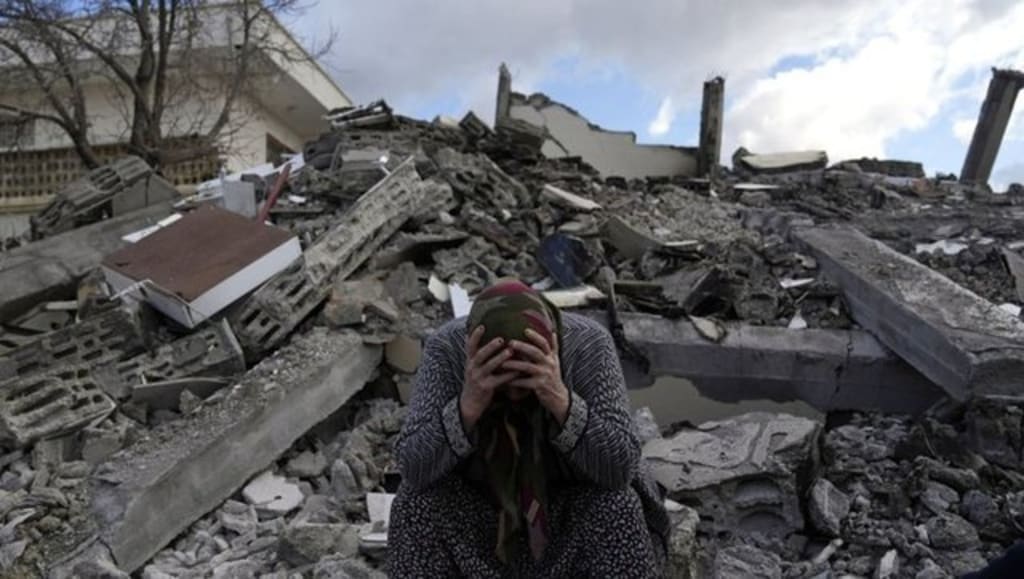
Earthquakes are natural disasters that occur when the Earth's tectonic plates move and create seismic waves. These waves can cause the ground to shake and result in damage to buildings, roads, and other structures.
Earthquakes are most commonly caused by the movement of tectonic plates, which are large pieces of the Earth's crust that float on the planet's molten mantle. As the plates move, they can sometimes collide, slide past each other, or pull apart. This movement creates stress in the Earth's crust, which is released in the form of an earthquake.
The strength of an earthquake is measured on the Richter scale, which ranges from 0 to 10. Earthquakes with a magnitude of 2.5 or less are usually not felt, while those with a magnitude of 5 or higher can cause significant damage.
In addition to the physical damage caused by earthquakes, they can also have a profound emotional impact on people. The fear and uncertainty that come with an earthquake can leave people feeling anxious and traumatized, especially if they have experienced a particularly strong earthquake or if they live in an area that is prone to earthquakes.
Despite the destructive power of earthquakes, there are steps that people can take to minimize their risk. Building codes can be strengthened to ensure that structures are able to withstand seismic activity, and emergency preparedness plans can be put in place to help people stay safe in the event of an earthquake.
Overall, earthquakes are a natural and unavoidable part of life on our planet. By understanding how they work and taking steps to prepare for them, we can help to minimize their impact and keep ourselves safe.
There are several precautions that you can take to minimize your risk and stay safe in the event of an earthquake. Here are some of the most important ones:
Secure your home: Make sure that heavy objects, such as bookshelves and cabinets, are securely fastened to walls. Also, ensure that hanging items like mirrors and picture frames are not placed above beds, couches, or other areas where people frequently sit or sleep.
Have an emergency kit: Prepare an emergency kit that includes items like water, non-perishable food, a first aid kit, a flashlight, and a battery-powered radio. Keep the kit in an easily accessible location in case you need to evacuate your home quickly.
Know your building's evacuation plan: If you live in a multi-story building, familiarize yourself with the building's evacuation plan and practice it with your family or roommates. Identify the quickest route to the nearest exit and make sure that everyone in your household knows it.
Stay indoors: During an earthquake, it is generally safer to stay indoors and take cover under a sturdy piece of furniture, such as a desk or table. Stay away from windows, as broken glass can be a major hazard.
Plan for aftershocks: After an earthquake, there may be aftershocks, which are smaller earthquakes that occur in the same area. Be prepared for aftershocks by staying alert and being ready to take cover again if necessary.
Be aware of your surroundings: If you are outdoors during an earthquake, move away from buildings, streetlights, and other structures that could potentially fall or break apart. If you are in a car, pull over to the side of the road and stop until the shaking stops.
Keep communication devices charged: Make sure that your phone, laptop, or other communication devices are charged and have enough battery life in case you need to call for help or receive emergency alerts.
By taking these precautions, you can help to minimize your risk and stay safe in the event of an earthquake. Remember, it's important to be prepared and stay calm if an earthquake does occur.
About the Creator
Wise~Guys
— Look Behind what's in Front of You ~ Make Good Choices — Hey, So how you Doin'..! Made~Men — Mobster Movies romanticise a distinctive, elegant appearance, impeccable attire style, along with the 'Families' expressive lingo. Making their 'Bones' gave them Panache — with vintage fedoras, tailored pin-striped suits, mirror-polished wing-tip shoes adorned with tassels; with their 'Gun Moll' gorgeous dates on their arms.
By Jay Kantor25 days ago in Families
The Main Benefits of Swimming for Kids
Swimming does more than just keep kids active - it strengthens their bodies and sharpens their minds. When taught correctly, swimming helps kids get stronger, improves their movement, and teaches them to trust themselves, all with minimal strain on growing muscles and joints. It's not only great exercise but a life skill they'll use long after childhood.
By Lilly Evans4 days ago in Families
🅼🅸🅳🅽🅸🅶🅷🆃 🆂🅽🅰🅲🅺🆂
"It's 10 in Tuscon! We all know what that means... It's Time for Midnight Snacks with your man, Gerald Gee! Ready to spend the night together? Me too! I'm full of snacks and can't wait to regurgitate them all back into your hungry ears. Crack a brew! Pop some corn! Anything to get ready for one hell of a show where the talk maybe cheap but the words cut deep...
By Lamar Wiggins3 days ago in Fiction




Comments
There are no comments for this story
Be the first to respond and start the conversation.