
Milk of a Mother's Love
Nurturing Life, One Drop at a Time
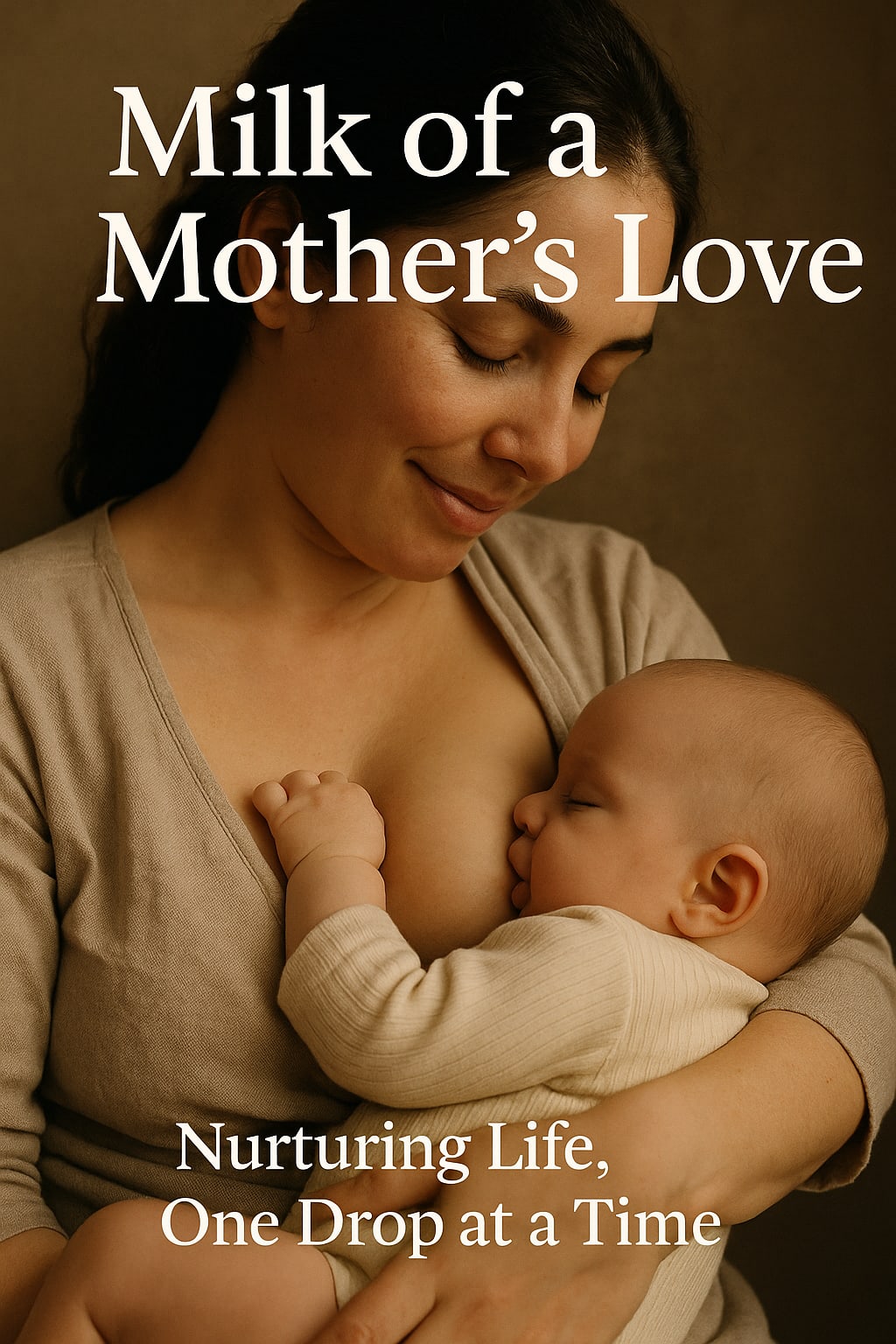
Nurtur
There is perhaps no act more intimate, natural, and profound than a mother nursing her child. It is a moment of quiet connection—a physical and emotional thread that ties two lives together from the very first breath. "Milk of a Mother’s Love" is not just a poetic expression; it encapsulates the miracle of human sustenance, the biological wonder of lactation, and the deep, often unspoken bond between mother and child.
The Biology of Bonding
Breast milk is more than nutrition. It is a living, dynamic substance created uniquely for a baby’s needs. From colostrum—often called "liquid gold"—to mature milk, a mother's body provides not only the perfect balance of fats, proteins, vitamins, and minerals, but also antibodies, enzymes, and hormones that help protect and shape a baby’s developing immune system.
The act of breastfeeding triggers the release of oxytocin, the “love hormone,” which promotes feelings of affection and trust. This same hormone also helps the uterus contract after childbirth and encourages maternal behaviors. It’s no wonder, then, that breastfeeding often becomes more than a feeding routine; it is a source of comfort, connection, and grounding for both mother and child.
An Emotional Lifeline
Beyond its biological brilliance, breast milk carries a symbolic weight. It represents sacrifice, care, and an offering that cannot be replaced by any other source. For many mothers, the decision to breastfeed is not just practical—it is deeply emotional. Sleepless nights, sore bodies, and quiet moments at dawn are all wrapped into the journey of nourishing a new life.
Mothers often speak of the stillness they find while nursing. In a world that demands constant movement and productivity, these sacred pauses become the foundation of early motherhood. With each feeding, mothers give not only sustenance but stability, offering their children a gentle rhythm of reassurance.
Challenges and Choices
Yet, the journey is not always smooth. Breastfeeding can come with its share of challenges—latch issues, low milk supply, physical pain, or societal pressure. For some, the emotional weight becomes heavy, especially when expectations clash with reality. It is important to remember that every mother’s story is unique, and her love is not defined by the method of feeding but by the intention behind it.
Modern motherhood often straddles the line between tradition and choice. While breastfeeding is celebrated for its many benefits, the pressure to exclusively breastfeed can sometimes overlook the nuances of individual circumstances. Postpartum depression, return to work, or medical complications may shift a mother’s plan—and that is okay. Love is not measured in ounces but in presence, patience, and perseverance.
Cultural and Historical Significance
Across cultures and throughout history, breast milk has been revered. In ancient societies, wet nurses were employed when mothers could not nurse, a testament to how crucial milk was considered to infant survival. In many indigenous communities, breastfeeding is still seen as a communal responsibility—an act tied to both maternal and societal care.
Religious texts, folklore, and oral traditions often include stories of mothers who gave their milk in acts of great devotion. In Hindu mythology, Yashoda’s act of nursing Krishna is a symbol of divine motherhood. In Christianity, depictions of the Virgin Mary breastfeeding baby Jesus are visual affirmations of her humanity and sacrifice. These portrayals remind us that the act of nursing is not just physical, but sacred.
The First Language of Love
In a newborn’s life, before words and gestures form, breastfeeding becomes a silent language. It is where the baby learns the scent, warmth, and heartbeat of their mother. It’s where the mother first memorizes the contours of her child’s face, the rhythm of their breath, the weight of their body resting in her arms.
As the baby grows and weans, the physical bond may change, but the emotional imprint remains. That early sense of safety, the knowledge that someone will always respond with nourishment and comfort, becomes a foundation for trust, empathy, and emotional security.
Honoring the Journey
To speak of the "Milk of a Mother's Love" is to acknowledge the silent heroism embedded in motherhood. It is to honor the cracked nipples and the full hearts, the whispered lullabies and the anxious monitoring of feeding schedules. It is to appreciate the invisible labor, the quiet power, and the infinite love that flows through each drop.
Whether a mother breastfeeds for a day, a year, or not at all, the essence of her love remains the same. Feeding is just one expression of the maternal bond—a vital one, yes, but part of a much larger tapestry of care.
---
In the end, the milk of a mother's love is not confined to the breast. It is in the way she holds, protects, and nurtures. It is in the choices she makes, the sacrifices she endures, and the joy she discovers in her child’s every breath. It is the first gift of life, given without expectation, and remembered forever.
About the Creator
Keep reading
More stories from Noor Hussain and writers in Families and other communities.
The Science Backed Benefits of Kissing
nce-Ba Kissing is far more than just an intimate gesture shared between partners. From a scientific standpoint, it’s a complex behavior packed with biological, psychological, and emotional implications. While many see kissing as a simple expression of affection, researchers have found that this act carries a wide array of benefits for physical and mental health. In this article, we’ll explore the fascinating science behind kissing and how something so simple can have such profound effects.
By Noor Hussain10 months ago in Families
Wings of a Lioness: The Geology of Inherited Pride
People often ask me where I get the strength to pack my entire life into two suitcases and head into the unknown. Where do I get that step that never falters, neither in the cold Canadian North nor under the elegant skies of France? The answer doesn't lie in geographic maps, but in an old photo album, my mother's oversized ring, and that blue flight attendant's cap that is worth more to me than any crown. My courage is not my own doing – it is the dowry left to me by my mother, a woman who conquered heights with airplanes, and the earth beneath her feet with her unwavering character.
By Magma Star4 days ago in Families




Comments
There are no comments for this story
Be the first to respond and start the conversation.