
Middle. Eldest. Only.
a short story by Kayla Weinkauf


Middle. Eldest. Only.
Written by Kayla Weinkauf
I felt her pain before I heard it. Despairing dry heaves flew across the phone and hung heavy on my shoulders. They suffocated me like a dense fog on a bitter morning.
I knew, by the tone of her weeping what had happened.
I sat silently as she continued to cry.
“When?” I finally stammered. A whisper’s whisper.
“Last night”. The words filled her mouth and clawed their way down her throat until they landed in her gut and bubbled into the warm center where she had carried all three of us.
“How?”
“Car.”
I breathed deeply trying to muster the courage to ask another question.
“Are you there?” she sobbed.
“Yes Mama, I’m here. What do you need?”
“Will you go? To …” she trailed off. “I can’t be the one.”
“Of course. I’ll be there in the morning.”
I hung up without another word. I wanted to say, “I love you” or “I can’t believe it” or “I’m sorry” or, even, “Do I need to call anyone else?”
I refrained. A voice much wiser than my own pleaded with me for silence. This voice—this other knowing, could feel my mother’s spirit would crumble beneath the weight of more words.
----
As I shut my car door, I sat in the driver’s seat unsure. I couldn’t buckle my safety belt or turn the key in the ignition. I felt myself savagely gripping and shaking the steering wheel. I wanted to rip it from the frame. Here it was—the rageful sting of grief.
My baby brother was dead.
I released my grip and laid my forehead against the wheel. I waited for the tears to come. They didn’t. I opened my mouth to let out a cry that never came. I sank briefly into in the silence that said all the words I could not bear to utter out loud. And then I drove all night.
----
I shuffled the stack of papers in front of me.
“Is this what an entire life amounts to—this stingy stack of black scribbles and symbols across stark white paper?” I thought out loud, but under my breath.
My eyes scanned the words. I learned to read when I was five. Now all these familiar words: ‘time’ ‘car’ ‘lights’ ‘accident’ ‘death’—seemed completely unrecognizable—foreign—meaningless.
The officer handed me a clear gallon-sized bag.
“Personal effects.” He said, almost an afterthought.
A wallet. Keys. Broken cheap sunglasses. Cellphone. I recognized it all except for a slender, black notebook. I removed the notebook from the plastic bag and held it up to the offensive fluorescent lights overhead.
“What’s this?” I asked.
“Don’t know, ma’am. That notebook was with the rest of the stuff we salvaged from the car.”
Salvaged. The word knocked the wind of out me. The officer could see it.
He added carefully, “I’m really sorry for your loss, ma’am. This must be difficult.”
“Thank you.” I exhaled, still holding the notebook up to the light. I stared at it—expecting it to take flight.
“Ma’am? Ma’am…”
“Yes, officer. You needed me to sign…”
“Yes ma’am, just here and here. The death certificate should be ready in five days. We’ll mail it to you.”
----
08.11.80
That was all that was written in the black notebook.
I knew the numbers. Our eldest brother’s birthday. What did it mean? A passcode for one of the many accounts I had been charged with closing, maybe? Or a simple reminder not to forget the big brother he hardly knew? Perhaps it meant absolutely nothing.
I wanted the notebook and the numbers written within it to mean nothing—less than nothing. I didn’t have the emotional energy for a mysterious notebook. I wanted to do only what I must: make funeral arrangements. Call distant cousins and close friends. Order flowers. Mindlessly chew bites of over-salted casseroles from talkative, well-meaning neighbors. Offer and accept embraces. Assemble a slideshow of photographs. Clean out closets and box up keepsakes. Hold my mother’s hand.
All of that I could do with poise—ease, even. I’d save crying for later—when I was alone and could tear the air with my wailing in the privacy of my home. I didn’t want to do anything unplanned. I merely wanted to survive. I had to—I was the only one left.
I was born the only daughter nestled between two brothers. I was meant to be the middle—the strong, steady tower that withstood the storm. When my older brother died, I became the eldest. Now my younger brother had died too. I was the only.
08.11.80
Those numbers meant everything. If not to me—then to my mother. After the service was done and the storm had passed, I searched for what they must have meant to the youngest of us three.
----
“And you have the…”
“Death certificate? Right here.”
I slid the paper across the desk. The banker across from me smiled sweetly and fluttered her eyelashes. I would’ve laughed under any other circumstances. She looked as if she had an eyelash that had gone rogue—and she was blinking in a furious but futile attempt to get the lash to fall. I didn’t snicker or smile. I sat still—all business.
We sat in strained silence for several minutes. Her, pausing her typing every few seconds to glance over at me with another smiley, eyelash flutter. I stared back at her—tightly squeezing my thighs with my palms—willing myself not to burst into laughter.
“I want you to know that all of us here at First National were so deeply sorry to hear of your brother’s passing. You know, he was more than a customer—he was a friend.”
Gross, lady.
The banker continued talking and typing. “So young. Was he your only brother?”
“No.”
“Oh good!” she said with a strange relief in her voice.
I offered her the same vacant stare I’d given the officer several days before.
“Not good—but you know—good you have another brother to lean on at a time like this.” The banker’s creamy cheeks flushed.
“He’s dead too, actually.” I smirked, knowing this sort of awkward encounter with a white woman would’ve made both of my black brothers howl with laughter.
“No! Really?” she squeaked—unable to maintain a professional demeanor.
“Really. Not the sort of thing I’d joke about.”
“Oh my—you poor thing. And how did he…?”
“Car accident. Same as this brother.” I tapped the death certificate on her desk. I was suddenly desperate to end this transaction, however humorous to me.
“Both of them? Killed? In—car—accidents?” The banker gasped.
“Yes ma’am. My eldest brother was killed by a drunk driver when he was a 20. And my youngest died behind the wheel after one too many.”
The banker wept loudly. People in the lobby stared. I was humiliated and yet oddly tickled by her outburst—remembering again how funny my brothers would find this.
“Your poor mother.” She cooed.
I slid her box of tissues were within her reach.
“Bless you.” She sniffled with one final pull of snot into her throat.
More strained silence.
“Okie-dokie. That. Should. Do it!” she exclaimed, punctuating each word with a forceful, friendly tap on her keyboard. It was as if the earlier outburst had never happened at all.
“He was a ‘friend’…” I thought to myself. I shook my head slightly but forced myself not to roll my eyes.
“Now,” the banker said, “I’ll walk you over to our vault and you can access your brother’s safe deposit box.”
She looked herself over in the screen of her computer, wiped away the bits of Kleenex from her eyes, and stood up straight. Now she was all business, and I was the wide-eyed clown.
“Pardon?” I asked her.
The banker had already begun walking away.
“Your brother had a safe deposit box.”
“Oh.”
“If you’ll follow me, I have the passcode somewhere…”
“081180.” I confirmed—trailing behind the banker.
----
I flopped my left leg over the side of my bed and wrestled a twisted, fallen sock back onto my foot. I checked time on my cellphone.
“2:42 AM. This is bullshit.”
I knew I wouldn’t be able to fall back asleep.
“I’ll count it all again…just to be sure.”
I sleepily made my way to the closet and found the shoebox in the back corner. I ran my fingers along the seams of the box top. The aging tape made a crackling sound that was especially unpleasant to my ears amongst the stillness of the night.
It took me a good deal longer to count all the bills this time than it had the first. Varying denominations and degrees of wear and tear. The money had a musk I couldn’t quite place. I held it up to my nose repeatedly—taking deep hits off it. Each sniff was a search—but not for a memory, for an explanation.
“How’d you manage to keep this a secret?”
----
“I see you found it.” Mama said, as I set the box down on her kitchen table.
“You knew your son had $20,000 dollars in a lock box?”
“I didn’t know where, but I knew he had it.”
“Why didn’t you tell me?”
“I thought he had—ages ago.”
“Mama…” I broke off, crying, for the first time since she had called me the night he died.
“Anyway, it’s yours now, baby. Do something good with it.”
“Where did it come from?”
“The wife.”
“Who?!”
“The wife of the drunk driver that killed your older brother. Few months after his funeral, I got a letter from this lady named Freida. Real nice lady.”
“Mama, wait…”
“Hush, child. You asked about the money. Anyway, in that first letter she asked me to forgive her husband for being drunk behind the wheel and killing my baby. Said she knew I’d lost something they could never replace. I could sue their family, and probably win—for wrongful death or something. But they didn’t have much money—knew I’d just end up with a bunch of legal fees. So, she sent me what she could spare—one dollar.”
“A dollar?”
“Yep. Sent me one dollar in the mail every year for the first several years. Then when things got better for her, she sent me more money. Different amounts every year. But always came around his birthday. Over time—added up.”
“To $20,000 dollars? So how did…”
“Your younger brother end up with it?” my mother chuckled.
“Right time and place, I guess. I was sitting at this very table when that year’s letter came from Freida. Happened to be a good year for her. The money just sorta…rolled out of the envelope like a wild wave. Fore I knew it, boy had his hands all over it. I swatted at him—said, ‘Look withcha eyes, not withcha hands.’ I told him where it come from and that he could have it if he hid it someplace real good. He said when it reached $20,000 he’d split it with you.”
My mother’s eyes were wet. She clutched my hand.
“You were my middle, my eldest, and now my only. Do whatever you want with that money. Donate. Spend. Save. Hell, bury or burn it if you want. It’s yours. But you whatever you do with it—do it with your brothers in your heart. Don’t let their memory disappear with the money.”
----
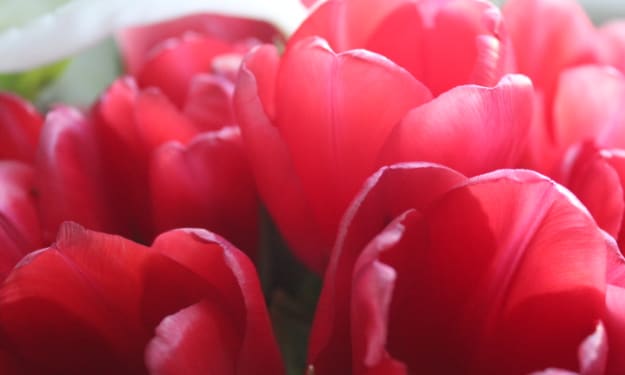
Ten years later, at my mother’s funeral, there was (as some whispered) “a distasteful number of flowers” in the church. Roses. Carnations. Tulips. Lilies. Orchids. Flowers of every color and kind—about, $20,000 dollars’ worth, I’d guess.
And, at that same service, I sat alone in the first pew. I felt the spirit of my oldest and my youngest brother on either side of me—holding me together—firmly, in the middle.
About the Creator
Keep reading
More stories from Kay Weinkauf and writers in Families and other communities.
Wise~Guys
— Look Behind what's in Front of You ~ Make Good Choices — Hey, So how you Doin'..! Made~Men — Mobster Movies romanticise a distinctive, elegant appearance, impeccable attire style, along with the 'Families' expressive lingo. Making their 'Bones' gave them Panache — with vintage fedoras, tailored pin-striped suits, mirror-polished wing-tip shoes adorned with tassels; with their 'Gun Moll' gorgeous dates on their arms.
By Jay Kantor24 days ago in Families
The Banyan Tree
It’s always a “must see” place to visit in our family on my maternal mothers side. When making our way into Haleiwa for our shaved ice and day at the beach. Watching the tourists enjoy the sun and waves. While reflecting and thinking to myself. Am I now considered a “tourist” now? Since I was uprooted at the age of 5, and planted into a small dinky little town that on I5 you pass in the blink of an eye. Then I bring myself back to the banyan tree that my great grandfather planted. I remind myself that my roots are forever solidified in the red volcanic dirt that stains anything and everything it touches. I reflect and remember all my family members who hold this location and tree, as a reminder of where are roots are planted. And I can’t help but wonder, was this my great grandfathers purpose? A place where his family can come back and be reminded of where we are from? And who we are? And no matter where we go? Home is rooted in the hearts and memories that we create. I find myself yearning to learn more about each individual and the lives they lived and the struggles and successes in every day life. As I navigate my own life. Do we have things in common more than a bloodline. Do we think the same? Do we move the same? Do we love the same? Amazing how one act by one person with purpose/intention or without. Can inspire an individual generations later. To dig deeper, question more, appreciate more. Growing up as a child. I heard stories, looked at pictures. Imagined myself in a time in which we may say is much simpler than today. Slower pace, less chaos, black and white less grey. A time that felt more protected and safe in its own way. As a middle age woman. I often find myself reflecting on who I am? Do I carry any of the same traits and thoughts as my great grandparents? The same will and resilience in life’s short comings or maybe even my own? If we could be in each others presence. What would our conversations be like? Would they value me as I value their memory and stories? Would they be proud of who I am? Since I can remember I always had a close relationship with my grandma. She is the woman whom I hold dearest to my heart. A strong woman, who took such great care of her family immediate and extended. Being the glue that held everyone together. So I always understood why she was highly regarded and respected. I can say I took a lot of her traits and teachings, she helped mold me into who I am today. When she passed away when I was 15, it felt as if my entire world and safety net disappeared and took one of the biggest parts of me that I can never get back. Her absence set the tone for many infortunate events in my life. I recently went back to Hawaii with my younger sister. Just like we used to as kids for the summer. We visited the cemetery, all the family time allowed, our favorite food spots. And of course the banyan tree. The feeling is overwhelming in a good sense. To stand in the same spot as my great grandfather did when he planted it. You almost feel his presence around and it brings a smile to my face and a warming in my heart. This is where I am rooted. This is where my story began. So thank you great grandpa Miyoshi Ideguchi, for inspiring your great grand daughter to dig a little deeper into the roots that you have planted.
By Deana Cabison3 days ago in Families
Affection and Healing for Yourself
During the night of the last quarter moon, I gathered my ritual supplies. I carefully handled the chunk of black tourmaline that would protect me from your overall negative and narcissistic energy. I carefully walked the house with my stick of selenite in hand, asking the universe to cleanse our working space.
By Alisha Wilkins ✒️🦋🖋️5 days ago in Fiction


Comments
There are no comments for this story
Be the first to respond and start the conversation.