
Lula Mai Swanson: A pioneering woman, ahead of her time
"Take what you got and make something of it"

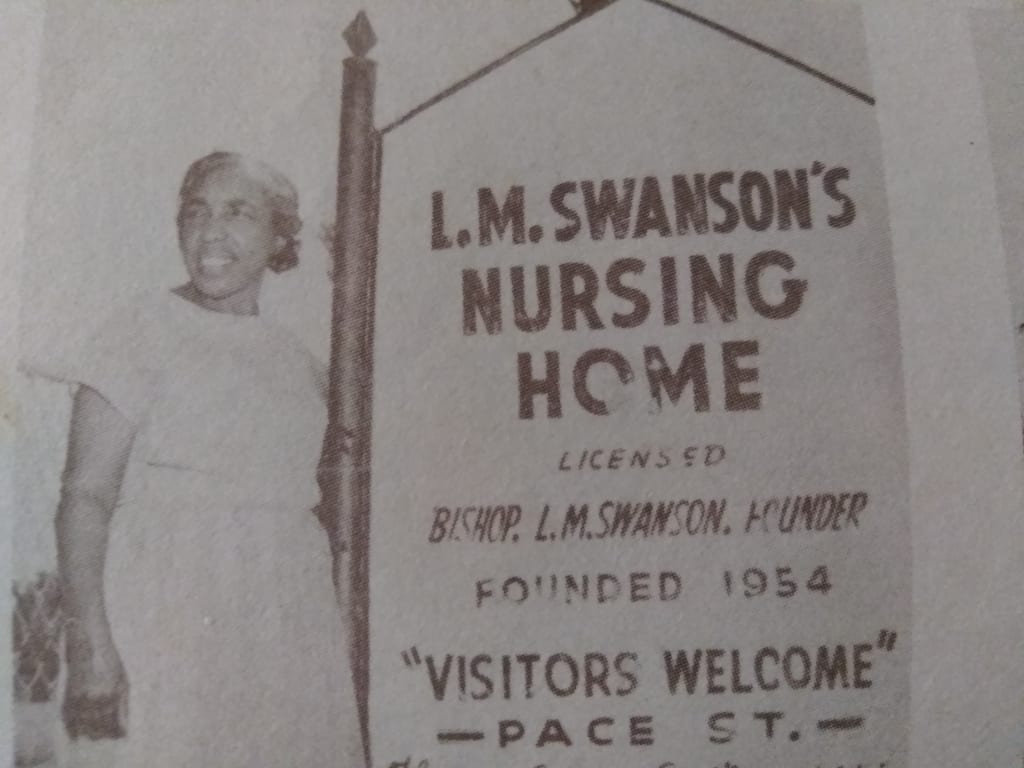
Larger than life.
That’s how I would describe my great aunt Lula Mai Swanson, a true pioneer businesswoman in every sense of the word.
She only stood five feet tall, but packed a fearlessness that helped her become the first Black woman in the state of Tennessee to own her own nursing home, during the Jim Crow segregation era.
Whenever I think about this short statured woman, with such a powerful personality, I can’t help but think back to 1985, when I got an opportunity to work with my great aunt at her nursing home the entire summer.
At the time, I was 11-years-old, and my mother thought it would be a good idea for me to learn from her. My mom felt she could mentor me and help teach me some life lessons through helping others.
Those three months I spent working at the Swanson Nursing Home truly transformed my life and helped shape the person I am today.
I will never forget the love she showed me and how she tenderly took me under her wings.
Just watching Aunt Lula Mai run her own business with authority and expertise, filled me with such pride.
I saw how her staff respected her and how much they admired her.
People all around town knew Lula Mai Swanson.
I can remember just smiling whenever we’d go somewhere in her grey Cadillac and people would call her by one name — Bishop.
She had garnered such respect from people of all races and socioeconomic backgrounds.
To understand what really inspires me about my great aunt, let me start from the beginning and take you through some of her most memorable sayings that stick with me even today. Sayings that she not only talked about, but actually lived.
“Take what you got and make something of it.”
As I have branched out into business for myself, I often refer back to my great aunt for words of wisdom. She always used to say, “Take what you got and make something of it.”
This could not have been more evident than in the early 1950’s, when she made up in her mind to open a nursing home.
During those days, getting loans at banks weren’t that common for Black people, neither were federal grants.
My industrious great aunt didn’t let that deter her from her goal.
She took what she had — $100 — and paid for an empty building in her home town of Gallatin, Tennessee, where she opened a small grocery store with $35 worth of groceries to start.
She saved every dime from the sales she made and put it toward her dream of opening her nursing home.
For me, when things get really hard and I feel like giving up on my dream of my media company, I think about this saying.
She was basically letting you know: You don’t have to have much, but whatever you do have, you can turn it into something.
For her, she basically took $135, opened up a little grocery store and it ultimately led to one of the most successful, privately-owned nursing homes anywhere in the state and I would argue the country.
And what’s most amazing is she did it during a time when it was really rare for women, and especially Black women, to own businesses.
Mrs. Swanson finally saw her nursing home become a reality on Jan. 1, 1954 — the same year of the landmark case Brown vs Board of Education — that ruled state-sanctioned segregation of public schools was unconstitutional.
As a kid, I often traveled through those halls of that 25 bed nursing home, visiting the patients and talking with them.
But, it wasn’t until the summer that I worked for my great aunt — 34 years after the doors were first opened — that I began to understand her love, her passion and her drive.
She first got the idea to open up a nursing home to serve the needs of the elderly, after visiting a substandard one in Nashville in the late 1940’s. She saw the patients’ condition. They were malnourished and not well cared for, and that day, my great aunt, who was also the pastor of three churches in three different cities in Middle Tennessee, resolved to build a place elderly African-Americans could have that would be their safe haven.
Nursing homes, during that time, were known for shoddy operations — as living conditions in what were known as almshouses— worsened.
As many old age homes came under fire for unsafe living conditions and substandard health practices, it was during the 1940’s that federal grants were given for nursing homes to be built like hospitals.
"I never say no if it is possible to say yes.”
Once the elderly began receiving Social Security, many people went into the nursing home business just for the money.
Not my Aunt Lula Mai. In fact, many of those who came to her facility were poor and destitute. They had no Social Security, yet, she never turned them away.
Lula Mai Swanson, a pioneer ahead of her times, believed the verses in the Bible which spoke of helping out a neighbor. It was her calling.
“She was very charitable,” her youngest son, John Swanson, now 91-years old, recalled. “She would always do whatever she could for people.”
My aunt who died in 1988 at the age of 81, had a motto that people all over town knew about and often came to her for, “I never say no if any way possible to say yes.”
This slogan was actually printed on the side of her red and white church van.
Many people in need came to my aunt for charity and she helped many of them, if at all possible.
Her work in the community, church and through her nursing home, did not go unnoticed. She received numerous awards from the NAACP, the Chamber of Commerce, as well as from the State of Tennessee.
The pastor even helped put her youngest sister, Florence, who was my grandmother, through nursing school. My grandmother worked as a nurse at the Swanson Nursing Home for years.
My great aunt also helped care for many of her nieces and nephews as well.
When wayward teens got out of line, they were generally shipped to Lula Mai Swanson’s to get put back on the straight path.
“She was interested in all the family,” her son said.
She made such a huge impact in people’s lives, especially mine.
“They would always call her when they needed help. She always would go to people’s rescue,” her son said.
“A little woman of stature, but had a big heart for humanity.”
“If you don’t have time to do it right now, when will you have time?”
During the summer of 1985, I would arrive at the Swanson Nursing Home bright and early.
My great aunt literally lived just a few feet away from her business.
She had an intercom that allowed her to hear everything that was taking place inside the nursing home.
If she saw something needed to be done, she didn’t wait around, she got to it.
“She had a deep concern for her patients,” her son recalled. “She had an intercom at her bedside. She could monitor all things going on in the nursing home.
“She’d be able to hear the nurses, the aides and patients — whatever was going on. She’d hear the employees’ attitude toward the patients. If they were mean to them or yelling at them, she would immediately go over to them and talk to them about how they were talking to (the patients).
If the employees’ had the wrong attitude toward the patients, my great aunt was not scared to terminate their employment. The patients always came first.
Swanson’s Nursing Home wasn’t like any nursing home that many people had ever known. It didn’t have an odor and the owner made sure everything was right. If it wasn’t up to her standards, she would make sure it got fixed.
The love Bishop Swanson, as she was most commonly known by the community, had for her patients and her nursing home, was very apparent to me, even as a kid.
Although she was the owner, my great aunt was not afraid to get her hands dirty — literally. She bathed the patients, fed them, and gave them their medicine. At times, if she was short staffed, she’d even cook their food.
Bishop Swanson was even known for spending long hours doing laundry — washing clothes, sheets, pillow cases and drying them.
“She wanted her patients well-cared for,” John Swanson said.
“Every knock is a boost.”
A devastating fire at another nursing home that killed 13 patients, would almost derail my great aunt’s business, a few years after she opened.
At the nursing home where the patients died, the facility lacked fire extinguishers on the premises.
As a result, the State demanded that all nursing homes get a sprinkling system, which included Swanson’s Nursing Home. The cost was an exorbitant amount — $250,000 — which Mrs. Swanson did not have.
The State gave my great aunt an ultimatum, either get the sprinkling system or she would have to shut down.
All her hard work seemed to be going up in flames and needless to say, Mrs. Swanson was devastated. She didn’t have $250,000.
But that saying, “Every knock is a boost,” replayed in her head.
Meaning that when something bad happens, it’s only going to lead to something better.
My great aunt didn’t crawl up in a ball and cry her eyes out — she came out determined.
The same drive that helped push her to build a nursing home, start three churches when females were not supposed to preach in the pulpit, and also expand her property ownership, also led her to another idea.
She prayed about it and she later said the Lord gave her the idea to make plaques of each of the patients at her facility. She then put their picture on each one to show the faces behind the people who would be kicked out, if Swanson’s Nursing Home was forced to shut down.
She then put the plaques up around town at the different restaurants and businesses.
Donations began pouring in and before long, she had collected the $250k and was able to purchase the sprinkler system.
“The person that can outthink you can always lead you.”
What I admire most about my great aunt was her leadership skills. She always seemed to be ahead of her time.
I saw a strong, powerful Black woman, who was not afraid of anything or anybody. She didn’t let others’ opinions stop her from doing what she thought was right. And she most certainly, did not let people outthink or outwit her.
She truly was fearless and had such a love for God as a woman pastor in a male dominated field.
I watched her stand firm in her conviction — not letting the color of her skin or her gender hold her from achieving her goals in life — that were driven by a firm faith in Jesus Christ.
First, as a Black woman entrepreneur in the Jim Crow south, who made a name for herself as a no-nonsense businesswoman, known to stand her ground. She had a way with people and they seemed to flock to her.
Bishop Swanson also traveled all over the country in her Cadillac preaching the gospel.
She even traveled to Jerusalem in the 1960s.
You definitely could not underestimate her because of her height, gender or color. She never let any of those things keep her from achieving her goals. She never allowed herself to be defined by society’s standards.
If Bishop Lula Mai Swanson wanted something, she’d find the means to get it done herself. She didn’t wait on others.
“She was boss!” her granddaughter Lanitta Joseph, recalled. “She made things happen.”
About the Creator
Keep reading
More stories from Toni Mitchell and writers in Families and other communities.
Wise~Guys
— Look Behind what's in Front of You ~ Make Good Choices — Hey, So how you Doin'..! Made~Men — Mobster Movies romanticise a distinctive, elegant appearance, impeccable attire style, along with the 'Families' expressive lingo. Making their 'Bones' gave them Panache — with vintage fedoras, tailored pin-striped suits, mirror-polished wing-tip shoes adorned with tassels; with their 'Gun Moll' gorgeous dates on their arms.
By Jay Kantor23 days ago in Families
The Foolish Wife
The Foolish Wife A farmer knew that his wife was not very intelligent, so he believed that arguing with her was useless. A poor farmer lived in a village. He worked in his fields all day and earned just enough to manage two meals a day. He himself was simple and honest, but the wife he had married was extremely foolish. Their marriage was still new. One morning, before leaving for the fields, the farmer said to his wife, “I will be plowing all day and will be very tired and hungry. Please cook a good meal for me by the time I return, and also bring a glass of vinegar that I bought last year.”
By Sudais Zakwana day ago in Families




Comments
There are no comments for this story
Be the first to respond and start the conversation.