Latest Stories
Most recently published stories in Families.
My name is Alice and this is my story
Chapter One Alice was a girl that was loved a lot by her family. Her mother and father loved her very much but then their happened something that forced her mother to divorces her father she still had contact with her father and she went to him every weekend and some days he went to pick her up at school. Alice grows up thinking that parents should live in different houses but that was not the case in other families. When Alice was about 6 years old her mother met a man and they started dating. Alice was very confused by this man that was with her mother. She told her dad that she was afraid that he is going to make her not see her dad again. Her father told her nobody can every stop him for seeing his daughter and that he loves her very much. When she was 7 Years old her mother and her boyfriend married and 9 months later she had a brother. She also had a step sister that was very rude and did like her. They moved into a bigger house where they each got their own rooms and it was peaceful for a while. Alice and her father went to visit her granny that lived near the sea. Her granddad died a few days earlier and they went there for the funeral. At her grans house she played with her baby cousin that was just a few weeks older than her baby brother. When they went home her dad told her that she don’t have to fever about anything because he will always be there for her. Alice got home and then she saw all the new stuff that her step father’s child got. She was not worried about it because her dad will by her stuff.
By Alice Van Heerden12 days ago in Families

From Blueprint to Reality: A Step-by-Step Guide to Planning Your Dream Home Remodel
Key Takeaways Home remodelling requires careful planning and patience. Setting a realistic budget saves unnecessary spending. Creating a blueprint for your home remodeling is crucial. Seek permissions and approvals from building authorities before remodelling your home. Keeping aside extra money for emergencies and surprises is important.
By Andrew Lemieux12 days ago in Families
How Childhood Attachment Shapes Adult Heartbreak
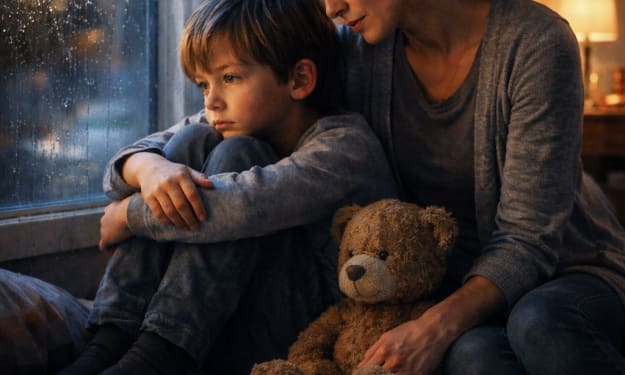
I was twenty-eight years old, sitting in my therapist's office for the fifth time that month, crying over yet another failed relationship. This time it was Marcus—kind, stable, emotionally available Marcus—who I'd pushed away for reasons I couldn't explain. "Tell me about your parents," my therapist said gently, sliding the tissue box closer. I rolled my eyes. "Really? We're doing the whole 'blame the parents' thing?" She smiled softly. "I'm not asking you to blame anyone. I'm asking you to understand yourself." What followed was the most uncomfortable, enlightening conversation of my life. Because as I started talking about my childhood, patterns emerged that I'd never seen before. Patterns that explained every heartbreak, every self-sabotage, every time I'd chosen someone emotionally unavailable or run from someone who truly cared. My therapist was right. The blueprint for heartbreak had been drawn long before I ever fell in love. The First Language We Learn Attachment theory sounds complicated, but it's actually quite simple: the way our caregivers respond to us as children teaches us what to expect from relationships as adults. It's our first lesson in love, trust, and worthiness. My mother loved me—I never doubted that. But her love came with conditions. It appeared when I was good, obedient, successful. It vanished when I was needy, emotional, or imperfect. I learned early that love was something I had to earn, not something I inherently deserved. My father? He was there but absent, physically present but emotionally distant. He worked late, hid behind newspapers, and responded to my excitement or sadness with the same uncomfortable silence. I learned that expressing needs pushed people away. So I stopped expressing them. I didn't know it then, but I was learning a language—the language of anxious attachment. And I would speak it fluently in every romantic relationship I'd ever have. The Dance We Can't Stop Repeating My first serious relationship was with Jake. He was charming, unpredictable, and emotionally unavailable. Our relationship was a rollercoaster—intensely passionate one week, ice-cold the next. I never knew where I stood, and that uncertainty drove me crazy. But here's the twisted part: it also felt familiar. The push and pull, the constant need to prove myself, the anxiety of wondering if today would be a good day or a bad day—it all echoed my childhood. I was trying to earn Jake's consistent love the same way I'd tried to earn my mother's approval. When he'd pull away, I'd chase harder. When he'd show affection, I'd melt with relief. I was addicted to the cycle because somewhere deep inside, I believed this was what love looked like. After Jake came David, then Ryan, then Christopher. Different faces, same pattern. I was attracted to men who made me work for their attention, who kept me guessing, who made me feel like I had to be perfect to be loved. The Good Guy Problem Then I met Marcus. Sweet, consistent, emotionally intelligent Marcus. He called when he said he would. He communicated clearly. He didn't play games. He made me feel safe. And I couldn't stand it. Within three months, I was picking fights over nothing. I felt suffocated by his reliability. I started noticing flaws that weren't really flaws—he texted too much, he was too eager, his kindness felt boring. The anxiety I'd felt with the others was missing, and without it, I didn't recognize the feeling as love. I broke up with him on a Tuesday night, citing some vague excuse about "not being ready." He took it gracefully, which only made me feel worse. That's when I ended up in therapy, finally asking the question I should have asked years earlier: Why do I keep destroying the good things in my life? Unpacking the Invisible Suitcase My therapist explained that I had an anxious attachment style, likely formed by my inconsistent childhood experiences with love and attention. Children with anxious attachment grow into adults who:
By Ameer Moavia12 days ago in Families

A Closer Look at the Diverse Cuisines Served at STIX ASIA . AI-Generated.
STIX ASIA stands as a vibrant reflection of Asia’s rich and diverse food culture, offering diners an immersive experience that goes far beyond a single cuisine. As a modern Asian Food Hall, it brings together multiple culinary traditions under one roof, allowing guests to explore a wide range of flavors, textures, and cooking styles in one setting. Each dish is inspired by authentic regional influences while being thoughtfully prepared to suit contemporary tastes.
By Robert Jhon12 days ago in Families
What You’ll Pay for Assisted Living and Why It Varies
A family tries to notice, however, not a bill or a brochure, but a change. The parent misses meals and forgets appointments or appears to be even more isolated than usual. The real issue is safety, comfort and everyday assistance long before the price comes into the picture. As soon as the assisted living comes into the discussion, it is necessary to comprehend the cost. Having an idea of what you are going to pay and why the numbers are different make families progress forward without ambiguousness.
By Laura Parton12 days ago in Families
Land of the Free
Somewhere between “freedom” and “Wi‑Fi,” America forgot how to rebel. We stopped throwing tea into harbors and started paying subscriptions to our own surveillance. The revolution didn’t end; it just got quiet, replaced by notifications and next‑day delivery. The land of the free grew polite — too polite — learning to mistake convenience for peace, and obedience for order.
By Living the Greatest CONSPIRACY Theory. By RG.13 days ago in Families
A Toast to the Timed and Tamed
It’s funny how everybody celebrates New Year’s on January 1st, like clockwork — literally. The fireworks go off, champagne pops, resolutions fly, and everyone cheers in submission, believing they’ve begun something new. But if you really think about it, nothing has shifted but the clock’s agreement. Nature doesn’t renew herself in January’s frost. The trees are bare, the ground is sleeping. We start the “new year” when life is still in hibernation — and call that progress.
By Living the Greatest CONSPIRACY Theory. By RG.13 days ago in Families
The Letter that Silenced the Cannons
The noise that hurts Lucien was eight years old and had hazel-colored eyes. Before, he loved to run in the fields behind his house, catch grasshoppers and listen to the blackbirds singing in the early morning. Before, his dad told him stories of brave knights and his mom made apple cakes that filled the whole kitchen with their aroma.
By La P'tite Pinolaise13 days ago in Families
Work-Life Integration vs. Work-Life Balance: Finding the Right Fit
In today’s fast-paced world, managing work-life integration and balance is more important than ever. People are increasingly looking for ways to juggle their jobs and personal lives without feeling overwhelmed. But what’s the difference between these two concepts, and which one is better for you? Let’s explore what each term means, how they compare, and how you can apply them to your life.
By Norman Badger13 days ago in Families